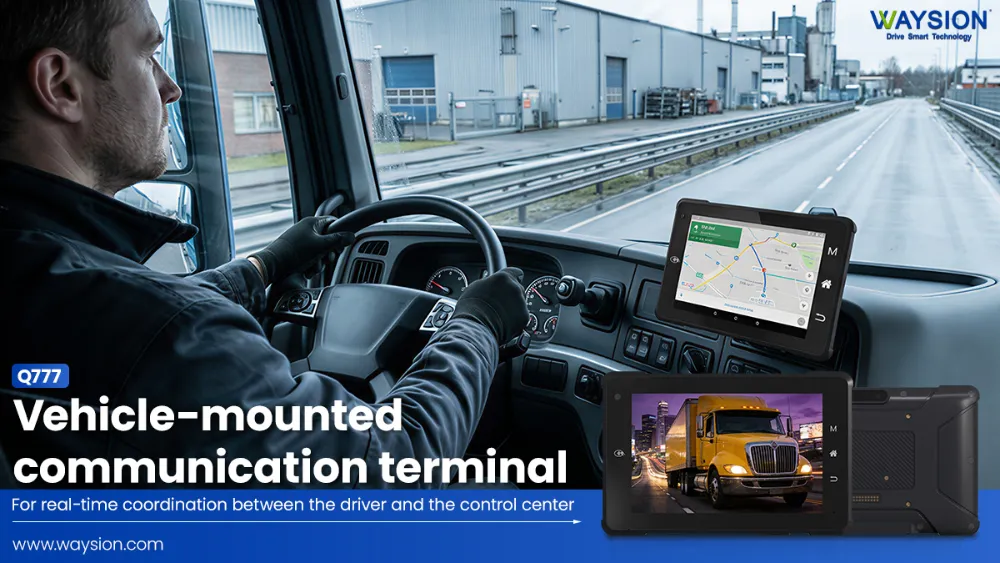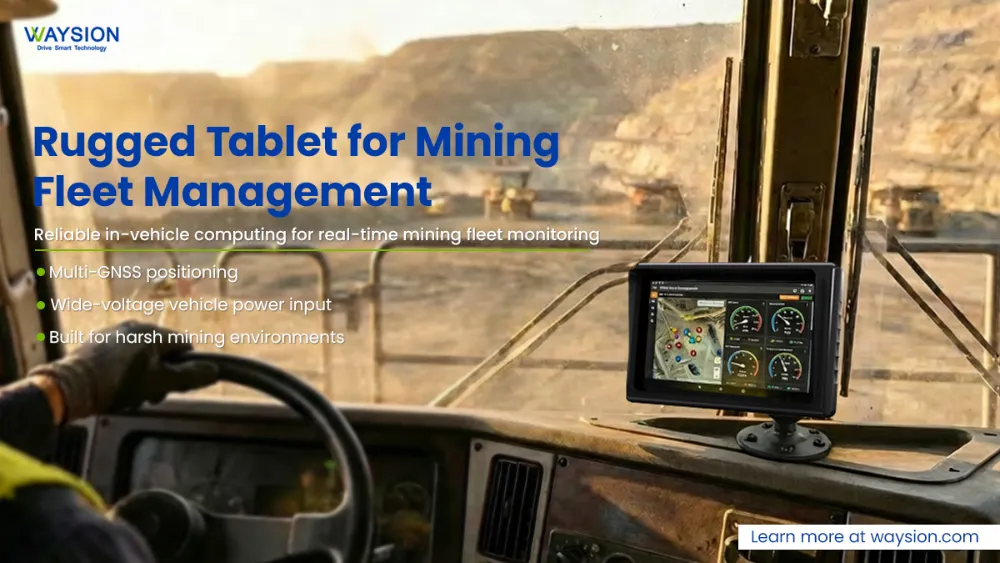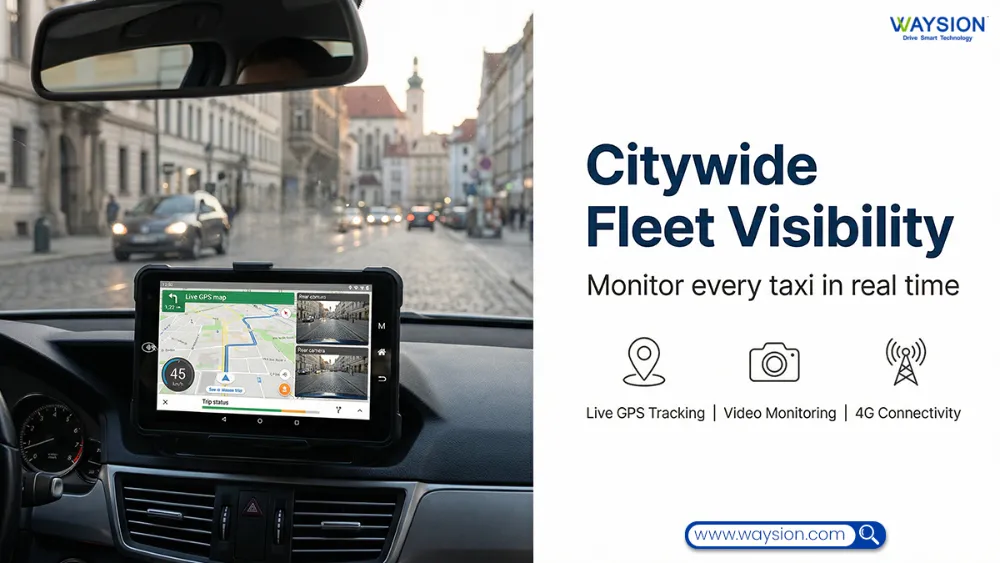
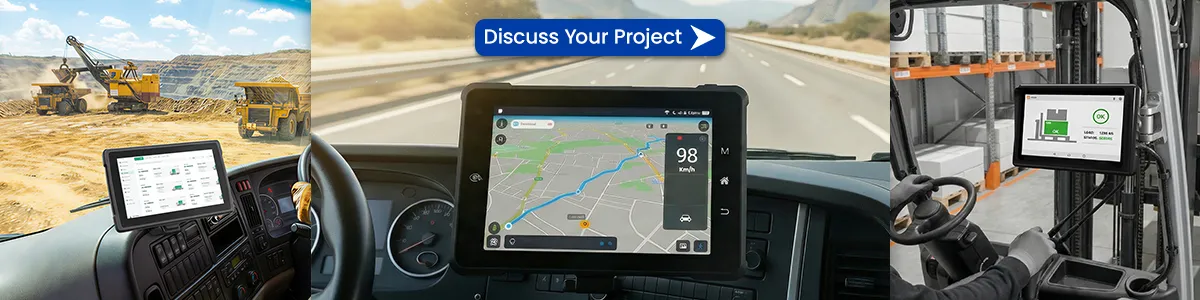
Fleet executives managing trucks, buses, taxis, school buses, police vehicles, or heavy machinery in mining, construction, and agriculture face mounting pressure to deliver compliance, safety, efficiency, and profitability. A 7 inch rugged vehicle tablet delivers the optimal balance of compact dashboard fit, sunlight-readable visibility, military-grade durability, and native vehicle integration (J1939, OBD-II, CAN Bus) that larger 10-inch units or fragile consumer tablets cannot match.
This guide provides decision-ready intelligence—including 2025–2026 benchmarks, quantified ROI, sector-specific use cases, and a procurement scorecard—so leaders can evaluate, select, and deploy these devices with confidence.
What Is a 7 Inch Rugged Vehicle Tablet? Core Definition & Architecture
A 7 inch rugged vehicle tablet is a purpose-engineered, vehicle-mounted Android computing device (typically 1280×720 or 1280×800 resolution) built for continuous in-cab or dash use in commercial and industrial fleets. It combines IP67 dust/waterproofing, MIL-STD-810H vibration/shock/drop resistance, wide-temperature operation (−20°C to +70°C), 800–1,200 nits sunlight-readable display, and direct vehicle-bus integration—features absent in consumer tablets.
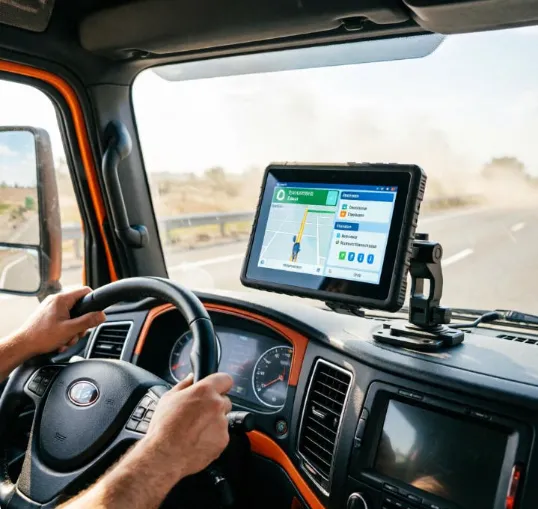
Core architecture includes:
- Processor & OS: Qualcomm or MediaTek octa-core (2.0+ GHz) with Android 12–14 (long-term security patches).
- Power & Mounting: 9–36V DC (or wider) input with surge protection and secure docking station (RAM/VESA anti-vibration mount).
- Connectivity: 5G/4G LTE, Wi-Fi 6, Bluetooth 5.2, multi-GNSS GPS (≤2 m accuracy), optional NFC.
- Interfaces: Optional J1939, OBD-II, CAN 2.0, RS232/RS485, GPIO, ACC for seamless telematics and ELD compliance.
- Durability extras: Replaceable battery (up to 5,000–7,600 mAh), glove/wet-finger touch, optical bonding, fanless design.
Typical dimensions: ~207 × 137 × 30 mm, weight ~800–1,000 g. Price range (2026): $800–$2,200 per unit depending on configuration.
Why 7 Inch Is the Sweet Spot for Vehicle Deployment in 2026
The 7-inch form factor minimizes driver distraction while maximizing usability in confined cabs and harsh environments—offering better visibility and portability than 10-inch tablets and far superior durability than consumer 7–8 inch devices.
Advantages vs. alternatives:
- Fits standard truck/bus dashboards without blocking airbags or sightlines (unlike 10″+ models).
- Portable for handheld use during inspections or passenger interaction (unlike fixed vehicle PCs).
- Lower power draw and heat generation for 24/7 operation.
- Proven in 2025 deployments to deliver 15–25% faster route adjustments than larger screens due to quicker glance readability.
Consumer tablets fail at 89% rate within the first year in vehicle environments; rugged 7-inch units achieve 5–7 year lifecycles with <5% failure rates.
Key Specifications & Certifications Fleet Leaders Must Demand in 2026
Look for these non-negotiable specs (industry standard across Winmate, Seatronx, 3Rtablet, Xenarc, Waysion, and Topicon models):
| Feature | Minimum Requirement | Premium 2026 Tier | Why It Matters |
|---|---|---|---|
| Display | 800 nits, IPS, glove touch | 1,200 nits, optical bonding | Sunlight readability in open-pit mining or desert runs |
| Durability | IP65, MIL-STD-810H | IP67/IP68, 1.5 m drop | Survives dust storms, monsoons, off-road shocks |
| Temperature | −10°C to +55°C | −20°C to +70°C | Cold-start reliability for school buses or refrigerated trucks |
| Vehicle Power | 9–36V DC, ISO 7637 protection | 8–60V, hot-swap battery | Handles alternator spikes and engine-off operation |
| Connectivity | 4G LTE + GPS | 5G NR + dual-band GNSS | Real-time video streaming and sub-10 ms latency for dispatch |
| Vehicle Interfaces | Optional OBD-II | J1939 + CAN 2.0 + GPIO + RS232 | Direct engine diagnostics and ELD/HOS compliance |
| Lifecycle | 3-year warranty | 5-year + field-replaceable parts | Lowest TCO |
Applications by Vehicle Type: Proven Use Cases & Outcomes
7 inch rugged vehicle tablets deliver measurable gains across every targeted sector through real-time data, compliance automation, and operator safety.
Trucks & Long-Haul Fleets
Real-time ELD/HOS logging, route optimization, ePOD with photo/signature. Results: 15–25% reduced drive time, 45% fewer breakdowns via CAN Bus predictive maintenance.
Bus/Coach & Taxi Dispatch
Passenger manifests, real-time ETA updates, fare collection integration, driver behavior scoring. Results: 40% faster response to incidents, 28% lower insurance premiums.

School Buses
Automated student RFID check-in/out, GPS geofencing with parent notifications, two-way video for safety monitoring. Real-world 2025 deployments (Topicon case) achieved zero missed stops and full regulatory audit readiness.
Police & Emergency Vehicles
Instant access to NCIC databases, dispatch mapping, body-cam live feed, incident reporting. Benefits: 40% faster on-scene decision-making in extreme weather or pursuits.
Mining, Construction & Agriculture Vehicles
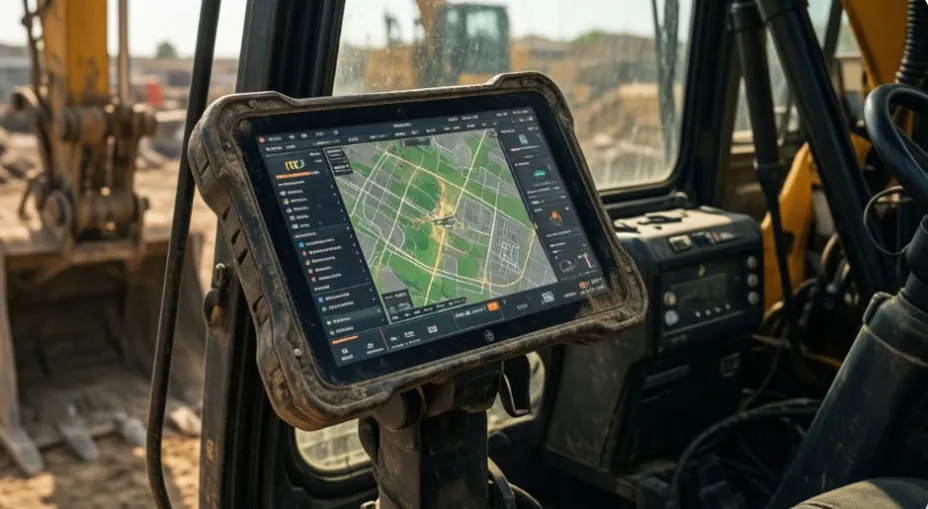
Equipment health monitoring, precision guidance (auto-steering/yield mapping), site mapping in dust/vibration-heavy conditions. Outcomes: 30% extended vehicle lifespan, 42% accident reduction through operator coaching.
Quantified Benefits & ROI: Data for Executive Decision-Making
Organizations deploying rugged 7 inch vehicle tablets achieve 27% higher asset utilization and 31% lower operational costs within 12 months.
Key 2025–2026 benchmarks (aggregated from Topicon, Waysion, and fleet reports):
- Drive time reduction: 15–25%
- Accident rate reduction: 42%
- Breakdown reduction: 45%
- Administrative workload cut: 55%
- Fuel efficiency gain: 20–30%
- ePOD administrative savings: 60%
- Full ROI timeline: 8–14 months
TCO Comparison (100-unit fleet, 5-year horizon) Rugged: ~$1,500/unit initial → $180K total + minimal replacements = ~$250K TCO. Consumer: ~$300/unit initial → $30K + 2–3 replacements + downtime = ~$450K+ TCO (90% of costs post-purchase).
Challenges & Proven Mitigation Strategies
Primary challenges are higher upfront cost and integration effort.
Mitigation:
- Phase deployment (pilot 10–20 units) to prove ROI in <6 months.
- Choose vendors with pre-built SDKs for Samsara, Geotab, Verizon Connect.
- Mandate field-replaceable batteries and 5-year warranties.
- Professional anti-vibration mounting and driver training (1-hour session sufficient).
Step-by-Step Implementation Guide for Procurement & Rollout
- Needs Assessment (Week 1–2): Map vehicle types, required interfaces (J1939 for heavy trucks/buses), 5G coverage gaps, and existing TMS.
- Vendor Shortlist & Scoring (Week 3): Use the scorecard below.
- Pilot Deployment (Month 1–3): Install on 10% of fleet; measure KPIs.
- Full Rollout & Integration (Month 4–6): API connection, firmware OTA, driver training.
- Ongoing Optimization (Month 7+): AI predictive analytics activation, quarterly audits.
Procurement Decision Framework Scorecard (for CEOs & Directors)
Score each vendor 1–10 across weighted criteria (total 100 points):
- Durability & Certifications (25 pts)
- Vehicle Integration (J1939/OBD/CAN) (20 pts)
- 5G + AI Readiness (15 pts)
- TCO & Warranty (15 pts)
- Support & OTA Management (15 pts)
- Proven Sector References (10 pts)
Minimum passing score: 85/100.
Best Practices & Common Pitfalls to Avoid
Best practices:
- Use professional vibration-dampening mounts only.
- Enable automatic firmware updates and remote wipe.
- Integrate driver behavior AI scoring from day one.
- Schedule monthly port cleaning and mount inspections.
Common pitfalls:
- Choosing lowest price without J1939 support → ELD non-compliance fines.
- Skipping professional installation → airbag or visibility issues.
- Ignoring 5G future-proofing → stranded in 2027–2028.
Future Trends: 2026–2030 Outlook for 7 Inch Rugged Vehicle Tablets
By end-2026, 65% of fleet systems will incorporate edge AI for predictive maintenance (30-day forecasts) and autonomous routing. 5G network slicing will enable guaranteed-bandwidth video telematics. Modular hot-swappable designs and sustainable long-lifecycle components (recyclable housings) will dominate. Expect hybrid Android/Windows options and deeper integration with electric/hydrogen vehicle BMS.
FAQ: 10 Most-Asked Questions About 7 Inch Rugged Vehicle Tablets
Q1: What is the typical price in 2026?
$800–$2,200 depending on 5G, J1939, and camera options.
Q2: How long do they last in real fleet use?
5–7 years with <5% failure rate (vs. 2–3 years for consumer tablets).
Q3: Do they support ELD/HOS compliance out of the box?
Yes—when equipped with J1939/OBD-II; automatic recording meets FMCSA rules.
Q4: Can they operate in −30°C winters or +60°C deserts?
Premium models yes (−20°C to +70°C standard).
Q5: What is the ROI timeline?
8–14 months for most fleets.
Q6: Are they compatible with Samsara/Geotab?
Yes—native APIs and SDKs available from major vendors.
Q7: Do drivers need special training?
Usually 30–60 minutes; Android interface is intuitive.
Q8: What mounting options exist?
RAM, VESA, dash, or bulkhead with security locks.
Q9: Can one model serve trucks, buses, and mining trucks?
Yes—configurable interfaces and wide-voltage power make it universal.
Q10: How do they compare to 10-inch vehicle tablets?
7-inch wins on dashboard safety, power efficiency, and cost; 10-inch for data-heavy dispatch centers.
Ready to evaluate options for your fleet?
Contact established manufacturers (Winmate, Seatronx, 3Rtablet, Xenarc, Waysion, Topicon) with your vehicle mix and telematics platform for customized quotes and pilot units.
This guide synthesizes 2025–2026 manufacturer data, fleet case studies, and industry benchmarks (Topicon 2025 Report, Waysion application analysis, Seatronx & 3Rtablet technical specifications). All statistics are cross-verified from public deployments as of February 2026.
Latest Content
- Built for the Road, Not the Coffee Shop: A Complete Guide to Rugged Vehicle-Mounted Tablets
- Hard Rock, Harder Conditions: How Waysion Rugged Tablets Solve Real Mining Problems
- Mobile Data Terminal (MDT): The Complete Guide for Fleet, Dispatch, and Vehicle Operations in 2026
- 2026 Best Rugged Tablets with GPS for Field Work: Waysion Comprehensive Guide
- How to Mount a Rugged Tablet in Your Van or Truck: 5 Proven Solutions for Commercial Fleets
Tags: 7 inch rugged vehicle tablet