In industrial and vehicle-based deployments, choosing an Android platform is less about specifications — and more about predictability.
For system integrators and OEMs, the real challenge lies not in launching a device, but in supporting it across years of operation, multiple vehicles, and evolving project requirements.
This article outlines how rugged Android platforms are typically evaluated from a partner’s perspective — and how WAYSION supports that process.
1. The Reality of Early-Stage Projects
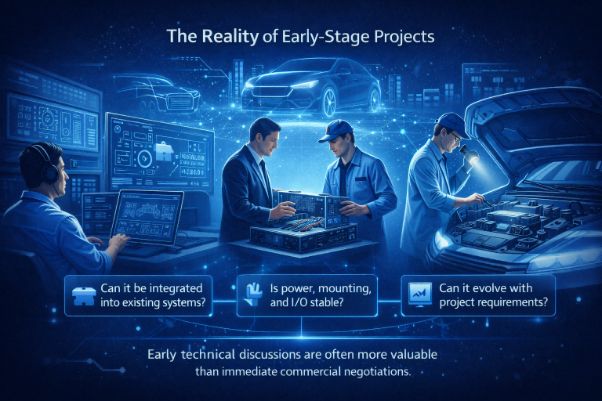
Many embedded and vehicle projects begin without a finalized customer or volume forecast.
At this stage, partners are usually focused on:
- Whether the hardware can be integrated into existing systems
- Whether power, mounting, and I/O behavior are stable
- Whether the platform can evolve as project requirements mature
This is why early technical discussions are often more valuable than immediate commercial negotiations.
2. Why Platform Stability Matters More Than Features
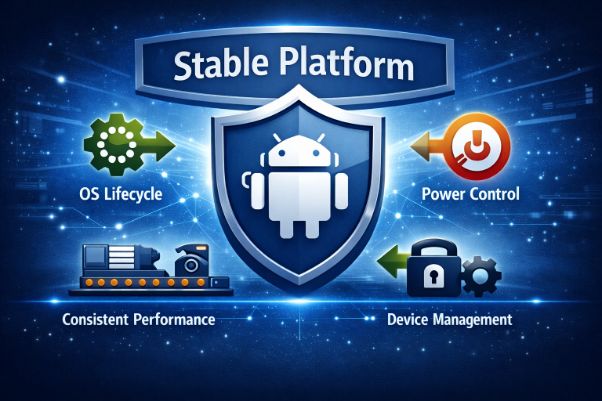
In industrial environments, stability consistently outweighs cutting-edge specifications.
Key evaluation criteria typically include:
- Android version lifecycle and upgrade strategy
- Controlled boot, sleep, and ignition behavior
- Consistent performance across production batches
- Availability of device-level APIs and MDM support
A stable platform reduces downstream engineering risk — especially during scale-up.
3. Integration as a Long-Term Process
Successful deployments are rarely achieved in a single step.
Instead, most follow a phased approach:
- Mechanical and power validation
- Interface and peripheral integration
- OS-level customization and testing
- Pilot deployment
- Gradual scaling
Supporting this process requires both engineering flexibility and clear internal coordination.
4. Working with a Hardware Partner — Not Just a Supplier
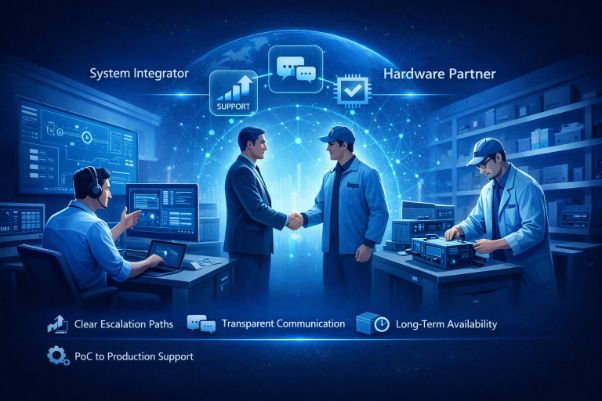
For system integrators, the hardware partner becomes part of the project team.
This means:
- Clear escalation paths
- Transparent communication on limitations and timelines
- Long-term product availability
- Support during both PoC and production stages
At WAYSION, this cooperative model forms the basis of how we work with partners globally.
Industrial Android projects succeed not because of a single specification, but because of long-term alignment between platform, partner, and project goals.
By engaging early and focusing on integration readiness, many teams significantly reduce risk — long before the first device is deployed.
Latest Content
- Built for the Road, Not the Coffee Shop: A Complete Guide to Rugged Vehicle-Mounted Tablets
- Hard Rock, Harder Conditions: How Waysion Rugged Tablets Solve Real Mining Problems
- Mobile Data Terminal (MDT): The Complete Guide for Fleet, Dispatch, and Vehicle Operations in 2026
- 10-Inch Rugged Tablet Manufacturer – Global OEM/ODM Solutions with 20+ Years Expertise | Waysion
- The Ultimate Guide to Choosing a Rugged In-Vehicle Tablet
Tags: