- Why Android 14 ELD Devices Matter for Modern Fleet Operations
- FMCSA Compliance & Real-Time HOS Logging
- Industrial Ruggedness & IP65 Rating for 24/7 Operations
- Real-Time Connectivity & Multi-GNSS Tracking
- Seamless Vehicle Integration via CAN-Bus & OBD-II
- MDM Compatibility & Over-the-Air Management
- Additional Considerations: User Interface & Driver Adoption
- Implementation Strategy: Deploying Android 14 ELD Devices in Your Fleet
- Frequently Asked Questions
- Conclusion: Making the Right Choice for Your Fleet
Modern trucking fleets require ELD devices that combine FMCSA compliance, robust connectivity, industrial durability, intuitive user interfaces, and seamless vehicle integration. Android 14 devices with IP65 ratings, wide-voltage power management, CAN-bus support, and MDM compatibility have become the industry standard, reducing HOS violations by up to 40% while improving operational efficiency and driver safety across fleet operations.
Why Android 14 ELD Devices Matter for Modern Fleet Operations
Android 14 has emerged as the operating system of choice for fleet management due to its security updates, MDM flexibility, and compatibility with modern telematics ecosystems. The trucking industry faces unprecedented regulatory pressure, with the FMCSA mandating electronic logging devices (ELDs) for all commercial vehicles since 2018. However, not all ELD devices are created equal. The choice between consumer-grade tablets and industrial-grade ELD terminals can mean the difference between smooth fleet operations and costly compliance violations.
Android 14 specifically addresses fleet managers’ critical needs: enhanced security patches that protect sensitive driver data, improved battery management for long-haul operations, and native support for Mobile Device Management (MDM) platforms. This latest OS iteration also provides better stability for real-time GPS tracking, vehicle diagnostics, and integration with existing fleet management software ecosystems.
FMCSA Compliance & Real-Time HOS Logging
FMCSA compliance is non-negotiable—your ELD device must automatically log Hours of Service (HOS) data and support both 60-hour/7-day and 70-hour/8-day regulations without manual intervention. The Federal Motor Carrier Safety Administration imposes strict penalties for non-compliance, ranging from $500 to $2,000 per violation. An ELD device that fails to accurately log driver hours or allows tampering exposes your fleet to regulatory fines, operational shutdowns, and reputational damage.
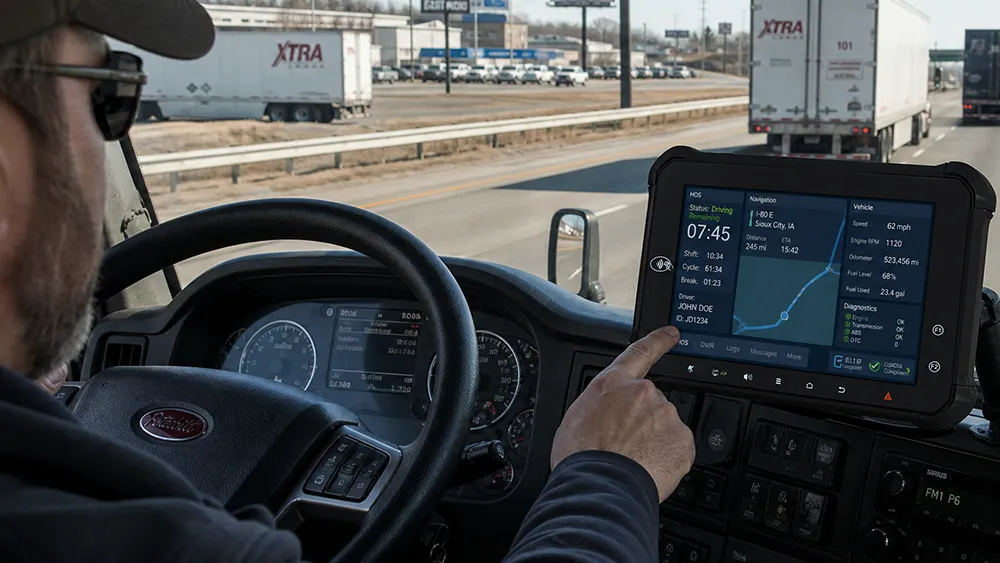
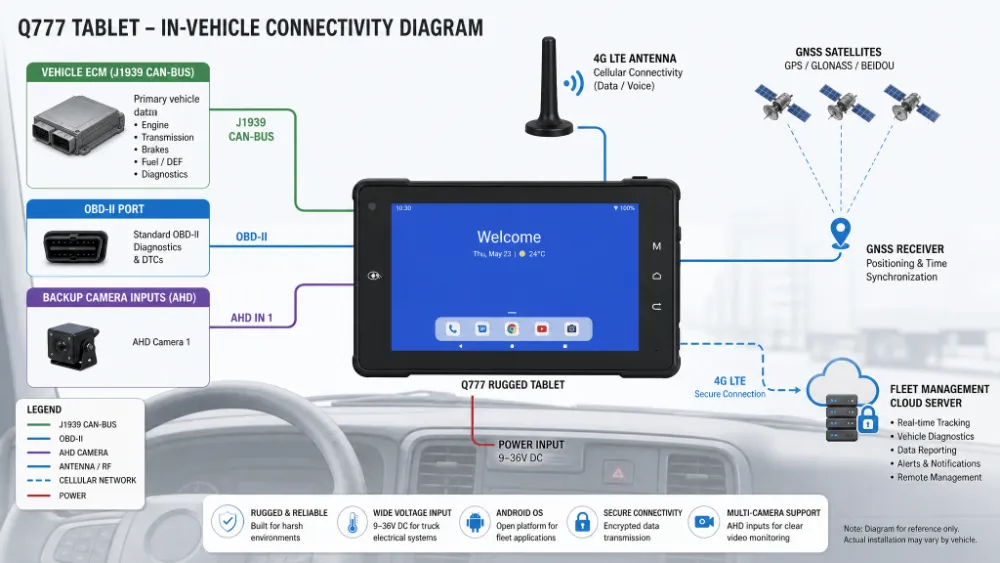
True FMCSA-compliant ELD devices integrate directly with your vehicle’s Engine Control Module (ECM) via SAE J1939 protocol and OBD-II standards. This direct connection enables automatic duty cycle transitions—the device recognizes when a driver shifts from “off-duty” to “driving” mode based on actual vehicle movement and engine status, eliminating manual logging errors. Real-time synchronization with FMCSA-approved servers ensures that your compliance data is tamper-proof and audit-ready at any moment.
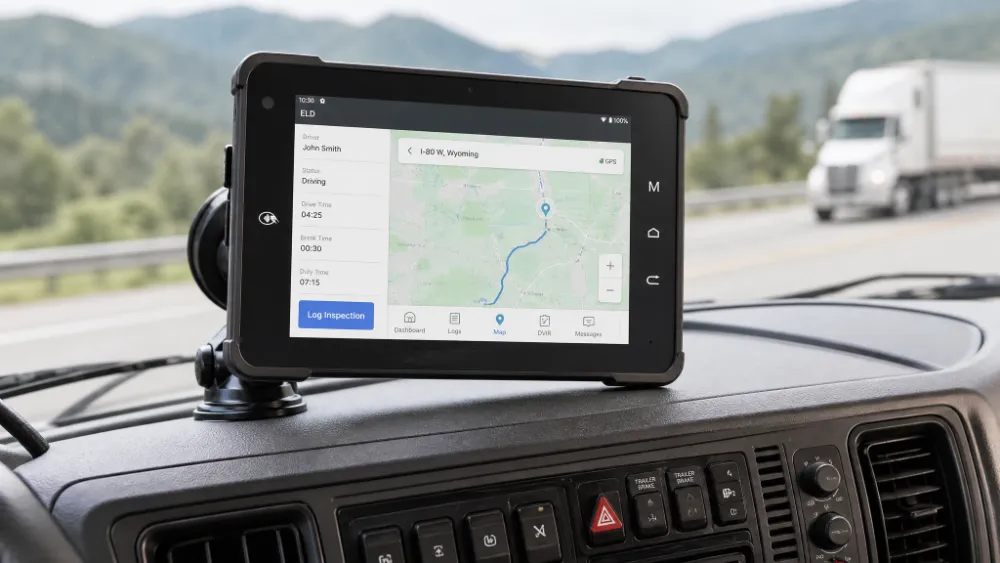
The Q777 exemplifies this approach with built-in J1939 and OBD-II support, automatically capturing engine diagnostics and duty status without requiring external adapters. This reduces HOS compliance errors by up to 40% compared to manual entry systems, while providing fleet managers with instant visibility into driver behavior and vehicle performance.
When selecting telematics hardware for long-haul trucks, consumer-grade tablets often fall short due to constant heat and heavy vibration. Commercial fleets require a dedicated, rugged tablet for trucking that supports J1939 CAN-bus protocols directly from the vehicle’s ECU.
Upgrading to a newer operating system ensures tighter security and smoother mobile device management (MDM) control. The Waysion Q777 stands out as a purpose-built Android 14 ELD device, designed to keep drivers compliant with FMCSA mandates while offering rich I/O options for various sensors.
Industrial Ruggedness & IP65 Rating for 24/7 Operations
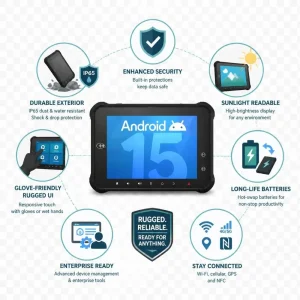
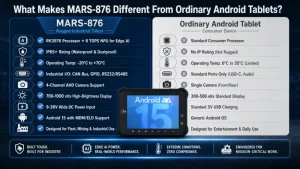
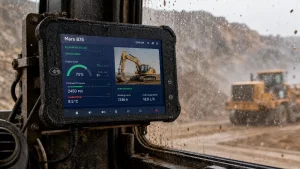
An ELD device must survive harsh vehicle environments—dust, moisture, vibration, and extreme temperatures—with an IP65 rating and MIL-STD-810H certification for drop resistance. Consumer tablets simply cannot withstand the rigors of fleet operations. A device that fails in a dusty warehouse or freezing overnight parking lot becomes a liability, not an asset.
IP65 rating means the device is dust-tight and protected against water jets from any direction. In practical terms, this allows your drivers to clean the device with compressed air or water without damaging internal components. MIL-STD-810H certification ensures the device survives 1.2-meter drops onto hard surfaces—a realistic scenario in busy truck cabs where devices may be knocked loose during braking or sharp turns.
Operating temperature ranges are equally critical. Consumer tablets typically function between 0°C and 35°C, which means they shut down during winter operations in northern regions or overheat during summer desert routes. Industrial ELD devices operate from -20°C to 70°C, ensuring consistent performance whether your drivers are navigating freezing Canadian highways or Arizona desert routes. This expanded temperature range directly translates to higher uptime and reduced equipment replacement costs.
The Q777 achieves this through its reinforced housing, sealed connectors, and wide-voltage input (9-36V DC), allowing it to handle vehicle power fluctuations during cold starts or electrical surges. Its MTBF (Mean Time Between Failures) exceeds 50,000 hours, supporting true 24/7 fleet operations without unexpected downtime.
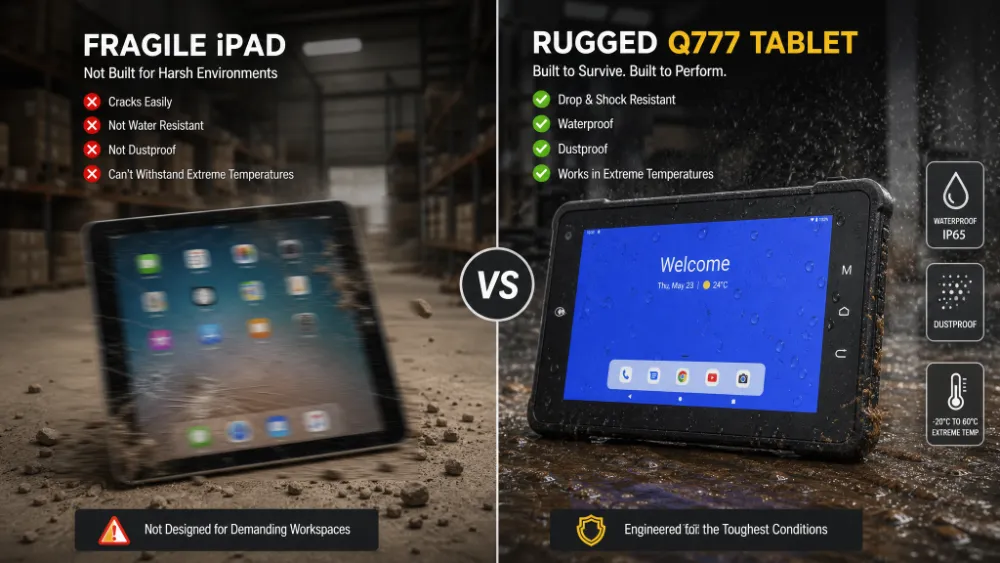
| Feature Category | Consumer Tablet (iPad) | Industrial ELD (Q777) |
|---|---|---|
| Power Input | 5V USB (Unstable) | 9-36V Wide Voltage + ACC Control |
| Operating Temperature | 0°C ~ 35°C | -20°C ~ 70°C |
| Ingress Protection | None (IP0) | IP65 + MIL-STD-810H |
| Vehicle Integration | Requires adapters | Built-in RS232/RS485/CAN |
| FMCSA Compliance | Not certified | Full J1939 + OBD-II support |
| MTBF (Reliability) | ~10,000 hours | >50,000 hours |
| Mounting Options | Suction cups (fragile) | VESA + RAM mounts (secure) |
Real-Time Connectivity & Multi-GNSS Tracking
Your ELD device needs 4G LTE, Wi-Fi, and multi-constellation GNSS (GPS/GLONASS/BEIDOU) to maintain constant communication and precise location tracking, even in remote areas. Connectivity gaps directly impact fleet visibility, driver safety, and customer satisfaction.
4G LTE ensures that your devices remain connected to dispatch servers, telematics platforms, and compliance databases regardless of location. Unlike older 3G networks that are being phased out, 4G LTE provides sufficient bandwidth for real-time video streaming from backup cameras, live route updates, and instant driver-to-dispatcher communication. Dual-band Wi-Fi (2.4GHz and 5GHz) allows devices to connect to warehouse networks, truck stop infrastructure, and temporary communication hotspots.
Multi-constellation GNSS is equally important. While GPS alone provides adequate accuracy in most scenarios, adding GLONASS (Russian system) and BEIDOU (Chinese system) dramatically improves location accuracy in urban canyons, tunnels, and areas with poor GPS satellite visibility. This redundancy ensures that your fleet maintains sub-10-meter accuracy for geofencing, delivery verification, and incident reconstruction.
The Q777 integrates GPS, GLONASS, and BEIDOU in a single chipset, providing continuous tracking even when individual satellite constellations experience temporary outages. This multi-redundancy approach is particularly valuable for logistics operations that require proof-of-delivery timestamps and route compliance verification.
Seamless Vehicle Integration via CAN-Bus & OBD-II
An enterprise-grade ELD device must include native CAN-bus (J1939) and OBD-II support for direct vehicle diagnostics, eliminating the need for external adapters and enabling real-time engine health monitoring. This integration transforms your ELD from a compliance tool into a comprehensive vehicle telematics platform.
CAN-bus (Controller Area Network) is the standard communication protocol for modern commercial vehicles. Through J1939 messaging, your ELD device can access engine parameters like fuel consumption, coolant temperature, oil pressure, and fault codes in real time. This data enables predictive maintenance—alerting fleet managers to potential engine failures before they cause costly breakdowns on the road.
OBD-II connectivity provides access to vehicle diagnostics across all makes and models, including fault detection and emissions monitoring. Combined with backup camera inputs (AHD format), your ELD device becomes a multi-functional command center that improves driver safety through rear-view monitoring and enables incident documentation through integrated video recording.
The Q777’s built-in RS232, RS422/RS485, and CAN-bus ports eliminate the need for external adapters or USB hubs that create reliability issues and clutter the vehicle interior. This native integration simplifies installation, reduces maintenance complexity, and ensures that all vehicle data flows directly into your fleet management software without latency or data loss.
Q777 Advantage: The Q777 supports up to 1 AHD camera inputs simultaneously, enabling multi-angle vehicle monitoring for driver coaching, incident investigation, and insurance claim documentation—all integrated into a single 7-inch display.
MDM Compatibility & Over-the-Air Management
Your ELD device must support major Mobile Device Management (MDM) platforms to enable remote app deployment, kiosk lock-down, and over-the-air updates across your entire fleet without requiring manual intervention. MDM compatibility transforms fleet management from reactive to proactive.
MDM platforms like MobileIron, Samsung Knox, and Intune allow fleet managers to centrally control device configurations, deploy compliance updates, and enforce security policies across hundreds or thousands of devices simultaneously. This capability is essential for maintaining compliance with evolving FMCSA regulations and security standards without requiring drivers to visit service centers.
Over-the-air (OTA) updates ensure that all devices receive the latest security patches, bug fixes, and feature enhancements immediately upon release. This prevents security vulnerabilities from exposing sensitive driver data and ensures that your fleet remains compliant with the most recent FMCSA interpretations and requirements.
Kiosk lock-down features restrict drivers from accessing non-essential apps or modifying device settings, ensuring that the device remains dedicated to its primary mission—accurate HOS logging and vehicle diagnostics. This reduces driver distraction and prevents accidental or intentional tampering that could compromise compliance.
The Q777 ships with Android 14 and supports all major MDM platforms, allowing your IT team to manage the entire fleet from a centralized dashboard. This reduces support costs and ensures consistent device behavior across all vehicles.
Additional Considerations: User Interface & Driver Adoption
A well-designed user interface with intuitive navigation and minimal training requirements directly impacts driver adoption and reduces support costs. Even the most technically advanced ELD device fails if drivers resist using it.
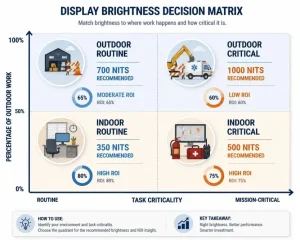
Modern ELD devices should feature large, high-brightness displays (at least 7 inches) with anti-glare coatings for visibility in bright sunlight. Touch interfaces should respond to both bare fingers and gloved hands, accommodating drivers who work in cold climates. The layout should minimize the number of taps required to log duty status changes, access navigation, or retrieve compliance reports.
The Q777’s 7-inch IPS display with high brightness levels ensures visibility in all lighting conditions, while its intuitive Android interface reduces the learning curve for drivers accustomed to smartphones and tablets. Quick-access buttons for duty status changes minimize distraction during driving operations.
Implementation Strategy: Deploying Android 14 ELD Devices in Your Fleet
Successful ELD deployment requires careful planning, driver training, and integration with existing fleet management systems. Start with a pilot program involving 10-20% of your fleet to identify integration challenges and validate compliance outcomes before full-scale rollout.
Establish clear driver training protocols that emphasize the compliance benefits and safety features of your chosen ELD device. Provide multiple training formats—in-person sessions, video tutorials, and quick-reference guides—to accommodate different learning preferences. Assign driver champions who can provide peer support and troubleshoot common issues.
Integrate your ELD device with your existing telematics platform, dispatch system, and payroll software to create a unified data ecosystem. This integration eliminates manual data entry, reduces errors, and provides comprehensive visibility into fleet operations.
Frequently Asked Questions
❓ What makes Android 14 superior to Android 13 for ELD applications?
Android 14 introduces enhanced security patches, improved battery management algorithms, and native support for advanced MDM features. These improvements directly translate to longer device lifespan, better compliance reliability, and easier fleet management at scale.
❓ Can I use a consumer tablet instead of an industrial ELD device to reduce costs?
Consumer tablets lack FMCSA certification, vehicle integration ports, and industrial durability ratings. While initial costs are lower, you’ll face higher replacement rates, compliance risks, and limited functionality. Industrial ELD devices provide significantly better total cost of ownership.
❓ How does the 5000mAh battery in the Q777 compare to other ELD devices?
The 5000mAh battery provides 3+ hours of continuous operation for off-dock usage. For all-day operations, the Q777 connects to vehicle power (9-36V DC), ensuring unlimited runtime while the vehicle is operational. This hybrid approach balances portability with reliability.
❓ Is IP65 rating sufficient for all trucking environments?
IP65 is the industry standard for mobile fleet devices, protecting against dust and water jets. Combined with MIL-STD-810H certification, this rating ensures durability for 99% of trucking operations. Specialized applications (e.g., deep-water port operations) may require higher ratings.
❓ What’s the typical ROI timeline for deploying Android 14 ELD devices?
Most fleets achieve ROI within 12-18 months through reduced HOS violation fines, improved fuel efficiency tracking, decreased equipment replacement costs, and reduced administrative overhead. Larger fleets (100+ vehicles) often see ROI within 6-12 months.
❓ How does the Q777 compare to other 7-inch ELD devices on the market?
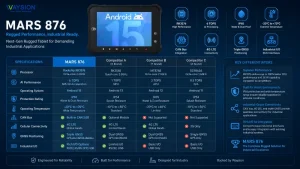
The Q777 combines Android 14, IP65 ruggedness, built-in CAN-bus/OBD-II support, and MDM compatibility in a single device. Its competitive advantage lies in seamless vehicle integration and proven reliability in large-scale deployments (500+ vehicle fleets). Most competitors require external adapters or offer limited vehicle connectivity.
❓ Can I integrate the Q777 with my existing fleet management software?
Yes. The Q777 supports integration with major fleet telematics platforms through APIs and standard data protocols. Waysion provides integration support and can customize connectivity to match your specific software ecosystem.
❓ What security measures protect sensitive driver data on Android 14 ELD devices?
Android 14 includes encryption, secure boot, and regular security patches. MDM platforms add additional layers through app-level permissions, data encryption, and remote wipe capabilities. The Q777 supports enterprise-grade security standards required for sensitive fleet data.
Conclusion: Making the Right Choice for Your Fleet
Selecting the right Android 14 ELD device requires balancing five critical factors: FMCSA compliance, industrial ruggedness, connectivity reliability, vehicle integration depth, and MDM management capability. Consumer tablets fail on all fronts, while purpose-built ELD devices like the Q777 deliver enterprise-grade reliability, compliance assurance, and operational efficiency.
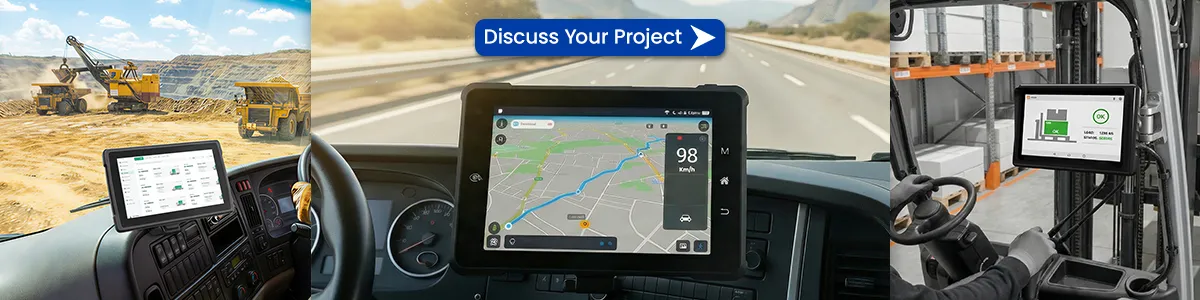
The Q777 represents the convergence of these five essential features in a single 7-inch platform. Its Android 14 foundation, IP65 durability, multi-GNSS connectivity, native CAN-bus integration, and MDM compatibility make it an ideal choice for logistics fleets, mining operations, public transportation, and heavy-duty construction environments.
Your fleet’s compliance, safety, and profitability depend on the quality of your ELD device. Investing in industrial-grade hardware today prevents costly violations, improves operational visibility, and supports long-term fleet growth.
Tags: CAN-bus tablet, rugged Android tablet