- 1. What makes a vehicle tablet suitable for underground mining versus standard industrial applications?
- 2. How does CAN Bus integration improve mining fleet management?
- 3. Why is AHD camera support important for underground mining vehicles instead of IP cameras?
- 4. What connectivity options are essential for underground mining operations?
- 5. How do rugged tablets contribute to mining safety compliance?
Underground mining operations represent one of the most technologically demanding and hazardous industrial environments on Earth. The convergence of confined spaces, extreme temperatures, high humidity, constant vibration, and potentially explosive atmospheres creates a unique set of challenges for any electronic device deployed in these conditions. As mining operations worldwide push deeper and demand greater efficiency, the need for robust, intelligent vehicle-mounted computing solutions has never been more critical. The Mars 876 emerges as a purpose-built answer to these challenges—a next-generation 8-inch rugged vehicle tablet engineered specifically for the unforgiving realities of underground mining operations.
Understanding the Underground Mining Environment
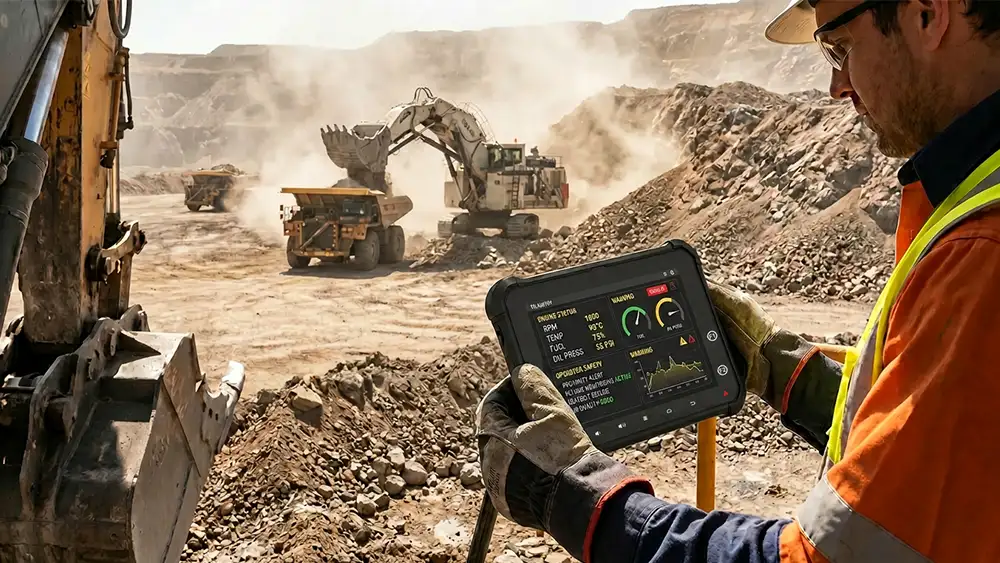
Before examining the technical capabilities of modern vehicle tablets, it is essential to appreciate the environmental stresses that define underground mining. Unlike surface operations, underground mines present a perfect storm of conditions that can destroy conventional electronics within days. Temperatures can swing dramatically from freezing near surface entries to over 60°C in deep workings where geothermal heat accumulates. Humidity levels frequently exceed 95%, creating condensation risks that standard devices simply cannot withstand. The constant presence of silica dust, rock particulates, and chemical exposure from blasting and processing operations means any device must feature fully sealed enclosures with IP68 ratings or higher.
Vibration presents another formidable challenge. Underground haul trucks, loaders, and shuttle vehicles operate on rough, uneven surfaces where continuous vibration can cause component failure and screen breakage in non-ruggedized equipment. The financial impact of equipment failure in mining operations is substantial—a single day of downtime at a mid-sized mine can cost between $50,000 and $250,000 in lost production. This reality makes equipment reliability not merely convenient, but economically critical to operational viability.
Perhaps most importantly, underground mining operations must contend with potentially explosive atmospheres. Methane gas accumulation, coal dust, and other combustible materials create environments where standard electronics could ignite catastrophic incidents. Equipment deployed in these zones must meet stringent ATEX/IECEx certification requirements and MSHA approval standards, ensuring they operate as intrinsic safety devices that cannot serve as ignition sources.
The Evolution of Vehicle-Mounted Computing in Mining
The journey from paper-based operational logs to fully integrated digital systems represents one of the most significant transformations in mining history. Early vehicle-mounted computers were essentially ruggedized laptops bolted to dashboards—functional but limited in their integration capabilities. They operated as isolated data entry points rather than connected intelligence hubs. The modern era demands something fundamentally different: devices that serve as the central nervous system of mining vehicle operations, seamlessly integrating telematics, safety monitoring, fleet management, and real-time communication.
⚡ Key Insight: Modern mining operations report that safety inspection efficiency improved by 70% and communication response time improved by 85% after deploying integrated rugged tablet solutions across their vehicle fleets. These improvements translate directly to reduced incident rates and enhanced regulatory compliance.
The Mars 876 embodies this evolution, powered by Android 15 and the RK3576 processor platform. This combination delivers the computational performance necessary for real-time data processing while maintaining the energy efficiency required for extended shift operations. The 8-inch form factor represents an optimal balance—large enough for detailed operational displays and multi-camera monitoring, yet compact enough to fit within the confined cabins of underground mining vehicles where space is at a premium.
Critical Connectivity for Underground Operations
Connectivity in underground mining has historically been a significant pain point. Standard Wi-Fi access points are often positioned at fixed locations, creating dead zones where field operators experience weak signal strength when attempting to download or upload critical operational data. This connectivity gap is not merely an inconvenience—it can be dangerous, particularly in drill and blast areas where real-time communication with control centers is essential for safety coordination.
The Mars 876 addresses these challenges through multiple connectivity pathways. 4G cellular connectivity enables continuous data transmission even in environments where Wi-Fi infrastructure is sparse or unreliable. The integration of CAN Bus protocols allows direct communication with vehicle engine control units, transmission systems, and onboard diagnostics—providing fleet managers with real-time visibility into vehicle health, fuel consumption, and operational status without requiring additional sensor installations.
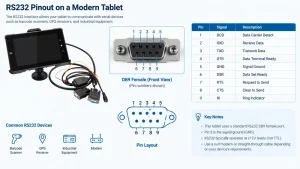
For operations requiring integration with legacy equipment or specialized mining machinery, the inclusion of GPIO, RS232, and RS485 interfaces ensures compatibility with a broad spectrum of industrial equipment. These serial communication ports enable connection to gas detection systems, proximity sensors, ventilation monitors, and other safety-critical devices that form the backbone of modern underground safety protocols.
Multi-Camera Integration for Enhanced Visibility
Underground mining vehicles operate in conditions of severely limited visibility. Dust clouds from drilling and hauling operations, poor lighting in deep workings, and the inherent blind spots of large machinery create dangerous situations where operators cannot see nearby hazards or personnel. The Mine Safety and Health Administration (MSHA) has documented that collisions and driving over unseen edges caused multiple fatalities annually in mining environments, with many incidents being entirely preventable through improved visibility systems.
📹 Safety Critical: The Mars 876 supports 4-channel AHD camera input, enabling comprehensive 360-degree visibility around mining vehicles. This multi-camera capability allows operators to monitor front, rear, and side views simultaneously, effectively eliminating dangerous blind spots that contribute to vehicle-pedestrian incidents.
The AHD (Analog High Definition) camera support is particularly significant for mining applications. AHD technology provides high-quality video transmission over standard coaxial cables with minimal latency—critical for real-time safety monitoring where split-second decisions matter. Unlike IP cameras that may suffer from network congestion or bandwidth limitations in underground environments, AHD cameras deliver consistent, reliable video feeds directly to the vehicle tablet display.
Fleet Management and Telematics Integration
Modern mining fleet management extends far beyond simple vehicle tracking. It encompasses predictive maintenance scheduling, driver behavior monitoring, fuel optimization, compliance reporting, and emergency response coordination. The Mars 876 serves as the onboard hub for these comprehensive telematics functions, collecting and transmitting data that transforms raw operational information into actionable intelligence.
Through CAN Bus integration, the tablet captures critical vehicle telemetry including engine hours, diagnostic trouble codes, fluid levels, and component wear indicators. This data enables predictive maintenance strategies that identify potential equipment failures before they cause costly unplanned downtime. Mining operations that have implemented predictive maintenance through integrated telematics report reducing equipment downtime by up to 25% while extending the operational lifespan of high-value mining assets.
Driver behavior monitoring represents another crucial application. Underground mining vehicles operate in close quarters where speeding, harsh braking, or reckless operation can have catastrophic consequences. The integrated telematics system can track acceleration patterns, speed adherence to site-specific limits, and operational zone compliance through geofencing. When integrated with AI-powered video analytics, the system can detect operator fatigue, distraction, or unsafe behaviors in real-time—triggering immediate alerts that prevent incidents before they occur.
Operational Efficiency and Cost Control
Fuel consumption represents one of the largest operational expenses in mining fleets. Underground haul trucks and loaders consume diesel at extraordinary rates, and inefficient routing or excessive idling can dramatically inflate costs while simultaneously increasing emissions. Real-time telematics data enables fleet managers to identify underutilized vehicles, optimize route assignments, and enforce anti-idling policies that directly impact the bottom line.
Case studies from mining operations worldwide demonstrate the tangible benefits of comprehensive telematics deployment. One Johannesburg-based mining contractor operating 60 haul trucks and 20 light vehicles implemented an integrated fleet management solution and achieved a 27% reduction in idle time, complete elimination of fuel losses, an 18% decrease in maintenance costs, and a 35% reduction in incident rates within just three months of deployment.
Rugged Design for Extreme Conditions
The physical design of any underground mining tablet must account for conditions that would destroy consumer-grade electronics within hours. The Mars 876 is engineered to withstand the full spectrum of mining environmental stresses. Its ruggedized enclosure maintains operational integrity across temperature extremes from -20°C to 60°C, ensuring reliable performance whether operating near freezing surface entries or in the sweltering heat of deep mine workings.
The display technology deserves particular attention. Underground mining cabins present unique visibility challenges—operators may transition from dimly lit tunnels to areas with temporary work lighting, or may need to view displays while wearing polarized safety glasses. High-brightness displays with optical bonding technology eliminate internal reflections and ensure screen readability under all lighting conditions. Anti-reflective coatings reduce glare from overhead lighting and vehicle windshields, while glove-friendly touch interfaces allow operation with the protective equipment that underground workers must wear at all times.
🛡️ Built Tough: MIL-STD-810H compliance ensures the device can withstand the continuous vibration, shock, and impact forces inherent to mining vehicle operations. IP68 sealing protects against dust ingress and submersion in water or slurry—common occurrences in underground environments where water management is a constant operational concern.
Safety Compliance and Regulatory Alignment
Mining operations worldwide operate under increasingly stringent regulatory frameworks governing worker safety, environmental protection, and operational transparency. In the United States, the Mine Safety and Health Administration (MSHA) mandates strict equipment standards and reporting requirements. Similar regulatory bodies in Australia, Canada, South Africa, and other major mining jurisdictions impose comparable obligations.
The Mars 876 facilitates compliance through automated data collection and reporting capabilities. Trip logs, working hours, engine diagnostics, and incident histories are automatically recorded and transmitted to centralized management systems. This automation eliminates the paper-based documentation that historically caused delays, errors, and compliance gaps. Automated reporting supports Environmental, Social, and Governance (ESG) initiatives increasingly demanded by investors and regulatory authorities—providing verifiable data on emissions, fuel efficiency, and operational sustainability metrics.
Emergency communication protocols represent another critical compliance dimension. Underground mines must maintain reliable communication systems for emergency response coordination. The integrated 4G connectivity and support for mesh networking protocols ensure that vehicle-mounted tablets remain connected to surface control centers, enabling immediate alert transmission during incidents and facilitating coordinated evacuation or rescue operations.

Integration with Modern Mining Technologies
The mining industry stands at the threshold of a technological revolution driven by artificial intelligence, Internet of Things (IoT) sensors, and autonomous systems. Vehicle-mounted tablets serve as the interface layer between human operators and these advanced technologies. The Mars 876, running Android 15, provides the software platform necessary to host modern mining applications—from 3D mapping and geological modeling to real-time ventilation monitoring and personnel tracking systems.
Integration with IoT sensor networks enables the tablet to display real-time data from distributed monitoring points throughout the mine. Air quality sensors can transmit carbon monoxide, methane, and particulate level data directly to vehicle displays, alerting operators to hazardous conditions before they become life-threatening. Proximity detection systems can communicate with the tablet to warn operators when their vehicle approaches restricted zones, other vehicles, or personnel wearing tracking beacons.
The RK3576 processor architecture provides sufficient computational power to run edge AI applications locally on the device. This capability enables real-time video analysis for object detection, collision avoidance, and anomaly recognition without requiring constant cloud connectivity—an essential feature in underground environments where network connectivity may be intermittent or bandwidth-limited.
Deployment Considerations for Mining Operations
Successful deployment of vehicle-mounted tablets in mining operations requires careful consideration of installation, power management, and user training. Mining vehicles operate on varied electrical systems, and the Mars 876's wide voltage input range accommodates the diverse power environments found across different vehicle types—from light utility vehicles to massive haul trucks. Intelligent power management ensures the device operates reliably across the full shift duration while protecting against voltage spikes and electrical noise common in heavy-duty vehicle systems.
Mounting solutions must account for the extreme vibration and shock loads in mining vehicles. Professional-grade RAM mounts or custom-fabricated dash integrations ensure the tablet remains securely positioned while allowing operators to adjust viewing angles for optimal visibility. Cable management is equally critical—connections must be strain-relieved and routed away from moving components, hot surfaces, or areas where they could be damaged by cargo or debris.
Operator training represents a final essential component. Even the most capable technology delivers limited value if operators cannot use it effectively. Intuitive Android-based interfaces minimize the learning curve, while customizable dashboards allow operations to prioritize the information most relevant to specific vehicle types and operational roles. Training programs should emphasize not only basic operation but also the safety-critical functions—how to interpret camera feeds, respond to proximity alerts, and utilize emergency communication features.
The Future of Underground Mining Vehicle Technology
As mining operations continue to automate and digitize, the role of vehicle-mounted computing platforms will only expand. The transition toward autonomous haulage systems, remote-controlled equipment, and fully integrated smart mines requires robust, reliable computing infrastructure at the vehicle level. The Mars 876 represents a forward-compatible platform designed to evolve with these industry trends.
The convergence of telematics, video analytics, and AI-driven safety systems on a single vehicle-mounted device eliminates the complexity of managing multiple disconnected systems. Rather than installing separate GPS trackers, dash cameras, diagnostic monitors, and communication radios, mining operations can deploy a single integrated solution that consolidates all functions while reducing installation complexity, maintenance overhead, and total cost of ownership.
For mining operations seeking to enhance safety, improve efficiency, and maintain regulatory compliance in the world's most challenging industrial environments, the Mars 876 vehicle tablet offers a purpose-built solution that addresses the full spectrum of underground mining requirements—from dust-sealed durability to multi-camera safety monitoring, from CAN Bus telematics integration to 4G connectivity in remote environments.
Frequently Asked Questions
1. What makes a vehicle tablet suitable for underground mining versus standard industrial applications?
Underground mining tablets must meet stricter certifications including ATEX/IECEx for explosive atmospheres, MIL-STD-810H for vibration and shock resistance, and IP65 sealing against dust and water ingress. They also require specialized features like CAN Bus integration for vehicle diagnostics, multi-camera AHD support for visibility in dusty conditions, and high-brightness displays readable in low-light environments. Standard industrial tablets typically lack these mining-specific capabilities.
2. How does CAN Bus integration improve mining fleet management?
CAN Bus integration allows the tablet to communicate directly with the vehicle's engine control unit and onboard systems, providing real-time access to engine diagnostics, fuel consumption data, operating hours, and fault codes. This enables predictive maintenance scheduling, fuel efficiency monitoring, and immediate alert generation when mechanical issues arise—reducing unplanned downtime by up to 25% according to industry case studies.
3. Why is AHD camera support important for underground mining vehicles instead of IP cameras?
AHD (Analog High Definition) cameras transmit video over standard coaxial cables with minimal latency and without consuming network bandwidth. In underground environments where network infrastructure may be limited or congested, AHD provides reliable, consistent video feeds for safety monitoring. IP cameras depend on network connectivity and can suffer from latency or dropped frames when bandwidth is constrained—creating dangerous gaps in real-time visibility.
4. What connectivity options are essential for underground mining operations?
Underground mines require multi-layered connectivity including 4G cellular for wide-area communication, Wi-Fi for local zone coverage, and support for mesh networking or satellite fallback in deep workings where traditional signals cannot penetrate. The Mars 876's 4G capability ensures continuous data transmission to surface control centers, while GPIO/RS232/RS485 ports enable integration with legacy mining equipment and specialized safety sensors that may use proprietary communication protocols.
5. How do rugged tablets contribute to mining safety compliance?
Rugged tablets automate the collection and reporting of safety-critical data including vehicle inspection records, operator work hours, incident reports, and equipment diagnostics. This automation eliminates paper-based errors and delays while providing timestamped, verifiable records for regulatory audits. Integration with proximity sensors, gas detection systems, and AI-powered video analytics enables real-time hazard detection and immediate alert generation—directly supporting MSHA and international mining safety standards while reducing reportable safety incidents by up to 40%.
Tags: 8-inch mining vehicle mount computer with CAN Bus, Android 15 rugged tablet for mining telematics, industrial vehicle mount tablet RS232 RS485 GPIO, rugged vehicle tablet for underground mining fleet management, underground mining vehicle computer with AHD camera support