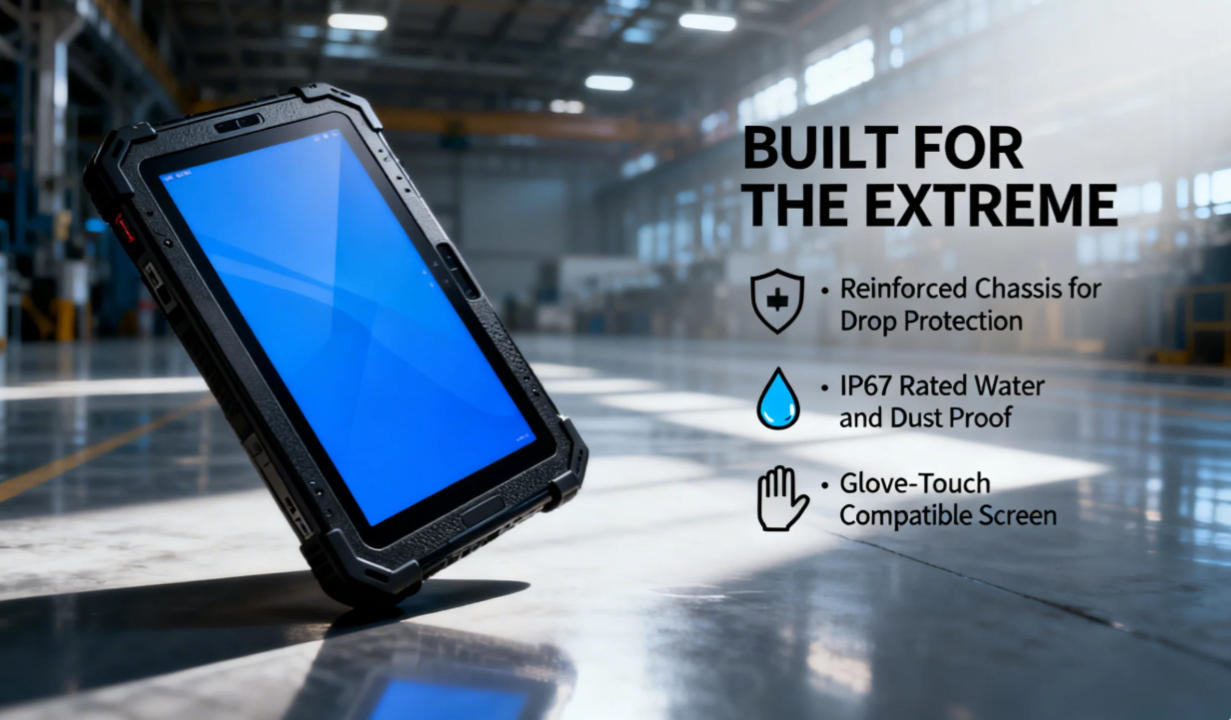
Waysion designs and manufactures rugged Android tablets, fleet MDTs and vehicle-mounted terminals for commercial fleets, public transport, logistics, mining, construction and industrial applications. Because these products may be deployed across different markets and vehicle environments, certification and compliance requirements vary by product model, hardware configuration, wireless module and destination market.
Waysion supports certification planning and documentation for applicable products, helping customers understand which approvals, test reports and declarations may be required for their target market. Certification availability, test scope and documentation depend on the exact product variant and configuration.
Request Certification Documentation
Compliance Is Model- and Market-Specific
A certification is not automatically valid for every product, every hardware configuration or every destination market. A rugged tablet may use different wireless modules, batteries, displays, antennas, enclosures, power supplies or vehicle interfaces depending on the configuration.
For this reason, Waysion treats certification as a model- and configuration-specific requirement.
Before deploying a product, customers should confirm:
- The exact product model and hardware revision
- The destination market or countries of use
- The wireless module and radio configuration
- Battery type, capacity and transport requirements
- Intended application, such as fleet, transit, industrial or consumer use
- Whether the product will be installed in a vehicle
- Whether the customer requires CE, FCC, E-Mark or other market-specific approvals
- Whether custom branding, enclosure changes or software modifications affect compliance
A standard product configuration may have different certification coverage from an OEM-customised version. Hardware or antenna changes, in particular, can affect radio, EMC and safety compliance.


Certifications Supported by Waysion
Depending on the product model, hardware configuration and destination market, Waysion can support the following certification and compliance pathways.
CE Compliance
CE marking may be relevant for products placed on the market in the European Economic Area. For rugged Android tablets and wireless-enabled vehicle terminals, applicable CE requirements may include radio equipment, electromagnetic compatibility, safety and environmental compliance.
Depending on the product configuration, relevant areas may include:
- Radio Equipment Directive, RED
- Electromagnetic Compatibility, EMC
- Low Voltage Directive, LVD
- Restriction of Hazardous Substances, RoHS
- Battery and transport compliance
- Product safety assessment
CE certification is not a single universal certificate. The applicable directives, standards, test reports and Declaration of Conformity depend on the product’s radio configuration, power supply, battery and intended use.
FCC Compliance
For products intended for the United States market, FCC compliance may apply to devices with intentional radiators, such as Wi-Fi, Bluetooth and cellular modules.
Depending on the product configuration, relevant areas may include:
- FCC Part 15 for unintentional radiators
- FCC Part 15 Subpart C for intentional radiators
- Modular approval considerations for wireless modules
- EMC testing
- Radio-frequency exposure assessment
- Labelling and user-information requirements
FCC compliance depends on the final product configuration. A change to the wireless module, antenna, enclosure or installation method can affect the approval path and documentation.
E-Mark for Automotive Applications
E-Mark may be relevant for products intended for use in vehicles, particularly where electromagnetic compatibility and automotive environmental requirements apply.
Depending on the product type, installation environment and destination market, relevant areas may include:
- Automotive EMC requirements
- Vehicle-related electronic equipment compliance
- E-Mark testing and approval support
- Automotive environmental and electrical requirements
E-Mark is especially relevant for fleet MDTs, vehicle-mounted terminals and products installed in commercial vehicles. It is not automatically applicable to every rugged tablet; it depends on the product’s intended vehicle application and regulatory scope.
RoHS Compliance
RoHS compliance relates to the restriction of certain hazardous substances in electrical and electronic equipment.
Depending on the destination market and product configuration, Waysion can support:
- RoHS compliance documentation
- Material and substance compliance information
- Supplier declarations and test documentation
- Product-specific compliance review
RoHS requirements may differ between markets and product categories. Customers should confirm the applicable version and scope for their destination market.
ISO 9001 Quality Management
Waysion’s manufacturing facility is ISO 9001-certified quality management system, reflecting the company’s quality-management system for the development and production of rugged tablets, in-vehicle computers and embedded devices.waysion
ISO 9001 is a quality-management-system certification, not a product-safety or market-access certification. It supports consistent manufacturing and quality processes, but it does not replace product-specific certifications such as CE, FCC or E-Mark.
Environmental and Durability Testing
Rugged tablets and fleet MDTs must operate in environments that include vibration, shock, dust, moisture, temperature changes and direct sunlight. Waysion supports environmental and durability testing for applicable product models.
IP Ingress Protection
Ingress Protection, or IP, ratings describe protection against solids and liquids. Waysion product configurations may support IP65 or IP67 ingress protection, depending on the model.
| IP rating | Protection against solids | Protection against liquids | Typical relevance |
|---|---|---|---|
| IP65 | Dust protected | Protected against water jets | Vehicle cabs, industrial environments, outdoor use |
| IP67 | Dust tight | Protected against temporary immersion | More demanding industrial and outdoor environments |
An IP rating describes ingress protection under specified test conditions. It does not automatically mean that a device is suitable for every liquid exposure, pressure condition, chemical environment or submersion scenario.
MIL-STD-810H Environmental Testing
MIL-STD-810H is a United States military standard that defines environmental test methods for equipment. It is commonly used to assess performance under conditions such as temperature, humidity, vibration, shock, dust and other environmental stresses.
Waysion product configurations may support MIL-STD-810H environmental testing, depending on the model.
Important distinction:
- MIL-STD-810H defines test methods and procedures
- It does not automatically certify that a product meets every possible military requirement
- The applicable test methods, severity levels and pass criteria must be defined for each product and project
Customers should request the specific test scope, test report and applicable product variant before relying on MIL-STD-810H claims for procurement or deployment decisions.
Temperature and Operating Conditions
Fleet and industrial environments can expose devices to heat, cold, humidity and rapid temperature changes. Selected Waysion models are designed to operate in temperatures from -10°C to 60°C.
Operating temperature is different from storage temperature. It is also different from the temperature range supported during charging, high-load operation or continuous vehicle use.
Before deployment, customers should confirm:
- Operating temperature range
- Storage temperature range
- Charging temperature limitations
- Battery performance at low and high temperatures
- Display performance in extreme temperatures
- Thermal management under continuous workloads
Wireless, Battery and Transport Compliance
Rugged Android tablets and fleet MDTs often include lithium batteries, cellular modules, Wi-Fi, Bluetooth and GNSS receivers. These components can introduce additional compliance requirements.
Wireless Module Compliance
Cellular, Wi-Fi and Bluetooth modules may have their own module certifications. However, module certification does not automatically transfer to a finished product.
The final product configuration must consider:
- Antenna type and placement
- Antenna gain and radiation characteristics
- Enclosure material and shielding
- Modular approval conditions
- Host product integration requirements
- Destination-market radio regulations
- Labelling and user documentation
For OEM and ODM projects, wireless compliance should be reviewed before finalising the enclosure, antenna layout and hardware configuration.
Battery and Transport Compliance
Lithium batteries may be subject to transport, safety and labelling requirements depending on battery chemistry, capacity, packaging and shipping method.
Depending on the project, compliance planning may include:
- Battery specification and capacity
- UN38.3 transport testing considerations
- Packaging and labelling requirements
- Air, sea and ground transport rules
- Destination-market battery regulations
- Battery safety documentation
Battery and transport rules can change by carrier, route and destination market. Customers should confirm the latest requirements with their logistics provider before shipment.
Documentation Available from Waysion
Waysion can provide documentation to support procurement, integration and market-access planning for applicable products.
Depending on the product model, hardware configuration and destination market, available documentation may include:
- Certificate of Conformity
- Declaration of Conformity, DoC
- CE test reports
- FCC test reports
- E-Mark documentation
- RoHS documentation
- IP test reports
- MIL-STD-810H test reports
- ISO 9001 certificate
- Product specification sheet
- Safety data sheet, where applicable
- Battery and transport documentation
- Wireless module documentation
- Country-specific compliance guidance
Documentation availability depends on the exact product variant, certification scope and customer requirements. Waysion does not represent that every document is available for every model or every market.
How to Request Certification Documents
To request certification or compliance documentation, provide the following information:
- Product model number
- Hardware revision or configuration
- Destination market or countries
- Intended application and installation environment
- Wireless module configuration
- Battery configuration
- Required certification type
- Required document type
- Project timeline
- Purchase order or project reference, if applicable
Waysion’s team can review the request and identify the applicable documents, test reports and certification pathway for the requested configuration.
Request Certification Documentation
Certification for OEM and ODM Projects
For OEM and ODM projects, certification should be planned at the beginning of the project, not after the product design is complete.
Custom hardware, antennas, enclosures, power configurations and wireless modules can affect compliance. Early planning helps reduce redesign risk, certification delays and market-entry costs.
For an OEM or ODM rugged Android tablet project, Waysion can support:
- Destination-market compliance review
- Certification planning
- Wireless module and antenna review
- Battery and transport compliance planning
- Test planning
- Documentation preparation
- Certification support for applicable configurations
- Compliance guidance for customised product variants
For OEM customisation such as branding, preloaded software or custom BIOS, typical project volumes start at 300 units. Standard models can be requested for evaluation without a minimum order quantity.
Frequently Asked Questions
Do all Waysion products have the same certifications?
No. Certification coverage varies by product model, hardware revision, wireless configuration, battery configuration and destination market.
Does CE certification apply to every Waysion product?
No. CE requirements depend on the product configuration, radio equipment, power supply, battery and destination market. Applicable CE documentation and directives must be confirmed for the exact product variant.
Does FCC certification apply to every Waysion product?
No. FCC requirements depend on the product’s radio configuration and destination market. Products with Wi-Fi, Bluetooth or cellular modules may require FCC-related compliance, subject to the final configuration.
Does E-Mark apply to every rugged tablet?
No. E-Mark is relevant for certain automotive-related applications and vehicle environments. It is not automatically applicable to every rugged tablet or fleet MDT.
Does IP65 or IP67 mean the product is waterproof?
No. IP ratings describe protection against ingress of solids and liquids under defined test conditions. They do not guarantee protection in every water-exposure, pressure or chemical environment.
Does MIL-STD-810H mean the product is military certified?
No. MIL-STD-810H defines environmental test methods. A product may be tested to selected MIL-STD-810H methods, but that does not automatically mean it meets every military requirement.
Can Waysion provide test reports?
Yes. Test reports may be available for applicable product models and configurations. Customers should specify the model, hardware revision, destination market and required certification type.
Can Waysion support certification for customised OEM products?
Yes. Certification should be planned early for OEM and ODM projects, especially when the project involves custom antennas, wireless modules, enclosures, batteries or vehicle-related applications.
Talk to Waysion About Compliance
Whether you are deploying rugged Android tablets in Europe, North America, the Middle East, Asia-Pacific or another market, Waysion can help you identify the certification and documentation requirements for your product configuration.
Contact Waysion for:
- Certification and compliance planning
- CE, FCC, E-Mark and RoHS documentation
- IP and MIL-STD-810H test documentation
- Battery and transport compliance guidance
- Wireless module compliance review
- OEM/ODM certification planning
- Product-specific test reports
Request Certification Documentation