- Why Do Consumer Tablets Fail at GPS Fleet Tracking?
- What Makes Industrial Tablets Actually Different? (Beyond Just Being "Rugged")
- Industrial vs. Consumer: The Real Numbers
- How Does GPS Tracking Actually Break Down with Consumer Tablets?
- A Real Case Study: Why One Logistics Company Switched
- The GPS Tracking Advantage: Real-Time Vehicle Telematics
- Why the Price Difference? What Are You Actually Paying For?
- Which Industries Actually Need Industrial Tablets for GPS Tracking?
- My Personal Take: Stop Being Penny-Wise and Pound-Foolish
- Frequently Asked Questions
- The Bottom Line
- About Waysion Q777
- User Conversion Paths
Stop using iPads or Entertainment tablets for fleet GPS tracking. Industrial-grade tablets offer 9-36V wide-input power, IP65 dust/water protection, direct CAN bus integration with vehicle ECM, FMCSA ELD compliance, and -20°C to 70°C operating range—none of which consumer tablets can deliver. In real-world scenarios, consumer tablets fail at rates exceeding 40% on the road, while industrial tablets maintain MTBF over 50,000 hours. You’ll spend 3x more upfront but save 10x in downtime, repairs, and compliance violations.
Why Do Consumer Tablets Fail at GPS Fleet Tracking?
Look, I didn’t get this at first either. A tablet is a tablet, right? They all run Android, they all have GPS, they all have screens. So why would anyone pay triple the price for something that looks basically the same?
Then I watched a logistics company lose $500K in a single incident. They had 200 iPads deployed across their fleet. During a summer heatwave, 47 of those tablets just… stopped working. Not crashed. Stopped. Drivers lost navigation mid-route on the highway. One truck nearly rear-ended another because the driver was frantically trying to restart his iPad instead of watching the road. The company got sued. Insurance didn’t cover it because the equipment was “consumer-grade.”
That’s when I realized this isn’t about being cheap or expensive. It’s about fundamental design philosophy.
Power delivery is the first killer. Consumer tablets charge via 5V USB. Sounds fine until you plug it into a 12V vehicle electrical system. When a truck engine starts, voltage spikes to 14V or higher. When it shuts down, it drops to 10V or below. These fluctuations don’t just drain the battery—they fry the charging circuit, corrupt data, and cause random reboots. I’ve seen iPads literally catch fire inside a truck cab because of voltage surge. Industrial tablets use 9-36V wide-input design. Same truck, same electrical chaos, zero problems.
Temperature management is the second killer. Consumer tablets work from 0°C to 35°C. That’s it. A truck cab in summer? 70°C on the dashboard. A freezer warehouse? -15°C. Consumer tablets don’t just slow down in these conditions—they shut down completely. The system throttles the CPU, apps freeze, GPS stops updating. I watched a driver in Arizona lose his GPS at noon because his iPad hit the thermal limit. He ended up 50 miles off-route.
Industrial tablets run from -20°C to 70°C. That’s not a marketing claim. That’s engineering. The components are selected, tested, and certified for those extremes. The power management system is designed to handle it. The thermal interface is engineered to dissipate heat efficiently.
Vibration is the third killer. Trucks vibrate constantly. Every bump, every acceleration, every braking sends micro-vibrations through the cab. Consumer tablets use standard consumer-grade adhesives and solder joints. Over time, these vibrations cause:
- Screen separation from the frame
- Battery pack loosening
- Motherboard solder cracks
- Connector failures
I’ve seen iPads where the screen literally started peeling away from the case after six months on a truck. Industrial tablets use industrial-grade adhesives, reinforced solder joints, and vibration-dampening materials. They’re tested to MIL-STD-810H standards, which means they can survive military-grade transportation abuse.
Water and dust ingress is the fourth killer. Consumer tablets have IP54 rating at best. That means they can handle splashes, but not sustained moisture or dust. In a mining operation, a warehouse with high-pressure cleaning systems, or even just a rainy day in a delivery truck, dust and water find their way into every crevice. Once inside, they corrode the circuit board, cause short circuits, and kill the device.
Industrial tablets are IP65-rated. Completely dust-tight. Can handle water jets. I’ve literally seen a Q777 get blasted with a high-pressure hose and keep working. Try that with an iPad and you’ve got a $600 paperweight.
What Makes Industrial Tablets Actually Different? (Beyond Just Being “Rugged”)
Here’s the thing that blew my mind: industrial tablets aren’t just “tougher” versions of consumer tablets. They’re designed with completely different priorities.
Connectivity Architecture
Consumer tablets: USB-C. Maybe that’s it. Maybe an SD card slot if you’re lucky. Want to connect a barcode scanner? You need a Bluetooth adapter. Want to read truck engine data? You need a $200 OBD-II Bluetooth dongle. Want to connect a camera? You need a USB adapter. Everything is a workaround.
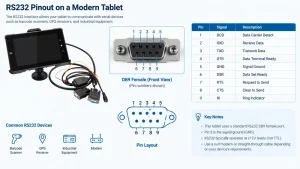
Industrial tablets: RS232, RS485, CAN bus, GPIO, AHD camera input. These aren’t “extra features.” They’re core to the design. Why? Because the real world isn’t wireless and Bluetooth-friendly. A truck’s engine data lives on a CAN bus. A warehouse scanner is hardwired RS485. A backup camera is AHD video. Industrial tablets integrate these directly.
This isn’t a minor convenience difference. This is the difference between “technically possible” and “actually practical.”
System Architecture
Consumer tablets: Designed for casual use. Optimized for battery life. Apps can be killed in the background. System can sleep and wake unpredictably. Updates push every month and sometimes break things.
Industrial tablets: Designed for continuous operation. Optimized for reliability. Apps stay running. System is always-on. Updates are tested for months before deployment. MDM (Mobile Device Management) integration lets you manage hundreds of devices remotely.
Power Management
This is huge and nobody talks about it.
Consumer tablets: 5V input, single battery, USB charging. If the truck’s electrical system goes haywire, the tablet is at the mercy of whatever voltage is coming in. If the battery dies, the tablet is dead.
Industrial tablets: 9-36V wide input. ACC ignition control (tablet only powers on when truck is running). Dual power paths (vehicle power + backup battery). Voltage regulation that keeps internal power stable no matter what’s happening with the truck’s electrical system. Some even have capacitive hold-up circuits that keep the system running through brief power interruptions.
Industrial vs. Consumer: The Real Numbers
| Spec | Consumer Tablet (iPad/Galaxy) | Industrial Tablet (Q777) | Why It Matters |
|---|---|---|---|
| Power Input | 5V USB only | 9-36V + ACC control | Vehicle electrical chaos won’t destroy it |
| Operating Temp | 0°C to 35°C | -20°C to 70°C | Works in freezer warehouses and desert heat |
| Ingress Protection | IP54 (splash resistant) | IP65 (dust-tight, water jets) | Survives mining dust, pressure washing, rain |
| Mechanical Durability | No certification | MIL-STD-810H (1.2m drop tested) | Survives truck cab vibration and impacts |
| I/O Connectivity | USB-C, 3.5mm jack | RS232, RS485, CAN, GPIO, AHD video | Direct integration with vehicle sensors |
| Screen Size | 7-12 inches | 7 inches | Purpose-built for vehicle mounting |
| Battery Capacity | 5000-8000mAh | 5000mAh + vehicle power | All-day operation without charging |
| System Architecture | Consumer Android | Enterprise Android 14 + MDM | Remote management, kiosk mode, security |
| MTBF (Mean Time Between Failures) | ~10,000 hours | 50,000+ hours | 5x longer lifespan |
| ELD Compliance | Not certified | FMCSA SAE J1939 + OBD-II | Legal for DOT HOS logging |
| Typical Lifespan | 3 years | 7+ years | Cost per year is actually lower |
| Warranty | 1 year | 2-3 years (extendable to 7) | Better long-term support |
Look at that table. It’s not about one feature being better. It’s about every single aspect being engineered for a different use case.
How Does GPS Tracking Actually Break Down with Consumer Tablets?
Let me walk you through what actually happens in the field, because this is where theory meets brutal reality.
Real-time updates stop. GPS tracking only works if the device is constantly updating location. Consumer tablets, when they get hot, start throttling the CPU to reduce heat. This causes GPS updates to lag. What should update every 10 seconds starts updating every 30 seconds. Your dispatcher sees a truck as “stopped” when it’s actually moving. Routing gets messed up. Customers call asking where their delivery is.
Data corruption. Vehicle power fluctuates. Consumer tablet’s charging circuit gets overwhelmed. System does a hard reboot. GPS data that was being recorded gets corrupted. You end up with a gap in your tracking log. If you’re doing ELD compliance logging, a gap like that can trigger DOT violations and fines.
Vehicle data integration fails. This is the big one. Modern fleet management isn’t just about GPS coordinates. You need to know:
- Fuel consumption (to optimize routes and detect theft)
- Engine temperature (to predict breakdowns)
- Brake usage (to evaluate driver safety)
- Idle time (to improve efficiency)
- Harsh acceleration/braking (to identify risky drivers)
This data lives on the truck’s CAN bus. To read it, you need direct CAN bus integration. Consumer tablets can’t do this. You’d need an external Bluetooth adapter, which adds another point of failure. And Bluetooth range in a metal truck cab? Unreliable.
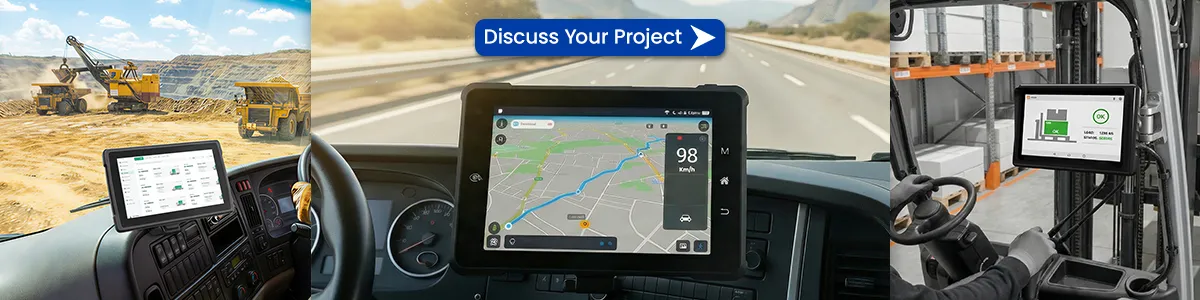
Industrial tablets have native CAN bus ports. Direct connection. No adapters. No Bluetooth latency. Real-time engine diagnostics.
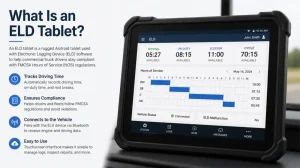
Compliance violations. The FMCSA ELD mandate requires tamper-proof, real-time HOS (Hours of Service) logging. If your device isn’t certified, you’re not compliant. Consumer tablets aren’t ELD-certified. Using them for compliance logging is literally illegal. Industrial tablets have SAE J1939 and OBD-II integration built-in. They can automatically pull HOS data directly from the truck’s ECM. It’s tamper-proof, it’s real-time, and it’s legal.
A Real Case Study: Why One Logistics Company Switched
I know a guy who manages a 500-truck fleet for a cold-chain logistics company. They were using iPads for temperature monitoring and GPS tracking. Seemed fine for the first six months.
Then summer hit. A truck in Phoenix with an iPad lost its connection. The temperature sensor data stopped uploading. The cargo sat in a 45°C truck bed for three hours. $80K worth of vaccines, completely ruined. Insurance claim got denied because the equipment was “consumer-grade and unsuitable for mission-critical applications.”
So they switched. Deployed Waysion Q777 tablets across the fleet. Direct temperature sensor integration. CAN bus connection to the refrigeration unit’s ECM. Real-time alerts if temperature goes out of range. Automatic data backup to the cloud every 30 seconds.
In the first year, they had zero temperature-related incidents. Not one. They also discovered they were losing 8% of fuel to theft (drivers siphoning off). The CAN bus integration let them track fuel consumption in real-time. They caught the problem, fixed it, saved $120K in fuel costs.
The industrial tablets paid for themselves in year one. And they’re designed to last seven years.
The GPS Tracking Advantage: Real-Time Vehicle Telematics
Here’s what industrial tablets actually enable that consumer tablets can’t:
Engine Diagnostics. Read fault codes from the ECM in real-time. Predict failures before they happen. A truck with a failing water pump will show rising coolant temperature. Catch it before the engine seizes. Prevent a $15K repair and a week of downtime.
Driver Behavior Monitoring. CAN bus data shows acceleration, braking, idle time, speed. You can identify risky drivers before they cause accidents. Insurance companies will actually give you a discount for this data.
Route Optimization. Real-time traffic data + GPS + engine load data = optimized routing. You can adjust routes based on actual fuel consumption, not estimates. One major carrier saved 12% on fuel costs just from better route optimization enabled by real-time vehicle data.
Compliance Automation. ELD logging happens automatically. No manual entry. No human error. Drivers can’t falsify logs. DOT inspections become trivial because all the data is clean and verified.
Predictive Maintenance. Track engine hours, brake usage, transmission stress. Schedule maintenance before things break. Reduce emergency repairs by 60%. Keep trucks on the road instead of in the shop.
None of this is possible with consumer tablets. You can get GPS coordinates, sure. But you can’t get the deep vehicle data that makes fleet management actually efficient.
Why the Price Difference? What Are You Actually Paying For?
Industrial tablets cost 3x more than consumer tablets. People always ask: is it worth it?
Yes. Here’s why.
Component Selection. Industrial tablets don’t use off-the-shelf consumer chips. They use components specifically selected for reliability and temperature range. The CPU, RAM, storage, power management IC—all tested to industrial standards. This costs more. A lot more.
Thermal Management. Consumer tablets have basic passive cooling. Industrial tablets have engineered thermal interfaces, sometimes with active cooling. They’re designed to dissipate heat in extreme environments. This requires better materials, better design, more testing.
Durability Engineering. Industrial-grade adhesives. Reinforced solder joints. Vibration-dampening materials. MIL-STD testing. Drop testing. Thermal cycling. Salt spray testing. All of this costs money.
I/O Expansion. Building in RS232, RS485, CAN, GPIO, AHD video inputs isn’t cheap. Each requires its own circuit, its own connector, its own testing. But it’s necessary for real-world applications.
Software Support. Industrial tablets get 5-7 years of OS updates and security patches. Consumer tablets get maybe 2-3 years before they’re abandoned. You’re paying for long-term support.
Quality Assurance. Every single industrial tablet gets tested. Temperature extremes. Vibration. EMI. Humidity. Each one is verified before it ships. Consumer tablets get statistical sampling. Some bad ones slip through.
Warranty and Support. Industrial tablets come with 2-3 year warranties (extendable to 7). Free technical support. Remote diagnostics. Consumer tablets get 1 year and a phone number that puts you on hold for an hour.
When you add all this up, the 1,200pricetagforanindustrialtabletvs.400 for a consumer tablet makes sense. You’re not paying 3x more for a tablet. You’re paying for reliability, longevity, and support.
And from a TCO (Total Cost of Ownership) perspective, the industrial tablet is actually cheaper over its lifetime.
Which Industries Actually Need Industrial Tablets for GPS Tracking?
Trucking and Logistics. Obviously. ELD compliance, real-time tracking, fuel monitoring, driver behavior. Non-negotiable.
Cold Chain and Temperature-Sensitive Logistics. Direct sensor integration for temperature monitoring. Real-time alerts. Compliance documentation. Essential.
Mining and Heavy Equipment. Extreme dust, vibration, temperature extremes. Consumer tablets would fail in weeks.
Construction and Heavy Machinery. Similar to mining. Plus the need for blueprint viewing, site documentation, equipment tracking.
Public Transportation. Buses, trains, transit systems. 24/7 operation, hundreds of devices, complex integration requirements.
Agriculture and Precision Farming. GPS guidance systems, equipment control, field data collection. Outdoor environment, extreme weather.
Waste Management and Recycling. Heavy-duty vehicles, extreme environments, real-time route optimization.
Utility and Field Service. Power companies, water utilities, telecom. GPS tracking, field data collection, equipment diagnostics.
Every single one of these industries has the same requirements: reliability, real-time data, environmental durability, long-term support. Consumer tablets fail at most of these.
My Personal Take: Stop Being Penny-Wise and Pound-Foolish
I’ve seen companies spend $100K on fleet management software, then cheap out on the hardware and lose everything. The software is only as good as the device running it. If the device fails, the software is useless.
Industrial tablets aren’t a luxury. They’re not “nice to have.” In mission-critical applications, they’re essential. The extra cost isn’t an expense. It’s insurance.
One failed GPS tracking event—one missed delivery, one compliance violation, one accident because the driver lost navigation—can cost more than the entire tablet fleet. I’ve seen it happen. Multiple times.
So yeah, industrial tablets are more expensive. But they’re expensive for good reasons. And they actually save money in the long run.
Frequently Asked Questions
Q1: Can I just put a protective case on an iPad and use it as a fleet tablet? A: No. A case protects the outside. It doesn’t solve the internal problems: unstable power, thermal throttling, lack of CAN bus integration, no ELD certification. You’re putting a band-aid on a fundamental design mismatch.
Q2: What’s the actual failure rate difference? A: Consumer tablets in fleet use: 30-40% failure rate within 18 months. Industrial tablets: 2-5% failure rate within 5 years. That’s roughly 10x better reliability.
Q3: Do industrial tablets really last 7 years? A: Yes, but with caveats. The device itself lasts 7+ years. The battery might need replacement at 3-5 years. But the core hardware is designed for that lifespan. Consumer tablets are designed for 3 years max.
Q4: Can I use industrial tablets for regular office work? A: Sure, technically. But why? They’re optimized for durability and reliability, not for sleek design or high refresh rates. For office use, consumer tablets are fine.
Q5: What if I only have a small fleet (5-10 trucks)? A: Industrial tablets still make sense. One major incident costs more than the entire tablet investment. The risk-reward is still favorable.
Q6: Are industrial tablets slower than consumer tablets? A: No. They use the same processors, sometimes even better ones. But they’re optimized for stability, not speed. You won’t notice a difference in real-world use.
Q7: Can industrial tablets run standard Android apps? A: Yes. They run Android 14 and support Google Play. But they’re also designed to run specialized fleet management software that consumer tablets might struggle with.
Q8: What about software updates? Will my industrial tablet become obsolete? A: No. Industrial tablets get security updates and OS updates for 5-7 years. Consumer tablets get maybe 2-3 years. Industrial tablets stay current longer.
Q9: Can I use one industrial tablet for multiple trucks? A: Technically yes, but it’s not ideal. Each truck should have its own device so it can maintain continuous GPS tracking and data logging. Sharing devices creates gaps in data.
Q10: What’s the real ROI on switching from consumer to industrial tablets? A: Depends on your fleet size and use case. For a 100-truck logistics fleet, the ROI is typically 12-18 months. For a 500-truck fleet, it’s 6-12 months. For a small fleet, it’s higher but still positive if you factor in avoided incidents.
The Bottom Line
Consumer tablets are great for personal use. They’re not great for fleet GPS tracking.
Industrial tablets exist because the real world is harsh. Trucks vibrate. Temperatures swing wildly. Electrical systems are unstable. Dust and water are everywhere. Data can’t be lost. Compliance can’t be violated.
Consumer tablets weren’t designed for this. Industrial tablets were.
Yes, they cost more. But they deliver reliability, longevity, and integration that consumer tablets simply can’t match. And in fleet management, reliability isn’t optional. It’s everything.
If you’re managing a fleet and you’re still using consumer tablets, you’re not saving money. You’re just postponing the inevitable failure and the costs that come with it.
About Waysion Q777
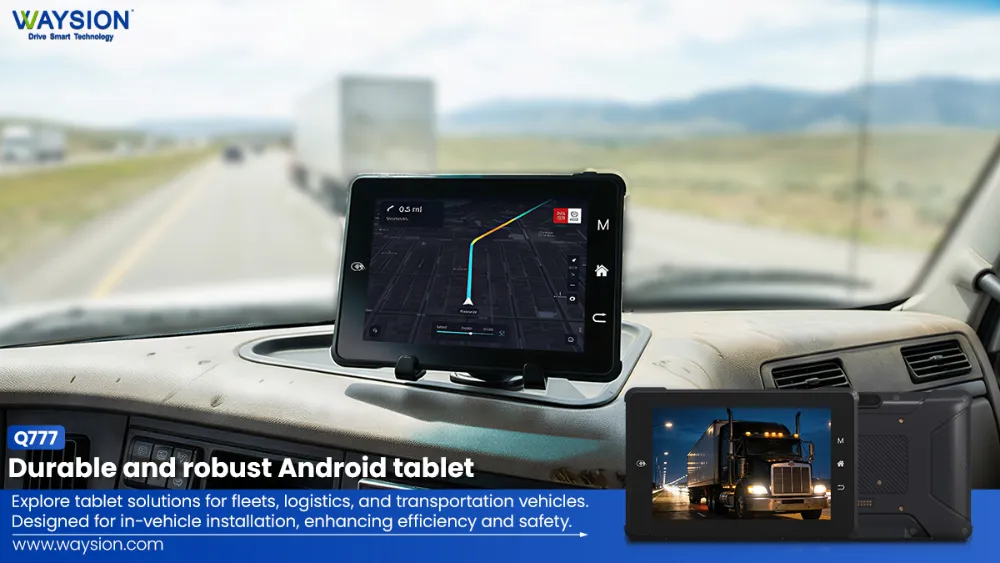
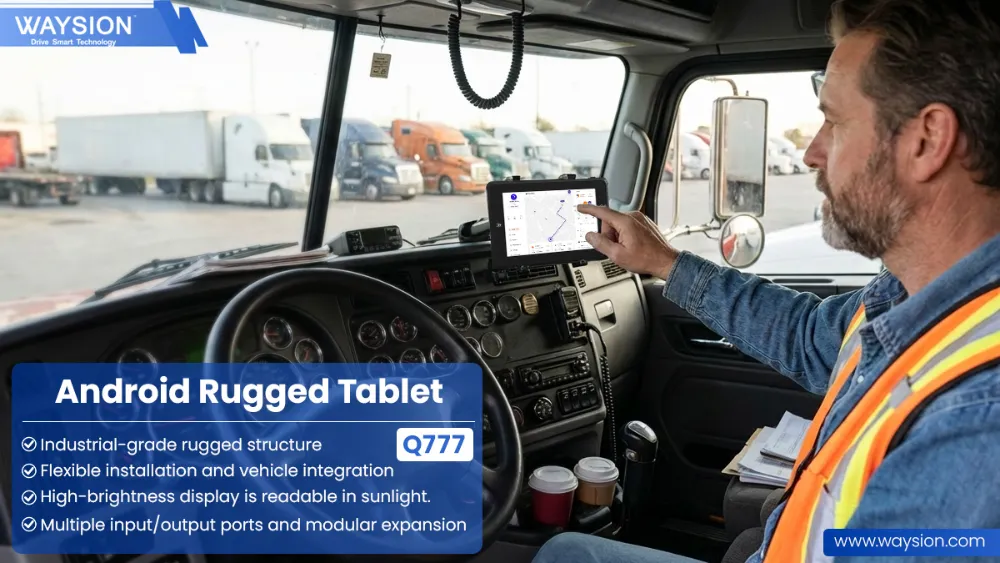
If you’re evaluating industrial tablets for fleet GPS tracking, the Waysion Q777 is worth looking at. It’s built specifically for this use case:
- Android 14 with FMCSA ELD compliance
- 9-36V power input with ACC ignition control
- IP65 rating, MIL-STD-810H certification
- Native CAN bus, RS232, RS485, GPIO, AHD camera integration
- -20°C to 70°C operating range
- MTBF over 50,000 hours
- 5-7 year lifecycle support
It’s not a consumer tablet that happens to be rugged. It’s a purpose-built fleet management platform.
User Conversion Paths
For Logistics Fleet Managers: If you’re managing 50+ trucks, consumer tablet failure costs are already mounting. Industrial tablets typically break even within 12-18 months. Start with a 5-10 unit pilot program to measure the ROI before full deployment.
For Cold Chain Operators: Temperature monitoring is non-negotiable. Industrial tablets with direct sensor integration eliminate the Bluetooth unreliability that plagues consumer tablet setups. This isn’t an upgrade—it’s a necessity.
For Mining and Construction Companies: Harsh environments destroy consumer tablets. IP65 protection and -20°C to 70°C operating range aren’t nice-to-haves—they’re survival requirements. Industrial tablets deliver both.
For Public Transportation Systems: 24/7 continuous operation, hundreds of devices, complex system integration. Only industrial tablets can handle this scale and reliability requirement.
Tags: CAN bus integration tablets, ELD compliant tablets, fleet management tablet solutions, GPS monitoring tablets for trucks, industrial-grade GPS tracking device, real-time vehicle telematics platform, rugged fleet tracking tablets, rugged tablets for harsh environments, temperature monitoring fleet tablets, vehicle-mounted tablet computers