Embedded Linux Tablet Engineering
Embedded Linux Tablets: A Practical Platform for Rugged Vehicle Computing
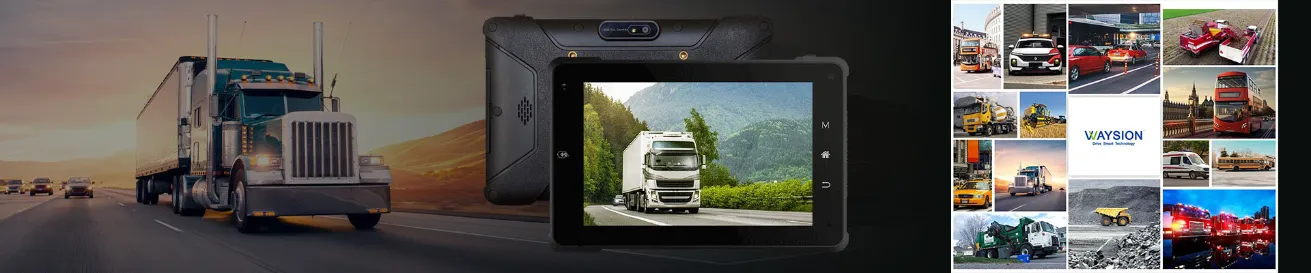
An embedded Linux tablet is more than a rugged display with an operating system. It is a controllable edge-computing platform that connects vehicle CAN Bus data, cameras, GNSS, LTE, peripherals, and fleet software into a dependable operational workflow. For teams deploying rugged vehicle tablets, fleet MDTs, and industrial Android/Linux hardware, Linux provides the flexibility to build a system that is secure, maintainable, and designed for years of field use.
Bottom line: choose an embedded Linux tablet when your project needs direct hardware control, custom applications, deterministic integration with vehicle systems, and a software lifecycle that can be maintained across a fleet. Choose Android when consumer-style app distribution, driver UX, and mobile-device management are the priority. The strongest vehicle platforms support both paths.
What Is an Embedded Linux Tablet?
An embedded Linux tablet is an ARM-based industrial tablet or vehicle-mounted mobile data terminal running a tailored Linux environment, commonly Debian, Ubuntu, Yocto-based Linux, or a supplier-supported Linux BSP. Unlike a general-purpose consumer tablet, it is designed to operate as part of a larger machine or fleet system: reading vehicle data, controlling peripherals, capturing video, communicating with cloud platforms, and running business-critical applications.
The Yocto Project defines embedded Linux as a customizable system-building approach: it provides tools, templates, and methods for creating tailored Linux images for connected edge devices across different hardware architectures. It is a collaborative project under the Linux Foundation and is widely used to build purpose-built embedded and IoT systems.

Usefulness: Why Fleets Choose Embedded Linux
The usefulness of an embedded Linux tablet comes from its ability to solve a specific operational problem rather than simply provide a screen. A logistics operator may need J1939 engine data and proof-of-delivery workflows. A mining operator may need camera inputs, CAN diagnostics, and offline resilience. A precision-agriculture team may need RTK positioning and implement-control integration.
Linux makes these scenarios practical because developers can control the OS image, background services, drivers, security policies, update process, and application stack. This is particularly valuable for rugged Linux tablets for industrial use, where software must remain stable in vehicles, warehouses, construction sites, and remote field environments.
- Custom fleet applications: Run dispatch, navigation, ELD, scanning, maintenance, and driver-safety software without relying entirely on a mobile app store.
- Vehicle-system integration: Connect CAN Bus, J1939, OBD-II, GPIO, RS232/RS485, Ethernet, cameras, and sensors through a unified terminal.
- Edge data processing: Process camera, location, diagnostic, and operational data locally before sending only relevant information to the cloud.
- Controlled updates: Manage firmware, applications, security patches, and device configurations through a controlled deployment process.
- Long-term platform control: Retain the ability to maintain, audit, and evolve the software stack across a multi-year fleet lifecycle.
Utility: What It Delivers in the Field
The utility of an embedded Linux tablet is measured in daily operational value: fewer disconnected workflows, faster access to vehicle data, more reliable driver tools, and less dependence on fragmented hardware. In a commercial vehicle, the terminal becomes the interface between the driver, the vehicle, and the back-office system.
Fleet Management
Combine GNSS tracking, dispatch, job status, driver communication, proof of delivery, and vehicle diagnostics in one rugged in-cab terminal.
Public Transportation
Support driver consoles, passenger information, automated announcements, fare workflows, route tracking, and CCTV integration.
Mining & Construction
Operate machine guidance, payload monitoring, camera inputs, diagnostics, and operator workflows in dusty, vibrating environments.
Precision Agriculture
Use RTK GNSS, field mapping, implement control, and agricultural fleet data to support more precise field operations.
Warehouse & Forklifts
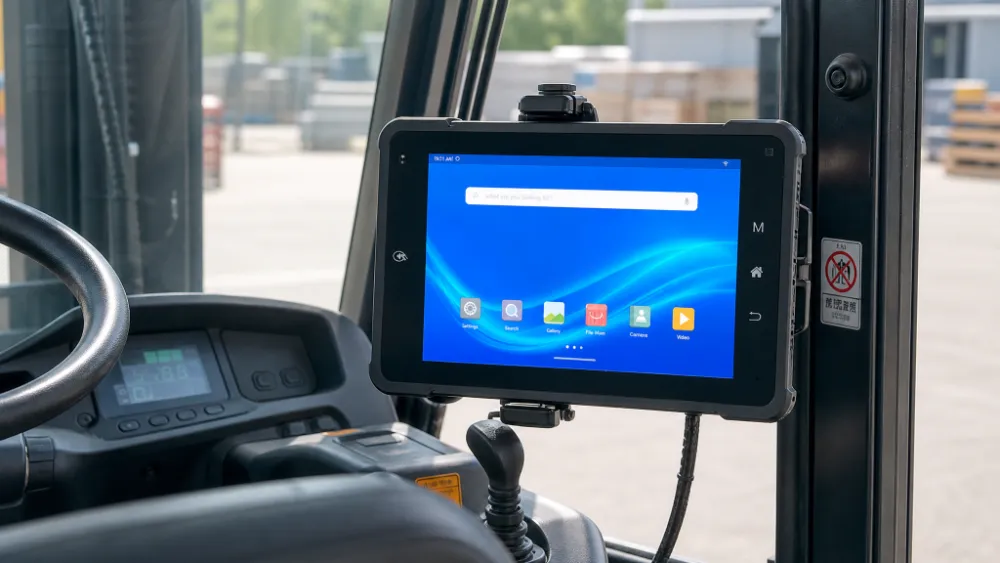
Enable scanning, inventory tasks, yard management, vehicle-mounted workflows, and warehouse management system integration.
Taxi & Ride-Hailing
Integrate dispatch, meter peripherals, payment accessories, navigation, LTE connectivity, and driver-facing applications.
Embedded Linux vs. Android for Vehicle Tablets
Both operating systems can power a rugged vehicle tablet, but they serve different engineering and business priorities. Android is often preferred for driver-facing applications, commercial app ecosystems, and enterprise mobile-device management. Embedded Linux is preferred when the project needs deeper system control, custom images, direct hardware integration, and a highly specialized software stack.
| Dimension | Embedded Linux Tablet | Android Vehicle Tablet |
|---|---|---|
| Primary strength | Custom system control and industrial integration | Familiar app ecosystem and driver UX |
| Best for | CAN/J1939 systems, edge processing, custom peripherals, specialized fleet platforms | MDM, kiosk mode, driver apps, rapid app deployment |
| OS customization | High: kernel, drivers, services, root filesystem, update strategy | Moderate: BSP, system apps, MDM, device policies |
| Integration model | Direct access to Linux APIs, serial interfaces, GPIO, CAN, and custom services | SDK, Android services, peripherals, and enterprise management tools |
| Typical buyer | System integrators, OEMs, industrial software teams | Fleet operators, transit agencies, delivery and mobility providers |
Waysion’s product family addresses both requirements: current fleet MDTs support Android 14 or Android 15, while selected models—including the Mars 876—offer a Linux BSP with kernel source for embedded applications.
What Makes a Rugged Embedded Linux Tablet Vehicle-Ready?
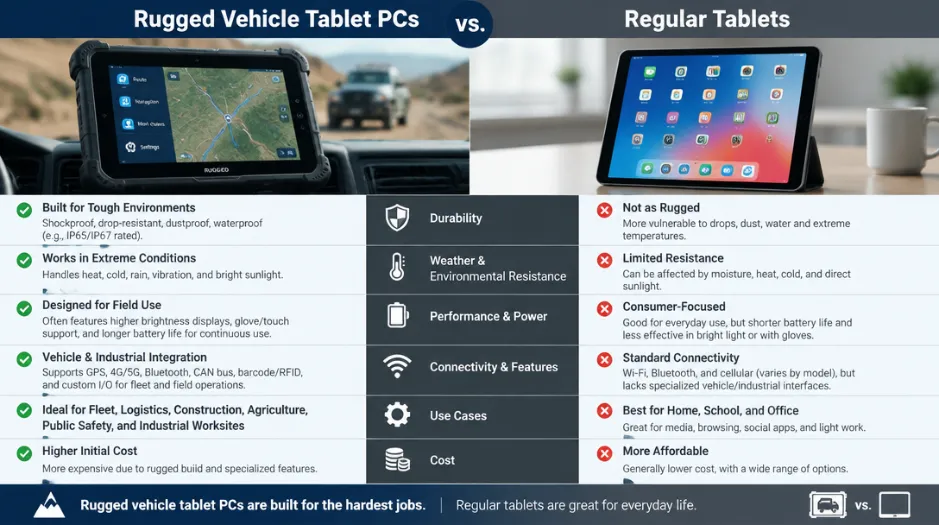
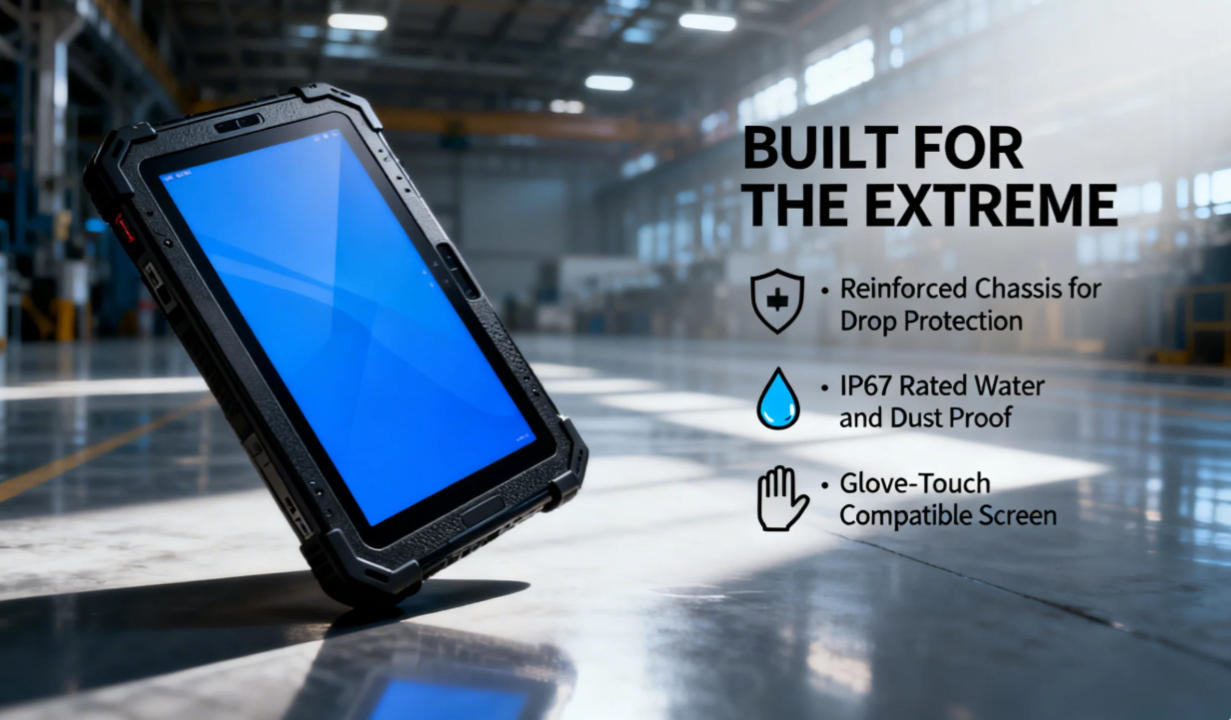
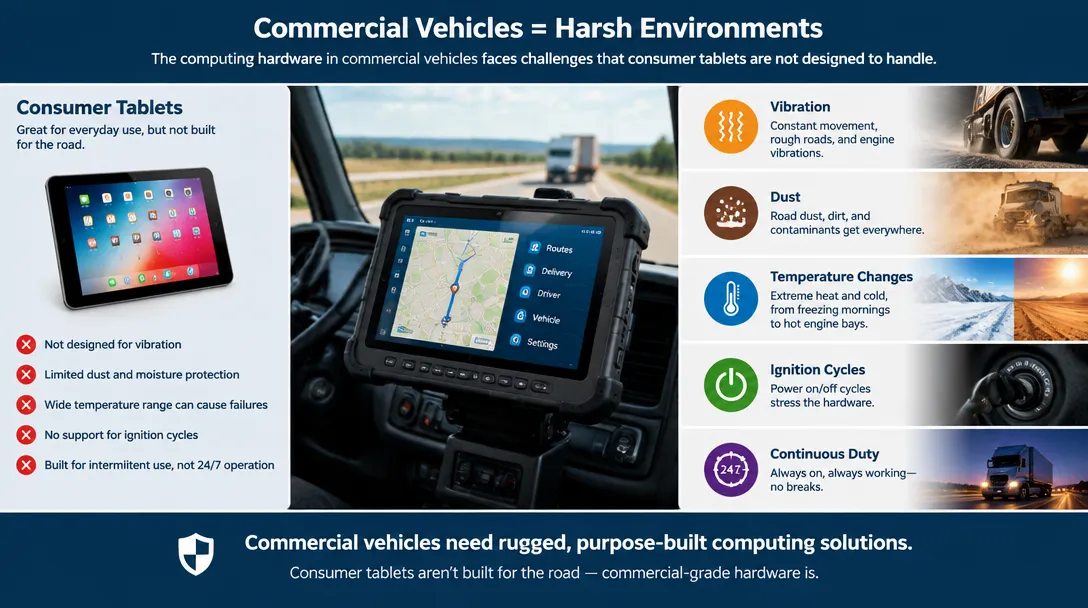
A true vehicle-mounted Linux tablet must survive the electrical, mechanical, thermal, and environmental realities of commercial deployment. It is not enough to install Linux on a consumer tablet; the enclosure, power design, interfaces, display, mounting, and software must be engineered as one system.
Rugged Standards, Explained Clearly
Buyers often see IP65, IP67, and MIL-STD-810H in rugged tablet specifications, but these terms describe different forms of protection. IP ratings address ingress of dust and liquids; MIL-STD-810 addresses environmental engineering considerations and laboratory test methods for equipment exposed to environmental stresses throughout its service life.
Dust-tight protection and resistance to water jets. Suitable for many in-cab, warehouse, transit, and industrial vehicle installations.
Dust-tight protection with greater liquid-ingress protection. Useful for harsh outdoor, agricultural, mining, and washdown-adjacent environments.
A framework for environmental tailoring and laboratory testing. It does not impose a single universal design requirement; the relevant test methods depend on the intended use environment.
Inside a Practical Embedded Linux Architecture
A well-designed embedded Linux tablet separates concerns across hardware, operating system, middleware, applications, and fleet infrastructure. This architecture makes it easier to update software, integrate peripherals, diagnose faults, and scale deployment from a pilot to hundreds or thousands of vehicles.
CAN Bus, J1939, OBD-II, cameras, GNSS, ignition, and industrial peripherals
Linux BSP, drivers, services, edge applications, local storage, and secure connectivity
Dispatch, telematics, maintenance, compliance, analytics, and remote device management
For example, a long-haul truck deployment may use the tablet to read J1939 engine data, display dispatch instructions, capture delivery confirmation, run navigation, and transmit selected diagnostic events to a fleet platform. The same hardware architecture can be adapted for a forklift, bus, agricultural machine, or mining vehicle by changing the mounting, peripherals, and application configuration.
Waysion Platforms for Embedded Linux Deployment
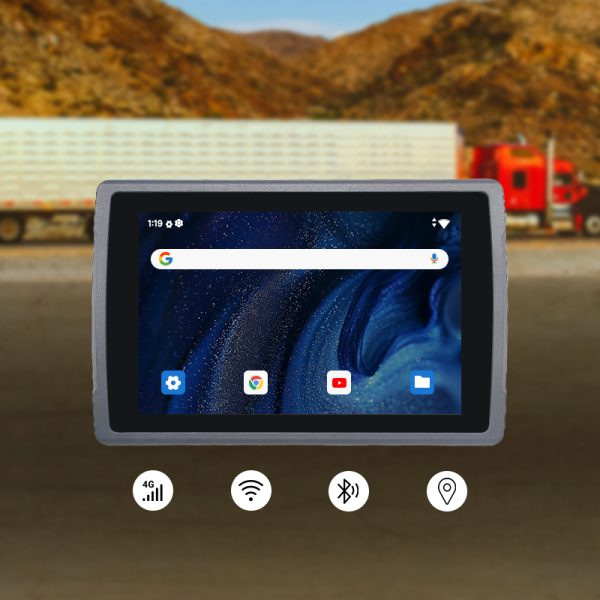
Waysion designs and manufactures 7–10.1 inch rugged vehicle terminals, fleet MDTs, and industrial Android/Linux hardware for software integrators, fleet operators, and OEMs. Its portfolio is built for trucks, buses, taxis, forklifts, construction equipment, mining vehicles, agricultural machinery, and other demanding mobile applications.
10.1-inch Linux / Android
SYVR10R Rugged Linux Tablet
A 10.1-inch dual-OS rugged vehicle tablet with Debian 11 Linux or Android 12, RK3568 processing, IP67 protection, CAN Bus, RS232/RS485, RJ45, AHD camera inputs, and optional RTK positioning.
View SYVR10R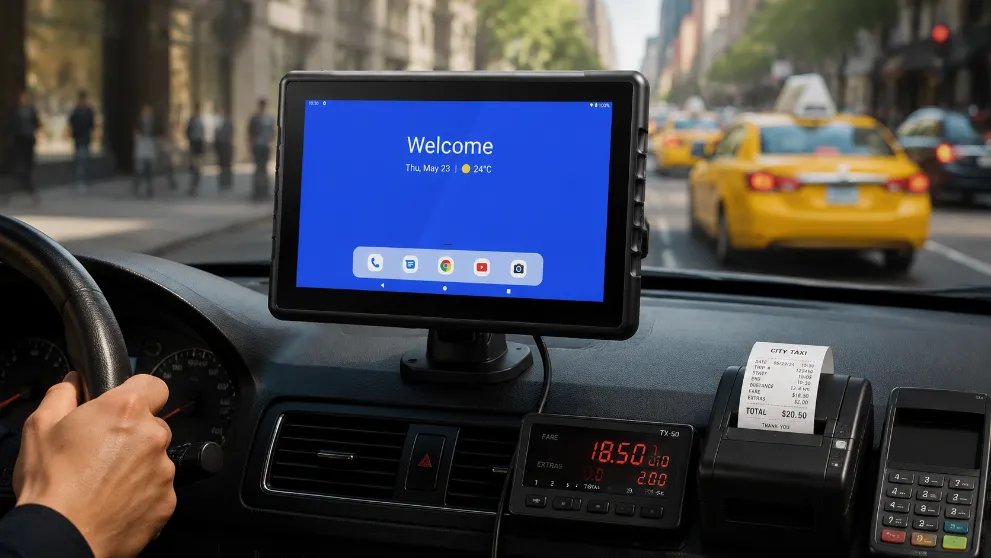
7-inch Fleet Terminal
V7S Rugged Vehicle Tablet
A compact 7-inch Android 14 vehicle terminal with dual CAN Bus, J1939 support, 9–36 V input, IP65 protection, LTE, GNSS, and industrial I/O for trucks, forklifts, transit, and mining applications.
View V7SHow to Select an Embedded Linux Tablet
The right industrial Linux tablet depends on the vehicle, software architecture, peripherals, installation constraints, and lifecycle requirements. Start with the operational workflow, then work backward to the hardware specification.
- Define the mission: Identify whether the terminal must support dispatch, ELD, navigation, diagnostics, camera analytics, scanning, passenger information, or machine control.
- Map vehicle interfaces: Confirm CAN Bus, J1939, OBD-II, GPIO, serial ports, Ethernet, camera inputs, and power requirements before selecting a model.
- Validate the OS strategy: Decide whether Linux, Android, or dual-OS flexibility best matches your development, security, and support model.
- Test the installation: Evaluate mounting, cable routing, sunlight readability, ignition behavior, thermal conditions, and peripheral compatibility in the real vehicle.
- Plan the lifecycle: Confirm BSP access, SDK documentation, firmware updates, certification documents, warranty, RMA, and spare-part availability.
Why Yocto-Based Linux Matters
For OEMs and system integrators, Yocto-based embedded Linux can reduce the gap between a generic Linux image and a deployable product. It enables teams to build a tailored image with only the components required for the application, which is particularly relevant for constrained embedded and IoT devices.
“The Yocto Project is an open source collaboration project that helps developers create custom Linux-based systems for embedded products regardless of the hardware architecture.”
— Yocto Project DocumentationIn a vehicle-tablet context, that may mean a lean image with only the required CAN services, camera stack, GNSS agent, update mechanism, and fleet application. It can also mean a more controlled security posture, because the software supply chain and running services are intentionally defined rather than inherited from a general-purpose desktop distribution.
Deployment Checklist for Fleet Integrators
Confirm the exact CAN, J1939, OBD-II, and GPIO requirements for the target vehicle class.
Validate wide-voltage input, ignition detection, delayed shutdown, and vehicle transient protection.
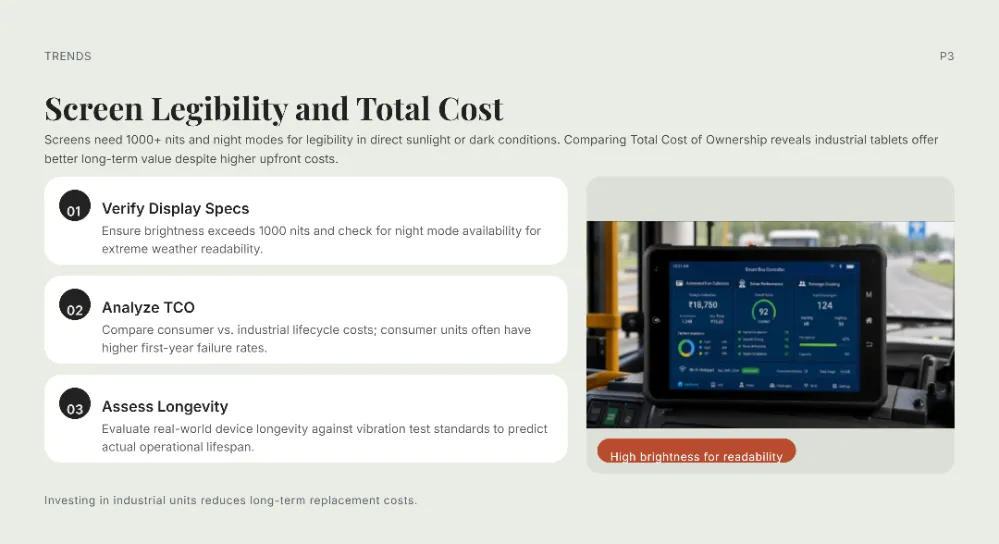
Test display legibility with gloves, sunlight, vibration, and the intended mounting position.
Review Linux BSP, kernel source, SDK, API documentation, and sample-code availability.
Define OTA or controlled firmware-update procedures, rollback plans, and security patching ownership.
Confirm IP, EMC, automotive, wireless, and destination-market certification documents for the exact configuration.
Frequently Asked Questions
What is an embedded Linux tablet?
An embedded Linux tablet is a rugged industrial or vehicle-mounted computer running a customizable Linux operating system. It is designed to integrate with vehicle systems, industrial peripherals, cameras, GNSS, cellular networks, and fleet software.
Is an embedded Linux tablet better than an Android rugged tablet?
Neither is universally better. Embedded Linux is stronger for custom system control, direct hardware integration, and specialized edge applications. Android is often stronger for driver-facing apps, commercial application distribution, and enterprise device management. Many fleet projects benefit from a platform that supports both operating environments.
Can an embedded Linux tablet read CAN Bus and J1939 data?
Yes, when the hardware includes CAN Bus support and the software stack includes the appropriate drivers and protocol integration. Waysion fleet MDTs support CAN Bus and J1939 integration, with CAN FD and OBD-II available on applicable models and configurations.
Which Waysion product is best for embedded Linux?
The SYVR10R is a strong option for teams that need a 10.1-inch rugged Linux tablet with Debian 11, IP67 protection, CAN Bus, serial interfaces, Ethernet, camera inputs, and optional RTK positioning.
Are rugged Linux tablets suitable for forklifts and mining vehicles?
Yes. Vehicle-ready rugged tablets are designed for continuous operation in environments with vibration, dust, temperature variation, wide-voltage power, and industrial peripherals. The appropriate model depends on the required ingress protection, display brightness, I/O, mounting method, and certification requirements.
Build a Fleet Platform, Not Just a Tablet Deployment
An embedded Linux tablet becomes most valuable when it is treated as part of a complete vehicle system: rugged hardware, reliable power, vehicle interfaces, secure connectivity, custom software, mounting, certification, and long-term support. For organizations building connected fleet, transit, industrial, agricultural, or mining operations, this approach turns the tablet from a screen into a dependable edge-computing platform.