The Ultimate Guide to Mobile Data Terminals (MDT) in Specialized Industries
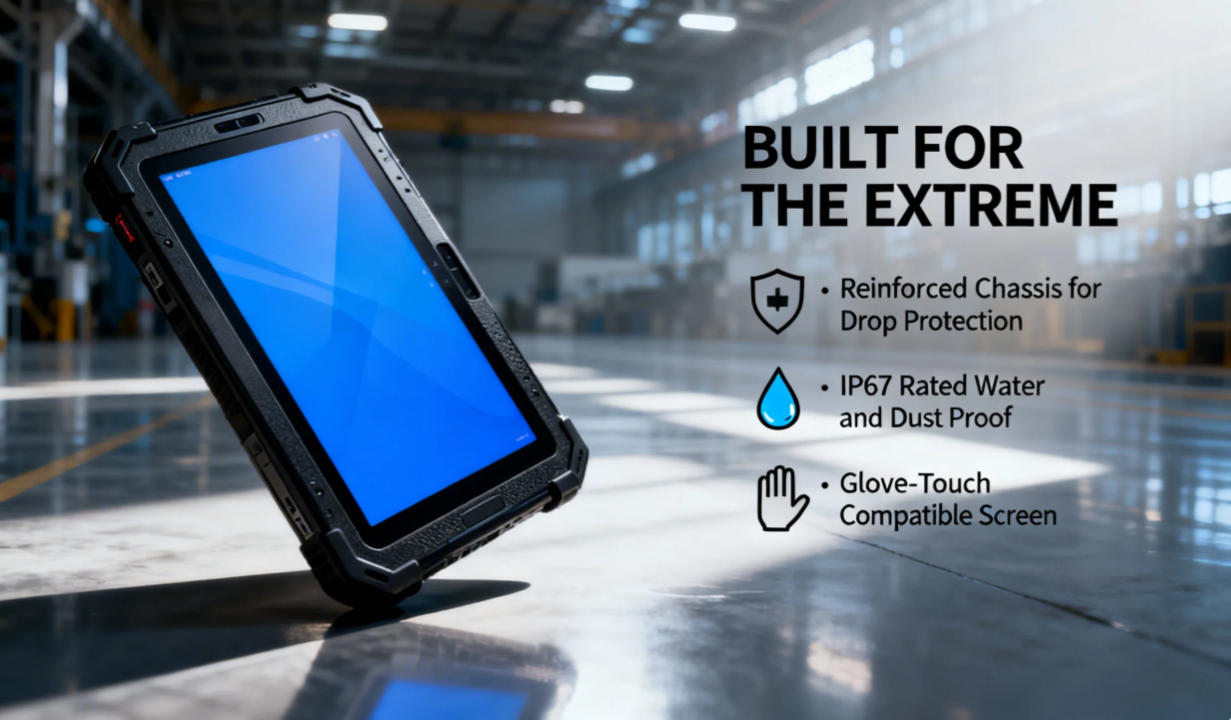
In the high-stakes environment of emergency response and public infrastructure, information isn’t just power—it’s safety. A Mobile Data Terminal (MDT), also known as a ruggedized vehicle-mounted computer, serves as the digital nervous system for mission-critical operations. These specialized computing devices enable seamless, real-time communication between field units and dispatch centers, facilitating tasks such as receiving incident details, updating status, and accessing complex mapping data.
For sectors like fire services, public transit, and law enforcement, MDTs have evolved from simple screens into high-performance hubs. In 2026, brands like Getac, Panasonic, and Waysion are leading the charge, ensuring that responders and drivers have the data they need—exactly when they need it. By integrating a mobile data terminal for fire service or transit operations, organizations can drastically reduce response times and eliminate communication errors.
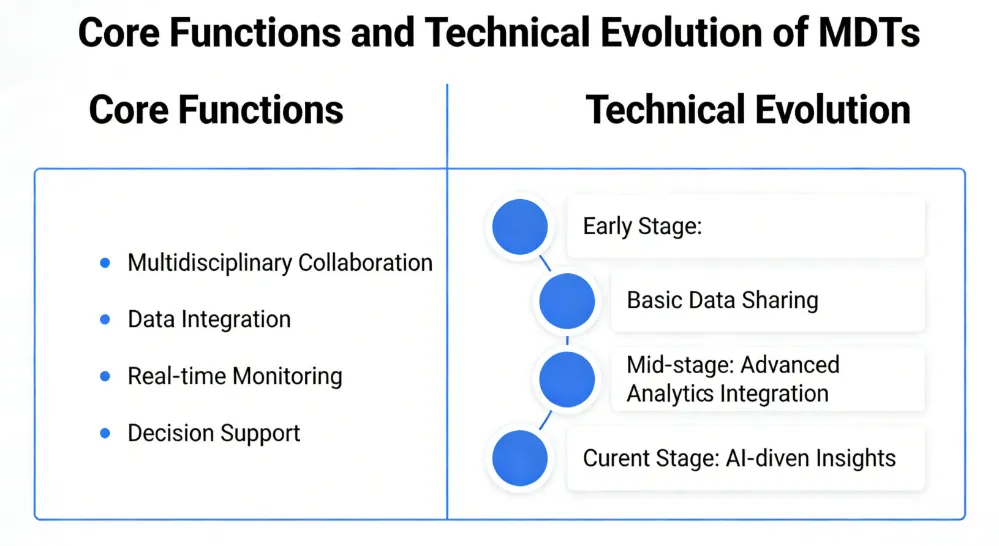
Core Functions and Technical Evolution of MDTs
The modern MDT has transitioned from a basic text-based terminal to a multi-functional computing powerhouse. Understanding the core technology is vital for selecting the right MDT for specific industries.
Real-Time Dispatch and CAD Integration
The primary role of an MDT is its integration with Computer-Aided Dispatch (CAD) systems. This allows dispatchers to push “silent” calls to units, providing exact addresses, routing instructions, and situational notes without cluttering radio airwaves.
GPS, AVL, and CAN-bus Integration
Modern terminals utilize Automatic Vehicle Location (AVL) to transmit precise coordinates to headquarters. Leading providers like Waysion take this further by integrating CAN-bus (J1939/OBD-II) interfaces, allowing the MDT to monitor engine diagnostics, fuel consumption, and driver behavior directly from the vehicle’s brain.
Hardware Trends: Rugged Laptops vs. Dedicated Tablets
The market is currently split between two major forms:
Fully Rugged Laptops/Hybrids: Brands like Getac and Panasonic Toughbook offer extreme durability for the harshest environments.
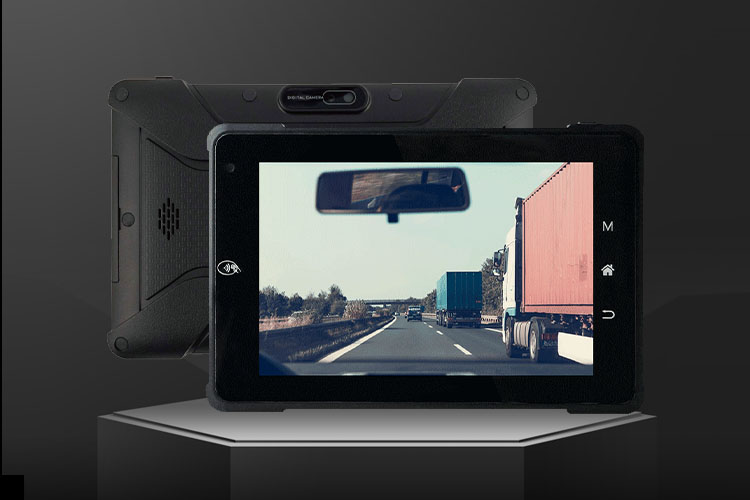
Dedicated In-Vehicle Tablets: Brands like Waysion specialize in compact, Android or Linux-based tablets designed specifically for dashboard mounting, offering high I/O integration (RS232, GPIO, LAN) at a competitive price point.
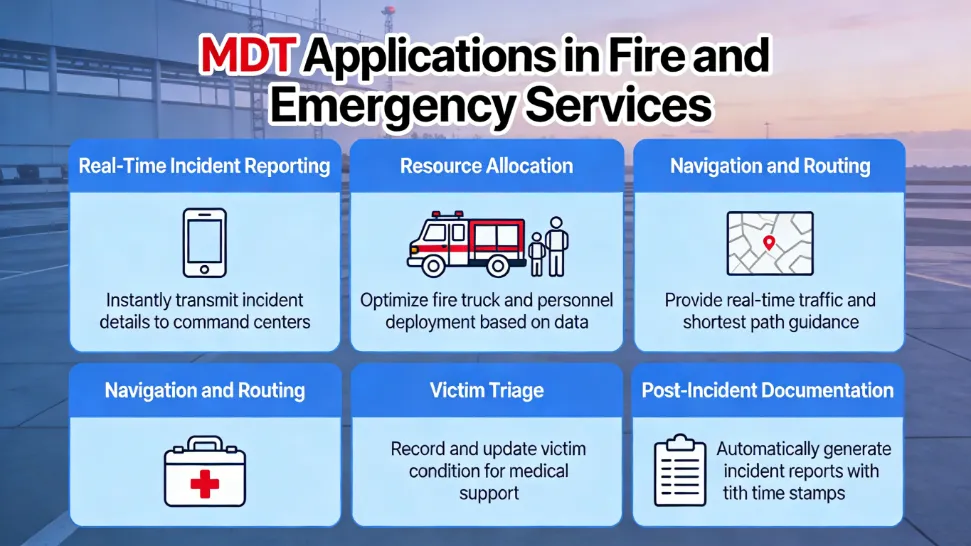
MDT Applications in Fire and Emergency Services
Focus: Mobile Data Terminal Fire Service
The fire service represents one of the most demanding environments for mobile computing. Firefighters require instant access to information while wearing heavy gear in chaotic, low-visibility environments.
Typical Use Cases on Fire Engines and Ambulances
Incident Details: Instant notification of call types and hydration levels.
Pre-Plan Access: Digital access to building blueprints, hydrant locations, and entry codes.
Hazmat Data: Instant look-up of Safety Data Sheets (SDS) via software like StreetWise CADlink to identify dangerous chemicals.
Offline Caching: Ensuring critical maps are available even in cellular dead zones.
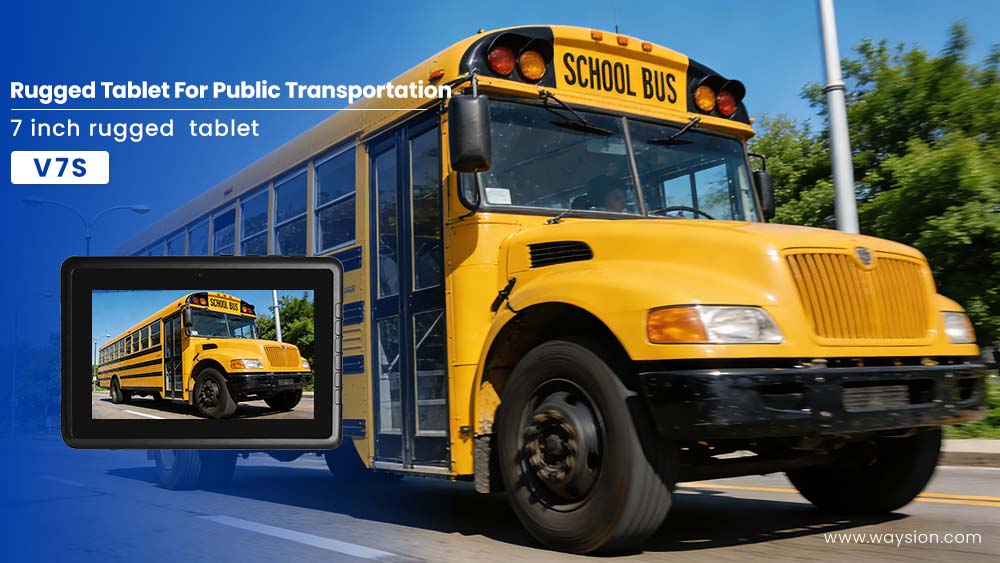
From metropolitan buses to complex rail networks and Metromovers, MDTs are the “brains” behind the schedule.
Roles in Transit Bus, Rail, and Metromover
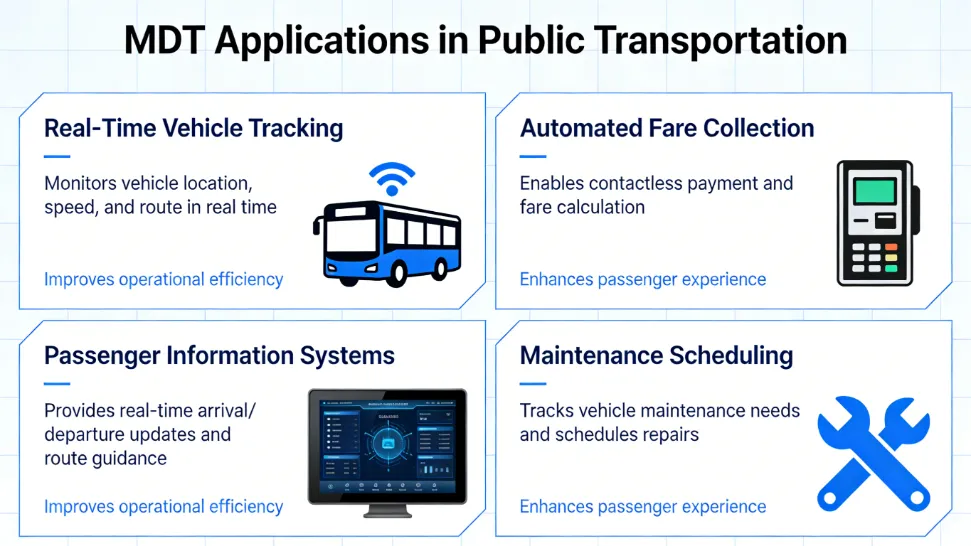
In the transit sector, the MDT acts as the primary interface for the driver:
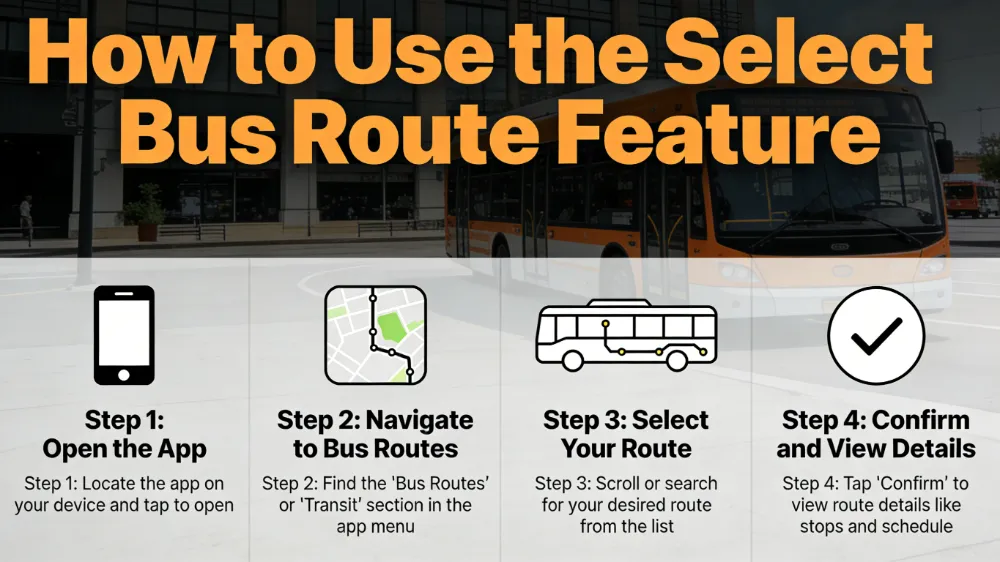
Route Guidance & Selection: Ensuring drivers stay on assigned paths and manage detours.
Passenger Information Systems (PIS): Automatically triggering “Next Stop” announcements and LED signage updates.
Fleet Management:Waysion terminals are frequently used here to connect with onboard cameras (DVR) and Automatic Passenger Counters (APC) to provide a 360-degree view of fleet operations.
Optimizing the Commute
By using MDTs, transit authorities can provide passengers with pinpoint accuracy on arrival times via mobile apps, significantly increasing rider satisfaction.
Superior integrated barcode and RFID scanning capabilities.
FAQ: Frequently Asked Questions (Structured Data)
Q: Why choose a dedicated MDT like Waysion over a consumer tablet?
A: Consumer tablets lack the specialized I/O (like CAN-bus or RS232) needed to communicate with vehicle hardware. Furthermore, dedicated MDTs are designed to handle constant vibration, extreme temperature fluctuations, and “dirty” vehicle power that would fry consumer electronics.
Q: Does an MDT work without cellular service?
A: Yes. Most professional MDT software supports offline mapping and data caching. Once the vehicle enters a coverage area, the device automatically syncs all updates with the cloud.
Q: What is the average budget for an MDT deployment?
A: Costs typically range from $1,000 to $4,000 per unit depending on ruggedness and features, plus installation and mounting hardware costs.
Conclusion
As we navigate the demands of 2026, the Mobile Data Terminal remains the cornerstone of efficiency for fire services, transit, and logistics. Whether you prioritize the extreme ruggedness of Getac or the specialized transit integration of Waysion, the right MDT ensures your fleet is safer, faster, and smarter.