Taxi fleets need more than a consumer tablet mounted on a dashboard. In real-world taxi operations, dispatch hardware must handle continuous vibration, long without compromising performance.
A rugged tablet for taxi dispatch systems gives taxi operators a more reliable in-vehicle platform for real-time dispatch, navigation, GPS tracking, communication, fare workflow, and fleet management. Compared with ordinary commercial tablets, rugged taxi tablets are designed for vehicle deployment, 24/7 use, and professional fleet integration.
Whether you manage a city taxi fleet, airport transport service, executive car operation, or ride-hailing vehicle network, choosing the right dispatch hardware can improve driver efficiency, dispatch visibility, and system stability.
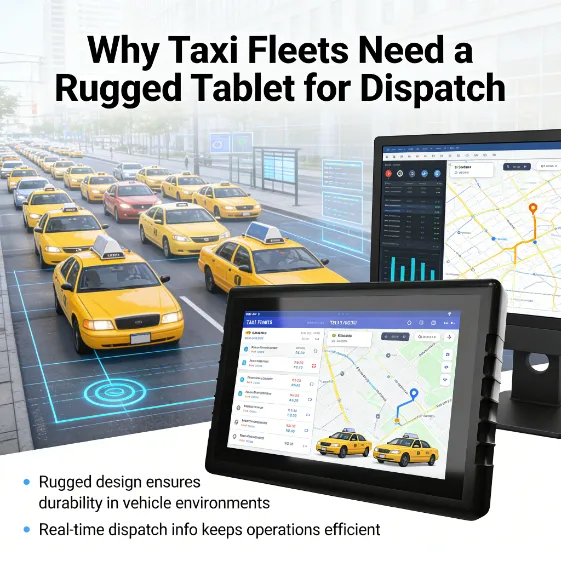
Why Taxi Fleets Need a Rugged Tablet for Dispatch
Taxi dispatch is a time-sensitive workflow. Drivers rely on in-vehicle screens to receive trips, navigate routes, communicate with dispatch, and manage bookings throughout the day.
A standard tablet may work for light use, but in fleet environments it often fails because of:
- overheating in parked vehicles
- weak mounting stability
- poor sunlight visibility
- short battery lifespan
- unstable touch performance
- limited I/O for system integration
- weak durability under vibration and daily wear
A rugged tablet for taxi dispatch systems is built to solve these operational issues.
It helps taxi operators maintain:
- faster dispatch response
- more stable route guidance
- better driver workflow
- higher uptime across the fleet
- reduced replacement and maintenance costs
For fleet owners, dispatch reliability is not just a hardware issue — it directly affects service speed, customer experience, and vehicle productivity.
Key Features of a Taxi Dispatch Rugged Tablet
Not all rugged tablets are equally suitable for taxi use. A proper taxi fleet rugged tablet solution should include the following core features.
1. Sunlight-Readable Display
Taxi drivers spend long hours on the road, often under direct sunlight. A dispatch screen must remain visible in bright daytime conditions.
A taxi-ready rugged tablet should offer:
- high-brightness display
- anti-glare visibility
- wide viewing angle
- responsive touch in varied lighting
This ensures drivers can clearly view:
- incoming dispatch jobs
- route navigation
- customer pickup details
- traffic instructions
- payment or booking screens
2. Stable Android Platform
An Android rugged tablet for taxi business is often the preferred choice because many taxi dispatch and mobility applications are Android-based.
Android allows fleets to run:
- taxi dispatch apps
- driver booking systems
- GPS navigation tools
- telematics software
- fleet communication platforms
- digital fare and workflow applications
For commercial deployment, the operating system should support:
- stable app performance
- device management
- wireless updates
- long-term platform reliability
3. Built-In GPS and Wireless Connectivity
Taxi dispatch depends heavily on location visibility and communication.
A rugged dispatch tablet should support:
- GPS / GNSS positioning
- 4G / LTE connectivity
- Wi-Fi
- Bluetooth
These features allow real-time communication between:
- drivers
- dispatch centers
- taxi booking platforms
- route management systems
- back-office fleet software
Without stable positioning and connectivity, dispatch efficiency drops quickly.
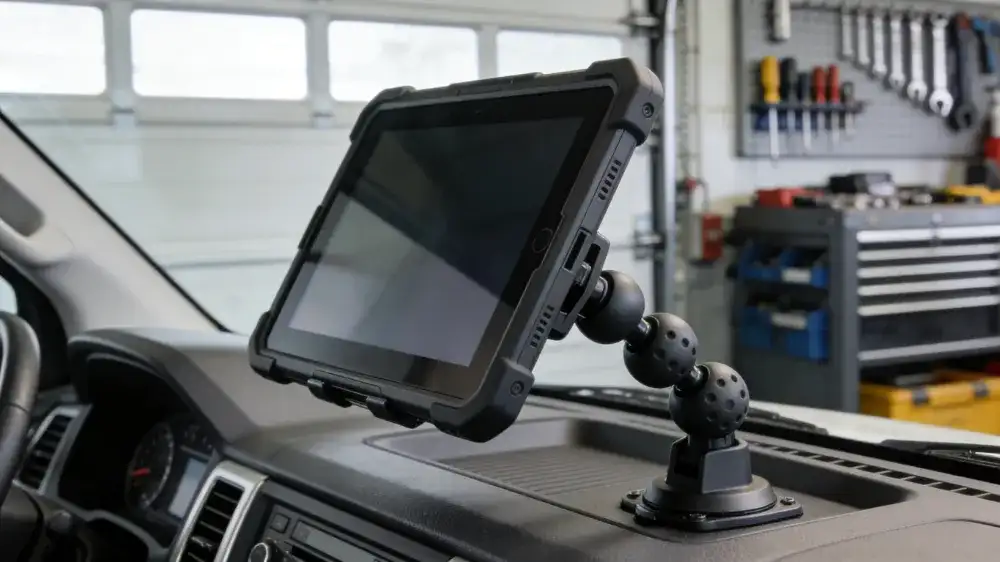
4. Vehicle Mounting and Docking Support
A vehicle mounted tablet for taxi fleet operations must be safely installed and easy to use.
Important mounting-related features include:
- secure in-vehicle docking
- quick release support
- power charging through dock
- anti-vibration installation
- flexible dashboard or console mounting
A professionally mounted rugged tablet improves:
- driver safety
- screen accessibility
- charging stability
- overall workflow convenience
5. Long Operating Time and Power Stability
Taxi vehicles often operate for extended shifts. The dispatch device must support long hours of active use without interruption.
Taxi-ready rugged tablets should be designed for:
- continuous operation
- stable charging in vehicle
- power-efficient performance
- minimal downtime during shifts
This is especially important for fleets running:
- day/night shifts
- airport transfer routes
- high-frequency urban dispatch
- 24-hour taxi services
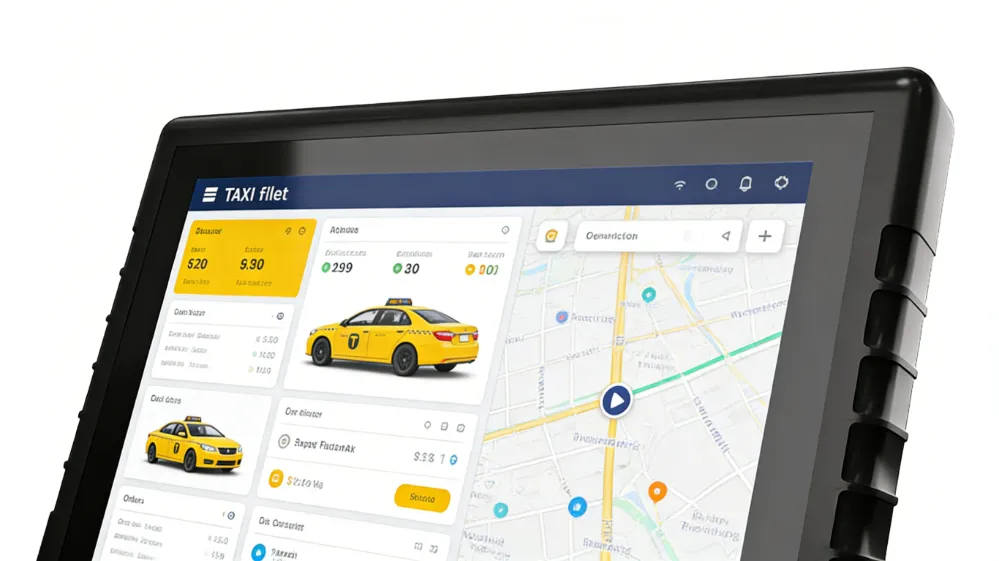
Vehicle Mounted Tablet for Taxi Fleet Operations
A taxi dispatch screen is not just a display — it becomes part of the driver’s daily operating environment.
That means the hardware must work well inside the vehicle, not just on a desk.
A vehicle mounted tablet for taxi fleet operations should be selected based on:
- dashboard space
- driver viewing angle
- touch accessibility
- cable management
- docking convenience
- power reliability
- screen size suitability
For many taxi deployments, 7-inch and 8-inch rugged tablets are especially practical because they provide a balance between:
- visibility
- compact footprint
- easier dashboard installation
- lower driver obstruction
A properly mounted rugged taxi tablet can support tasks such as:
- accepting new dispatch orders
- confirming pickups
- navigation and rerouting
- driver messaging
- route optimization
- fare workflow support
- trip completion updates
This is why taxi operators should view dispatch hardware as part of the fleet operating system, not just an accessory.
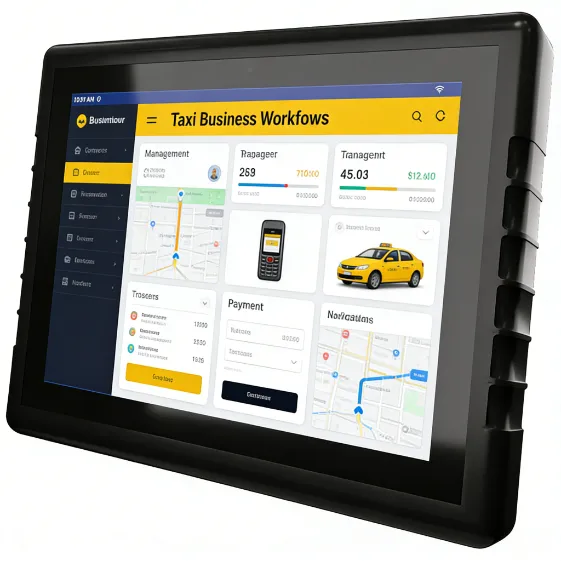
Android Rugged Tablet for Taxi Business Workflows
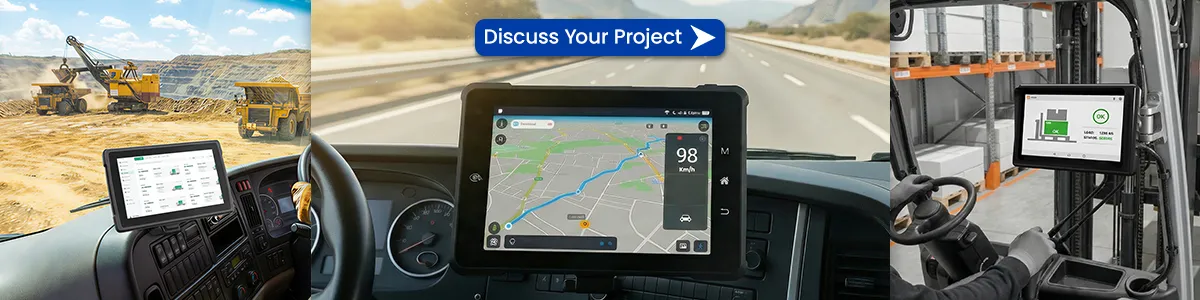
Taxi operations today are increasingly software-driven. Drivers often need to use several applications during a single shift.
A modern Android rugged tablet for taxi business can support multiple workflow layers, including:
Dispatch and Booking
Drivers receive trip assignments, pickup details, customer notes, and status updates directly through dispatch apps.
Navigation and Route Management
Integrated navigation helps drivers reach pickup and drop-off points efficiently while reducing route confusion and wasted mileage.
Driver Communication
Taxi operators often use messaging, voice dispatch, or task notifications to coordinate with drivers throughout the day.
GPS Tracking and Fleet Visibility
Fleet managers can monitor vehicle location, route movement, and dispatch completion in real time.
Payment and Fare Workflow
Depending on the setup, the tablet may also connect to taxi meters, payment systems, printers, or external peripherals.
Because taxi operations are mobile and time-sensitive, the hardware must support fast switching between applications, stable wireless communication, and consistent touch usability.
Industrial Tablet for Taxi Dispatch vs Consumer Tablet
Some fleet operators still attempt to use standard consumer tablets for taxi deployment. This often looks cheaper at first — until real-world usage starts exposing the weaknesses.
Consumer Tablets Often Struggle With:
- unstable vehicle mounting
- overheating inside parked vehicles
- low outdoor visibility
- weaker physical durability
- poor vibration tolerance
- limited wired integration
- shorter commercial lifecycle
Industrial Tablets Are Better Suited For:
- daily vehicle operation
- rugged in-cab environments
- long deployment cycles
- fleet-scale installation
- hardware integration requirements
- professional dispatch system use
A true industrial tablet for taxi dispatch is built for reliability, longevity, and operational consistency, which are far more important to fleet buyers than short-term hardware cost alone.
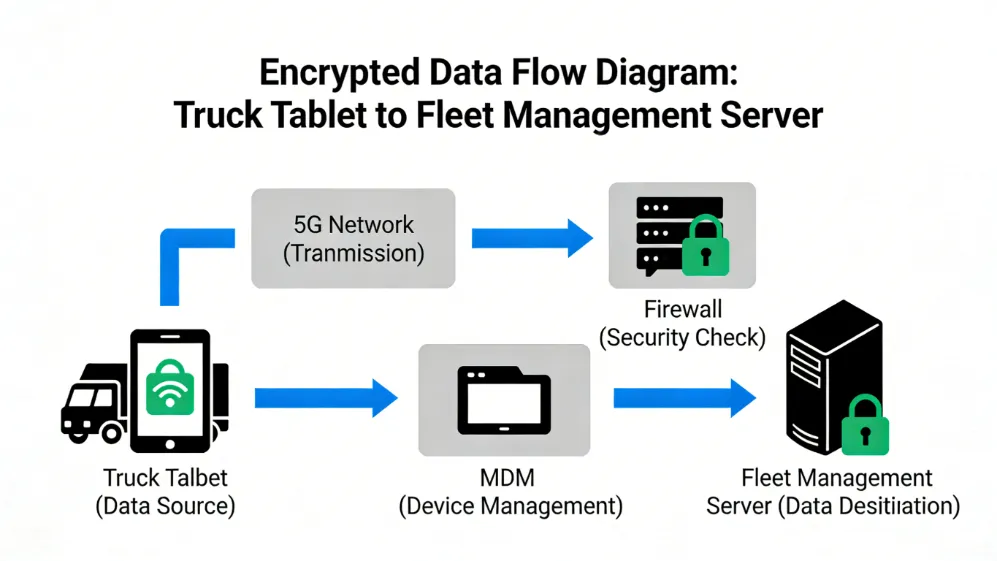
Integration with Taxi Dispatch, Navigation, and Driver Apps
One of the biggest requirements for taxi operators is compatibility with their software ecosystem.
A rugged taxi dispatch tablet should be able to integrate with:
- taxi dispatch software
- booking and reservation systems
- GPS and navigation apps
- telematics platforms
- communication systems
- mobile payment tools
- fleet management software
Depending on the project, some taxi fleets may also require support for:
- docking accessories
- external cameras
- barcode or NFC modules
- peripheral communication
- charging cradles
- custom interfaces
This is especially important for OEM / ODM projects where taxi operators or system integrators need a device tailored to their deployment model.

What Taxi Fleet Buyers Should Look for Before Purchasing
If you are sourcing dispatch hardware for a taxi fleet, these are the most important buying considerations.
Choose a Rugged Taxi Tablet Based on:
1. Screen Size
A compact screen may fit better in taxi dashboards, while larger screens may improve visibility.
2. Installation Method
Check whether the tablet supports docking, fixed mount installation, or detachable use.
3. Operating System Compatibility
Ensure the tablet can run your dispatch, booking, and tracking software smoothly.
4. Connectivity
Look for reliable support for GPS, 4G, Wi-Fi, and Bluetooth.
5. Environmental Durability
The device should handle vibration, temperature changes, daily touch use, and long working hours.
6. Expansion and Integration
If your fleet requires external systems, choose a device with appropriate interfaces and hardware flexibility.
7. Supply and Project Support
For commercial deployment, stable supply chain support and technical customization are just as important as hardware specifications.
Why Waysion Rugged Tablets Fit Taxi Fleet Deployment
For taxi operators, integrators, and mobility solution providers, the ideal dispatch tablet should combine:
- vehicle-grade durability
- Android application compatibility
- wireless communication support
- sunlight-readable usability
- stable mounting and docking
- long-term commercial deployment reliability
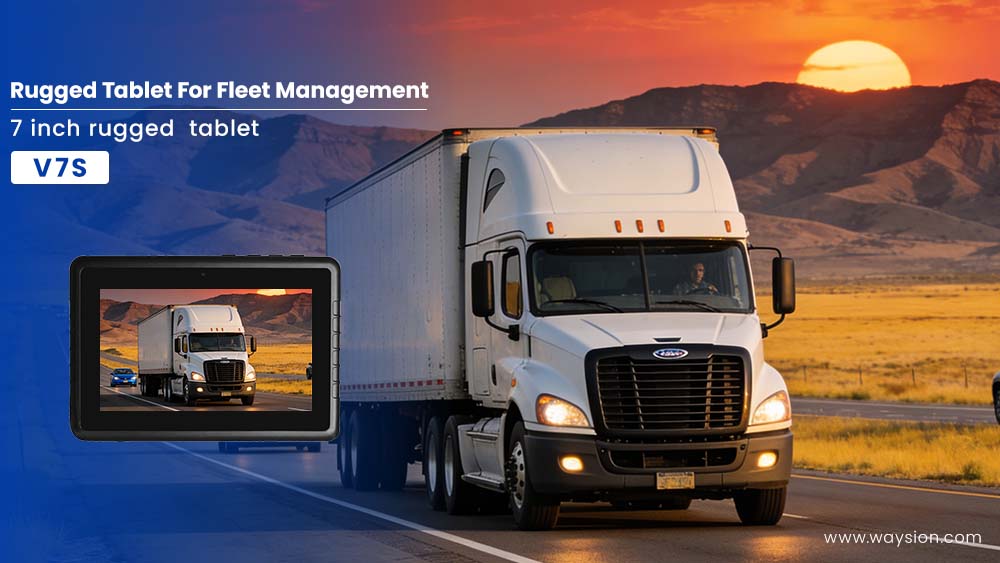
Waysion-style rugged vehicle tablets are especially suitable for taxi and mobility applications because they are designed for in-vehicle operation, not just handheld use.
This makes them a practical fit for:
- taxi dispatch systems
- urban transport fleets
- airport taxi services
- ride-hailing vehicles
- executive fleet operators
- connected vehicle deployments
For B2B buyers, the real value is not just the tablet itself — it is the ability to deploy a stable, scalable taxi fleet hardware solution.
Conclusion
A rugged tablet for taxi dispatch systems is a critical tool for improving the reliability and efficiency of modern taxi fleet operations.
Compared with ordinary tablets, a rugged in-vehicle solution offers stronger support for:
- dispatch workflow
- route navigation
- GPS tracking
- driver communication
- long operating hours
- commercial fleet deployment
For taxi operators looking to improve uptime, reduce hardware failures, and support daily driver productivity, investing in a purpose-built dispatch tablet is a much smarter long-term decision than relying on consumer-grade devices.
If your fleet needs a vehicle-mounted Android dispatch tablet, choosing the right rugged platform can help build a more stable and scalable taxi operation.
FAQ Section
What is a rugged tablet for taxi dispatch system?
A rugged tablet for taxi dispatch systems is a durable in-vehicle tablet designed to support taxi operations such as dispatch, navigation, GPS tracking, communication, and daily driver workflows.
Why is a rugged tablet better than a normal tablet for taxi use?
A rugged tablet is better suited for taxi use because it is designed for vibration, outdoor visibility, long operating hours, and more stable in-vehicle performance than a standard consumer tablet.
What size rugged tablet is best for taxi fleets?
For many taxi fleets, 7-inch to 8-inch rugged tablets are a popular choice because they offer a good balance of screen visibility, compact installation, and driver usability.
Can a taxi dispatch rugged tablet run Android apps?
Yes. Many taxi dispatch rugged tablets use Android OS and can run dispatch, booking, GPS navigation, communication, and fleet management applications.
What features should a taxi fleet look for in a dispatch tablet?
Taxi fleets should prioritize screen visibility, GPS, 4G connectivity, Android compatibility, docking support, stable power, and durability for daily in-vehicle use.
Can a rugged taxi tablet integrate with other fleet systems?
Yes. Depending on the hardware design, a rugged taxi tablet can often integrate with dispatch software, telematics systems, navigation tools, and external fleet accessories.
Latest Content
- How to Mount a Rugged Tablet in Your Van or Truck: 5 Proven Solutions for Commercial Fleets
- From Chaos to Control: How a Logistics Company Achieved 20% Efficiency Gains with the Waysion V7S Terminal
- How to Choose a Truck Tablet for Fleet Management: 2026 Selection Guide
- Industrial Android Tablet
- Small Frame, Industrial Power: The 7-Inch Rugged Tablet
Tags: android rugged tablet for taxi business, in vehicle taxi tablet, industrial tablet for taxi dispatch, taxi dispatch tablet, taxi fleet rugged tablet solution, vehicle mounted tablet for taxi fleet