Walk into any mid-sized distribution center outside Chicago or a high-mix assembly plant in southern Germany, and you will still see a familiar sight: clipboards, paper checklists, and workers running back to a stationary terminal. That workflow is not just slow—it is a direct source of picking errors, data lags, and unnecessary labor costs.
- Why General Tablets Fail on the Factory Floor
- Real-Time Production Tracking Without the Delay
- Transforming Warehouse Picking and Putaway
- Paperless Manufacturing and Audit Readiness
- Practical Considerations: Battery, Mounting, and Security
- Comparing to Traditional Tools
- Who Should Consider Waysion Tablets Right Now
The shift to rugged mobile computing has been talked about for years, but only recently have tools like the Waysion industrial tablet made the transition practical for operations that live on concrete floors, forklift traffic, and temperature swings. Unlike consumer-grade iPads that need bulky cases and constant recharging, Waysion’s purpose-built hardware addresses what actually matters in a warehouse or on a production line: durability, shift-long battery life, and seamless integration with the software stack you already use.
Why General Tablets Fail on the Factory Floor
A typical logistics manager in the Netherlands once told me that they tried consumer tablets for cycle counting. Within three months, screens cracked, charging ports filled with dust, and the devices overheated near loading docks. More importantly, workers hated them. The glossy screens were unreadable under high-bay lighting, and touch response failed when wearing gloves.
Waysion tablet benefits for manufacturing floor data collection start where those experiments stop. With IP65 waterproof ratings and MIL-STD-810G certification, these tablets survive drops onto concrete, exposure to sawdust or flour dust, and washdown cycles in food-grade warehouses. That matters whether you are running a cold storage facility in Minnesota or an automotive parts plant in Lyon.
Real-Time Production Tracking Without the Delay
One of the most overlooked pain points in discrete manufacturing is the gap between “part produced” and “part recorded.” Operators finish a batch, walk to a terminal, log in, and type numbers. That gap creates WIP (work-in-process) inaccuracies that ripple through MRP systems.
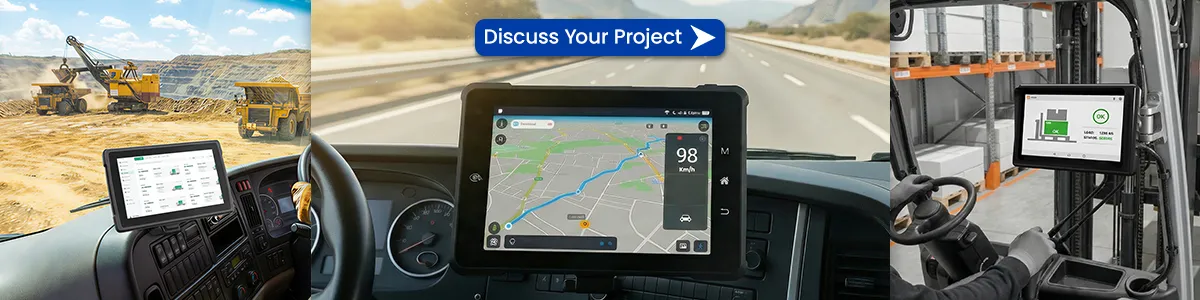
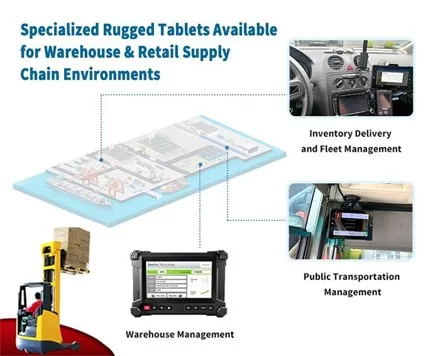
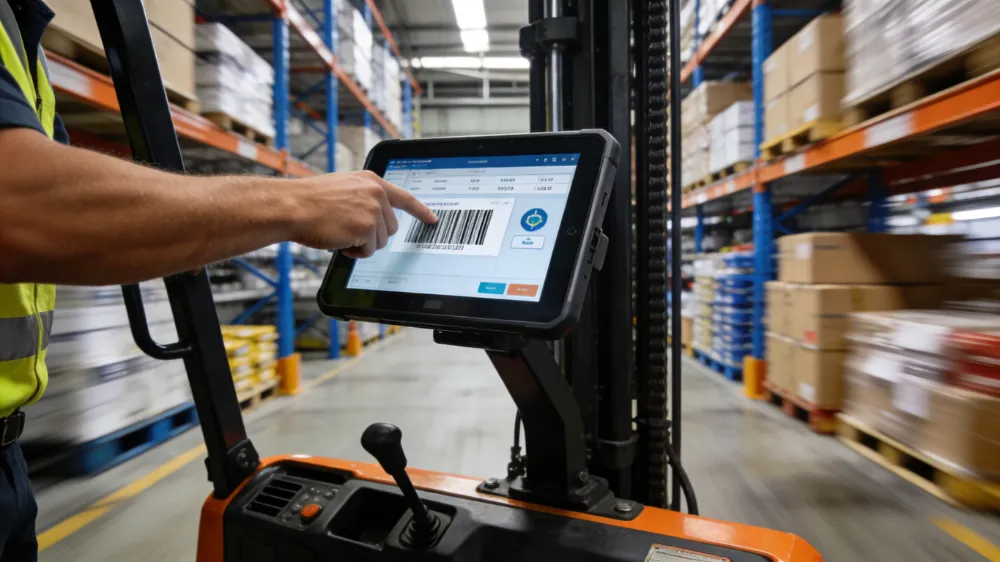
Using Waysion tablets for real-time production tracking closes that loop instantly. Mounted on articulating arms at each workstation, the tablet becomes a dedicated data capture point. Scan the job traveler barcode, enter scrap quantities, confirm operation completion—all without leaving the machine. A plant in Ohio that produces hydraulic fittings reduced their monthly inventory reconciliation time by 14 hours simply by moving to paperless confirmation at the point of work.
The tablets connect directly to common Manufacturing Execution Systems (MES) and ERPs like SAP EWM, Epicor, or Infor. That brings us to a critical question many procurement teams ask: Can Waysion tablets integrate with ERP and WMS systems? Yes—through standard Android APIs, RESTful calls, and pre-built drivers for barcode scanners (including 2D and RFID). Your IT team does not need to rewrite the entire warehouse management system.
Transforming Warehouse Picking and Putaway
Warehouse managers in the UK and Ireland are under constant pressure to improve order accuracy while cutting travel time. Traditional voice-directed picking helps, but it lacks visual confirmation. How do Waysion tablets improve warehouse inventory accuracy? By combining scanning, real-time visual verification, and dynamic task updating.
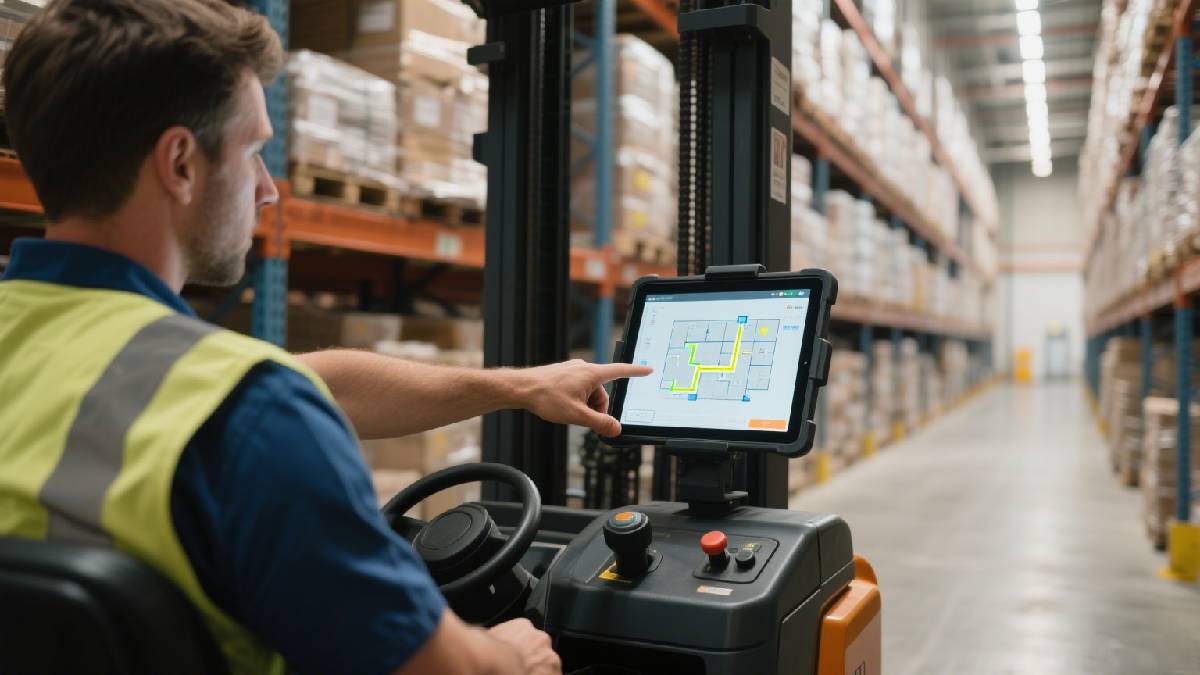
Imagine a picker working in a high-bay racking system near Birmingham. The tablet shows a map of the zone, highlights the next pick location, and prompts a scan of the shelf barcode. If the wrong item is scanned, an immediate alert sounds. After the pick, the worker confirms quantity with a single tap. That sequence eliminates the “double-check later” habit that creates most cycle count discrepancies.
In putaway scenarios, the same tablet guides the forklift operator to the optimal slot based on current velocity codes. No more guessing whether slow-moving items should go to the top rack. The system knows, and the tablet displays it in real time.
Paperless Manufacturing and Audit Readiness
Regulatory compliance is not exciting, but it is essential. For medical device or aerospace suppliers in places like Seattle or Toulouse, traceability demands a perfect digital record. How Waysion tablets support paperless manufacturing processes becomes a compliance advantage. Every scan, every parameter adjustment, every quality check is timestamped and tied to the operator’s ID.
During an internal audit or customer source inspection, you do not have to pull dusty binders. You export a report from the MES that was fed by tablet inputs. One electronics contract manufacturer in Guadalajara told me they cut their audit preparation time from two weeks to two days after deploying Waysion tablets on the assembly line. That is the difference between reactive and proactive quality management.
Practical Considerations: Battery, Mounting, and Security
No tablet works if the battery dies at hour six of a ten-hour shift. Waysion tablets typically deliver 8–12 hours of continuous scanning and screen-on time, and hot-swappable battery options exist for three-shift operations. That addresses Waysion tablet battery life for shift-long warehouse use directly.
Mounting options matter just as much. For forklifts, a RAM mount with vibration dampening keeps the tablet secure. For workbenches, a sliding dock with pass-through charging turns the tablet into a semi-fixed terminal that can be undocked for cycle counting. And for security in a factory IoT environment, Waysion tablet security features for factory IoT include Android Enterprise recommended configurations, disk encryption, and the ability to lock the device to a single app (kiosk mode). That means a picker cannot accidentally browse the web or change system settings.
Comparing to Traditional Tools
Some operations ask: why not just use a rugged barcode scanner? A scanner tells you what was scanned, but it cannot show you a pick path, display assembly instructions, or run a Kanban visualization. Waysion tablet vs traditional barcode scanner in manufacturing is not a fair fight—the tablet is a full computing platform with a rich UI. The scanner is a single-purpose input device.
Others ask about cost. A cost savings from using Waysion tablets in warehousing study by a third-party logistics provider in Poland showed that the tablets paid for themselves within eight months through reduced mispicks, lower training time (the Android interface is intuitive), and eliminated paper and toner expenses.
Who Should Consider Waysion Tablets Right Now
If your operation still prints pick lists, manually keys in production counts, or uses clipboards for quality checks, you already have a business case. The technology is mature, integration paths are well-documented, and the risk of trying a warehouse management tablet is far lower than the risk of falling behind competitors who already track everything in real time.
From a cold storage facility in Toronto to an auto parts warehouse in Melbourne, the pattern is the same. Once workers use a tablet that simply works—gloves on, rain or shine, all shift long—they never want to go back to paper.
About the author phil: 15 years in industrial IoT and warehouse automation consulting. Deployed rugged mobile solutions across 40+ manufacturing sites in North America and Europe.
Tags: How do Waysion tablets help manufacturing and warehousing, manufacturing rugged tablet, rugged Android tablet, warehouse management tablet, Waysion industrial tablet