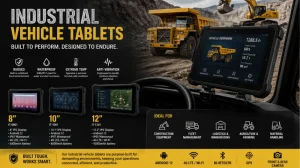
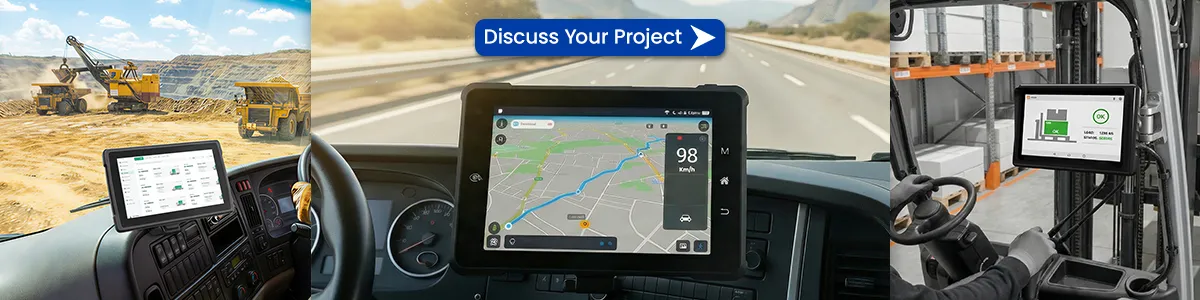
- Why Public Transport Fleets Need Rugged Android Devices
- Key Features That Matter in Transit Environments
- Real-World Applications Across Bus, Rail, and Paratransit Operations
- Product Comparisons: Leading Options in 2025–2026
- Measurable Benefits, ROI, and Total Cost of Ownership
- Implementation Best Practices and Common Pitfalls
- Frequently Asked Questions
Rugged Android devices have become essential infrastructure for modern public transport fleets. Transit agencies that replace consumer tablets and phones with purpose-built rugged Android hardware see fewer device failures, tighter schedule adherence, better real-time passenger information, and lower long-term costs. These devices handle constant vibration, extreme temperatures, dust, moisture, and long shifts while supporting vehicle integration, fare inspection, driver communication, and fleet telematics. Agencies that deploy them report efficiency gains of 25–40 percent and device uptime often exceeding 98 percent within the first year.
Public transport operators face a unique set of hardware challenges that ordinary smartphones and tablets simply cannot meet. Buses and trains shake continuously. Drivers work long shifts in direct sunlight or freezing conditions. Devices get dropped on platforms, exposed to rain at outdoor stops, and must stay powered through an entire duty cycle. At the same time, agencies need reliable platforms for CAD/AVL systems, electronic ticketing, passenger counting, driver authentication, and real-time messaging with dispatch.
Consumer devices fail under these conditions. Screens crack, batteries die mid-shift, and charging ports break. The resulting downtime forces drivers back to paper or radio-only communication, which slows service recovery and frustrates passengers. Rugged Android tablets and smartphones solve this by combining military-grade durability with the open Android ecosystem that most transit software already supports.
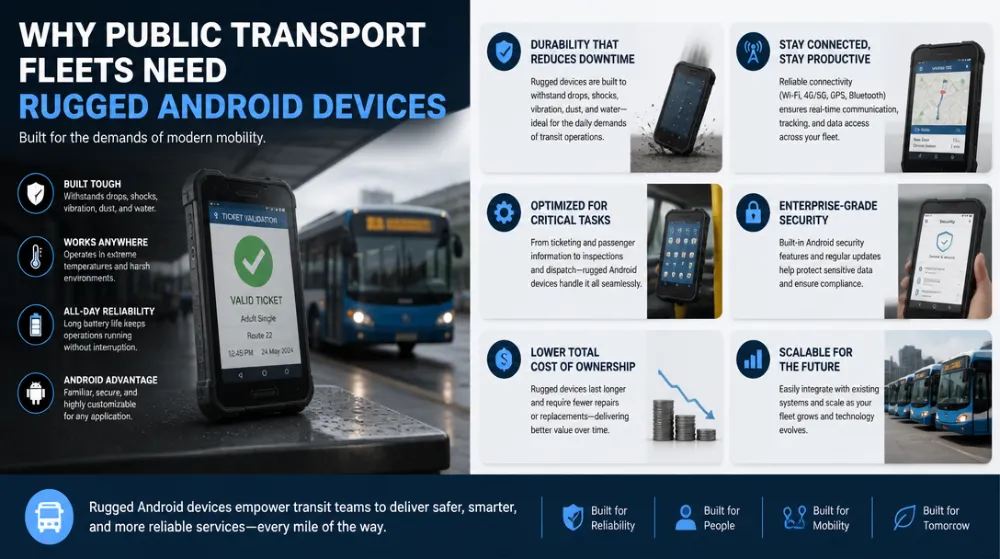
Why Public Transport Fleets Need Rugged Android Devices
The core problem is environmental stress combined with continuous operation. A typical city bus experiences constant vibration from road surfaces and engine harmonics. Depot environments add dust, oil, and temperature swings from overnight parking in extreme climates. Platform staff and fare inspectors move between vehicles and outdoor areas, exposing devices to rain, drops, and sunlight glare.
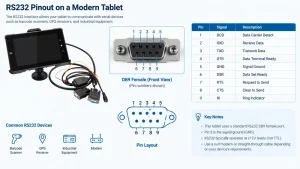
Android has become the preferred platform for many transit applications because it supports a wide range of specialized apps, offers flexible MDM (mobile device management) options, and allows customization without the licensing constraints sometimes found on other operating systems. Modern rugged Android devices run current versions (Android 14 or 15 in many 2025–2026 models), receive security updates, and integrate with vehicle systems via CAN bus, RS232, GPIO, and GNSS.
Agencies that continue using consumer hardware typically experience failure rates of 15–25 percent per year. Rugged devices from established manufacturers routinely show annual failure rates under 2–5 percent when properly docked and managed. That difference translates directly into lower replacement costs, fewer service disruptions, and higher driver confidence in the tools they use every day.
Key Features That Matter in Transit Environments
Not every “rugged” device is suitable for public transport. The features that actually deliver value include:
- Sunlight-readable displays – 700 to 1,000+ nits brightness with anti-glare coatings so drivers and inspectors can read maps, schedules, and ticket data in bright conditions.
- Wide-temperature operation – Reliable performance from roughly –20 °C to +60 °C or better, covering winter depots and summer vehicle cabins.
- Vehicle integration – Native or easily added CAN bus support for engine diagnostics, door status, and telematics; stable 9–36 V power input with ignition sensing; and secure docking stations.
- Connectivity – 4G/5G, dual-SIM options, Wi-Fi, Bluetooth, and multi-constellation GNSS (GPS + GLONASS + BeiDou) for accurate location even in urban canyons.
- Durability certifications – IP65 or IP67 for dust and water, MIL-STD-810H for drops, shock, and vibration.
- Battery and power management – Hot-swappable or high-capacity batteries, or vehicle-powered operation with backup power to survive ignition-off periods.
- Expansion options – NFC for driver login or passenger cards, barcode scanning for ticket validation, and camera inputs for cabin or exterior views.
These capabilities turn a tablet into a true mobile data terminal (MDT) rather than a fragile consumer screen mounted in a vehicle.
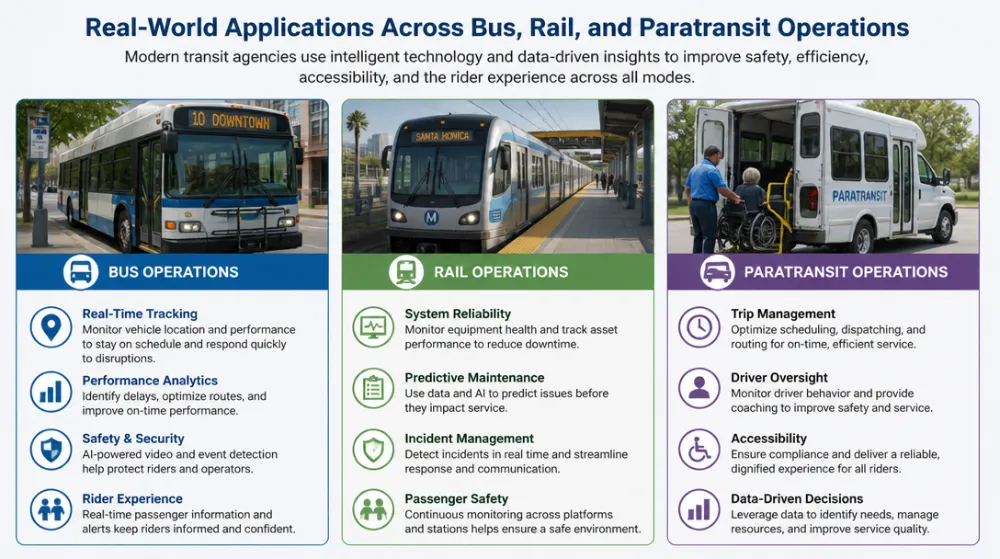
Real-World Applications Across Bus, Rail, and Paratransit Operations
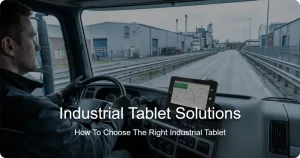
In urban bus fleets, rugged Android tablets mounted at the driver station display next-stop information, receive instant route changes from dispatch, and support automated passenger counting or fare validation. Inspectors carry lighter handheld versions for on-board ticket checks. One regional operator that deployed rugged Android MDTs across more than 300 buses reported a 30 percent improvement in overall fleet efficiency, zero device failures after deployment, faster driver–dispatcher communication, and higher passenger satisfaction through more accurate real-time information.
Paratransit and demand-response services use the same devices for digital manifests, ADA scheduling, and proof-of-trip capture. Platform supervisors and revenue-protection officers benefit from sunlight-readable screens and long battery life when working outdoors. Maintenance teams use the devices for work-order management and vehicle diagnostics pulled directly from the CAN bus.
School bus operations add another layer: student tracking, parent notifications, and route optimization all run reliably on hardware that survives the daily stop-and-go environment and the occasional drop by a driver or attendant.
Product Comparisons: Leading Options in 2025–2026
Several manufacturers focus specifically on transit and fleet use. Here is a practical comparison based on publicly available specifications and transit-oriented positioning:
- Getac ZX10 and ZX80 – Fully rugged Android tablets. The ZX10 is noted as one of the lightest 10-inch fully rugged Android options, with sunlight-readable LumiBond display, barcode scanning, and strong suitability for fare inspection and platform work. The more compact ZX80 prioritizes portability while retaining MIL-STD-810H and IP67 ratings. Both integrate well with vehicle docks.
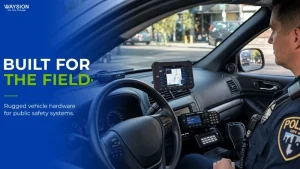
- Waysion V7S, Q777, and Mars 876 – Purpose-built vehicle-mount and handheld options running Android 14 or 15. Strong native support for CAN bus, RS232/RS485, GPIO, and 4G/5G. The V7S and Q777 are frequently positioned for public transit driver stations and fleet telematics; the Mars 876 adds Android 15 and broader industrial I/O. These tend to offer competitive pricing for volume deployments.
- PaceBlade and NEWISION MDT series – Specialized bus tablets with high-brightness (1,000-nit) screens, vehicle docking, E-mark certifications in some models, and options for NFC or barcode modules. Designed from the ground up for continuous in-vehicle use.
- Samsung Galaxy Tab Active series – Semi-rugged to rugged options that balance familiarity, replaceable batteries, S Pen support, and enterprise management. Popular where agencies want a more consumer-like experience with solid durability (IP68 / MIL-STD-810H).
- Other notables – Sonim rugged phones for push-to-talk and field communication; various OEM vehicle terminals that emphasize fanless design and wide voltage input.
No single device wins every category. Agencies prioritizing light weight and platform mobility often lean toward Getac or Samsung. Those needing deep vehicle I/O and lower unit cost at scale frequently evaluate Waysion, NEWISION, or similar MDT specialists. Always test docking compatibility, software certification, and long-term Android support commitments before large purchases.
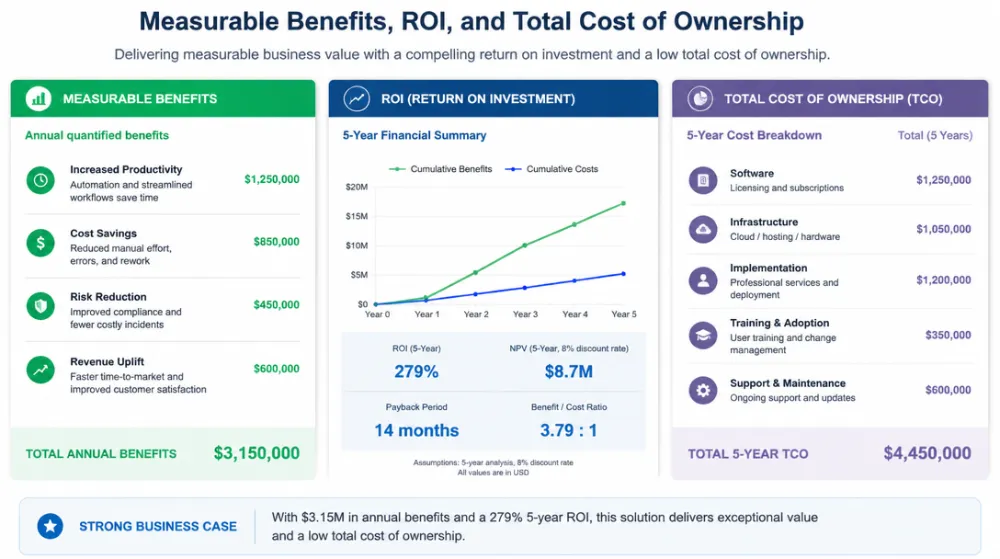
Measurable Benefits, ROI, and Total Cost of Ownership
The financial case rests on total cost of ownership rather than sticker price. Consumer tablets may cost less initially, but high failure rates, frequent replacements, and downtime quickly erase the savings. Industry observations and vendor-reported deployments show:
- Device failure rates dropping from double-digit percentages to low single digits.
- Fuel and routing efficiencies of 15–25 percent through better real-time data and optimized driving.
- Administrative workload reductions of 30–55 percent via digital processes.
- Schedule adherence improvements (for example, from the low 80s to the mid-90s in percentage terms).
- ROI typically achieved in 8–18 months for mid-sized fleets, driven by lower replacement costs, reduced overtime for delayed services, and better passenger information that supports ridership.
One European logistics-adjacent deployment of similar rugged Android tablets reported 40 percent operational cost reduction, 25 percent better fuel efficiency, and 99.7 percent device uptime. Transit-specific cases consistently highlight near-zero hardware failures after switching from consumer devices and measurable gains in passenger communication quality.
Implementation Best Practices and Common Pitfalls
Successful deployments start with clear requirements: which roles need vehicle-mounted versus handheld devices, what software must be certified, and what vehicle interfaces are required. Involve drivers and inspectors early—ergonomics and screen readability matter more than raw specs on paper.
Use enterprise MDM for centralized configuration, remote wipe, app lockdown, and over-the-air updates. Choose docking stations rated for continuous vibration. Plan for power management so devices survive ignition-off periods without draining vehicle batteries. Pilot on a small subset of vehicles before full rollout, measuring failure rates, user satisfaction, and operational metrics.
Common mistakes include under-specifying brightness, ignoring vehicle electrical standards (ISO 7637, wide voltage), or selecting devices with short software support windows. Also avoid treating rugged devices as “set and forget”—regular firmware and security updates remain essential.
Frequently Asked Questions
What is the typical lifespan of a rugged Android device in a bus fleet?
Most quality units last 5–7 years under continuous vehicle use when properly docked and managed, significantly longer than the 12–24 months common with consumer tablets.
Can these devices integrate with existing CAD/AVL and fare systems?
Yes. The majority support standard interfaces (CAN, serial, Ethernet via dock, Android intents/APIs) and work with major transit software platforms. Always verify certification with your software vendor.
Are Android devices secure enough for passenger and operational data?
Modern rugged Android devices support full disk encryption, secure boot, regular security patches, and enterprise MDM policies. Many agencies already run sensitive applications successfully on the platform.
How do costs compare over five years?
While individual rugged units cost more upfront, the combination of lower failure rates, longer life, and reduced downtime usually produces a lower total cost of ownership—often by 30–50 percent compared with repeated consumer device replacements.
Do drivers prefer them?
Feedback is generally positive once the devices are reliable and the screens are readable. Reduced frustration from frozen or dead devices improves acceptance.
Choosing the right rugged Android platform is one of the higher-ROI technology decisions a transit agency can make. The combination of durability, vehicle integration, and the flexible Android ecosystem directly addresses the daily realities of moving people safely and on time. Agencies that treat these devices as core operational infrastructure rather than disposable gadgets consistently report smoother operations, happier staff, and better service for the public they serve.
Tags: Android 15 rugged tablet for public transport fleets, best rugged Android tablets for bus fleets, durable Android devices for fare inspection, rugged tablets with CAN bus for transit operations, vehicle mount Android MDT for public transit