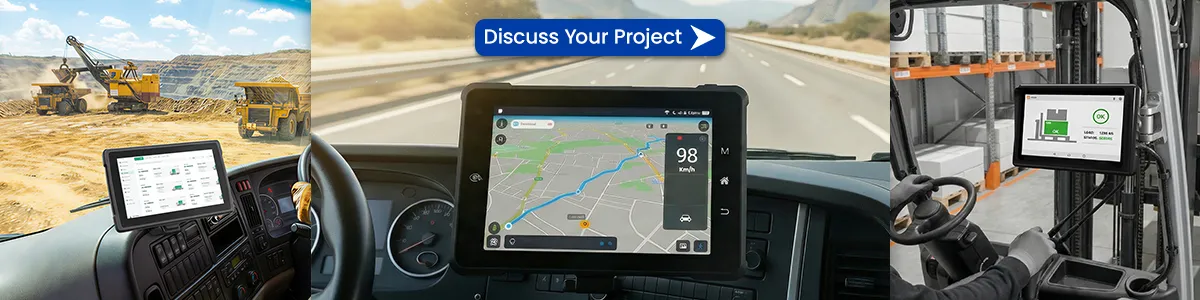
- Why rugged tablets matter in fleet management
- Core pain points for fleet tablets and how they manifest
- The Waysion Q777: a practical reference for addressing these pain points
- Architecture and deployment: turning capabilities into a scalable solution
- Industry use cases: how the Q777 fits real-world fleets
- Security, compliance, and lifecycle management
- ROI, cost considerations, and deployment roadmap
- Practical setup guide for a Waysion-inspired fleet rollout
- Frequently Asked Questions
- Conclusion and next steps
- Resources and reference
The modern fleet relies on in-vehicle tablets to drive real-time visibility, compliance, and operational efficiency. Yet many fleets struggle with durability, readability, connectivity, and data governance. This piece combines a structured pain-point analysis with a practical, product-focused solution using the Waysion Q777 rugged Android tablet as a reference architecture. It targets common needs across North America, Europe, and Asia-Pacific fleets, with geo-aware guidance for regulatory compliance (notably FMCSA ELD in the U.S., and related telematics standards worldwide).
Why rugged tablets matter in fleet management
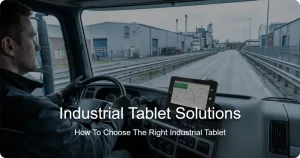
Fleet operations span harsh cab environments, variable climates, and mission-critical timeliness. A robust in-vehicle terminal is not a luxury—it’s the backbone of telematics, driver safety, and regulatory compliance. The Right rugged tablet must withstand dust, water, vibration, and temperature extremes while delivering reliable connectivity, secure data handling, and straightforward driver interaction. The Waysion Q777 provides a concrete, real-world example of how a purpose-built device can address core fleet challenges through hardware resilience, integrated vehicle interfaces, and software-ecosystem readiness.

Core pain points for fleet tablets and how they manifest
- Hardware durability and environmental resilience
- Symptoms: Frequent hardware failures, sudden downtime, higher maintenance costs.
- Business impact: Disrupted dispatch, reduced asset utilization, increased maintenance overhead.
- Symptoms: Frequent hardware failures, sudden downtime, higher maintenance costs.
- Screen readability and driver interaction
- Symptoms: Poor visibility in bright sun, trouble operating with gloves, complex UIs.
- Business impact: Increased driver distraction, more input errors, slower tasks.
- Symptoms: Poor visibility in bright sun, trouble operating with gloves, complex UIs.
- Connectivity stability and offline capability
- Symptoms: Latency in GPS tracking, delayed alerts, data gaps in remote areas.
- Business impact: Suboptimal routing, late exception handling, inconsistent data quality.
- Symptoms: Latency in GPS tracking, delayed alerts, data gaps in remote areas.
- Software complexity and training burden
- Symptoms: Fragmented apps, inconsistent UX, long onboarding.
- Business impact: Low user adoption, higher error rates, inflated training costs.
- Symptoms: Fragmented apps, inconsistent UX, long onboarding.
- Data integrity, integration, and governance
- Symptoms: Silos across TMS/WMS/ERP, time-stamp misalignment, duplicate efforts.
- Business impact: Misleading dashboards, delayed decisions, audit challenges.
- Symptoms: Silos across TMS/WMS/ERP, time-stamp misalignment, duplicate efforts.
- Compliance and security
- Symptoms: ELD/HOS violations, sensitive data risk, insufficient access control.
- Business impact: Fines, reputational harm, potential data breaches.
- Symptoms: ELD/HOS violations, sensitive data risk, insufficient access control.
- Cost and total cost of ownership (TCO)
- Symptoms: Upfront device cost, ongoing subscriptions, maintenance overhead.
- Business impact: Unclear ROI, budget volatility.
- Symptoms: Upfront device cost, ongoing subscriptions, maintenance overhead.
- Field maintenance and support
- Symptoms: Slow repair cycles, vehicle downtime, limited local service.
- Business impact: Reduced fleet uptime, higher risk during critical operations.
- Symptoms: Slow repair cycles, vehicle downtime, limited local service.
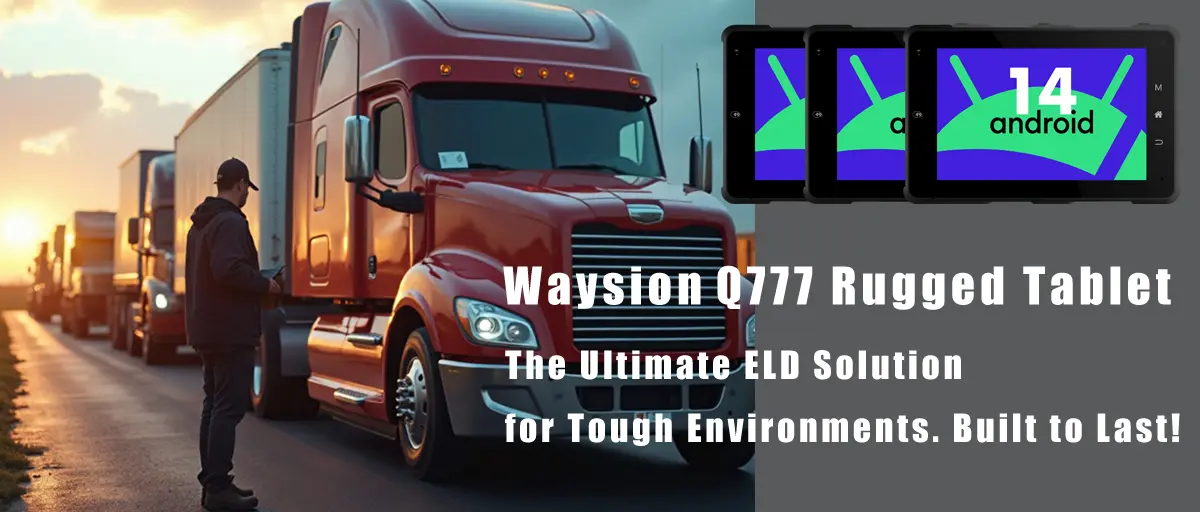
The Waysion Q777: a practical reference for addressing these pain points
The Waysion Q777 is a compact 7-inch rugged Android 14 tablet designed specifically for fleet management, logistics, and field-teams. Below is a concise mapping of its features to the pain points described above, highlighting how this device can help you reduce downtime and improve compliance and safety.
- Robust rugged design
- IP65 dust/water resistance, MIL-STD-810H shock/vibration/dust protection, and a wide operating temperature range (-20°C to 70°C).
- Why it matters: Survives dusty warehouses, cold/freezer storage, desert environments, and heavy vehicle vibrations, reducing unexpected downtime.
- IP65 dust/water resistance, MIL-STD-810H shock/vibration/dust protection, and a wide operating temperature range (-20°C to 70°C).
- Industrial I/O and vehicle integration
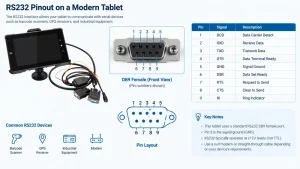
- Built-in CAN Bus (J1939/OBD-II), RS232, RS422/RS485, GPIO, and AHD camera input.
- Why it matters: Direct data collection from engines, sensors, cameras, and peripherals; easier integration with existing fleets and equipment.
- Built-in CAN Bus (J1939/OBD-II), RS232, RS422/RS485, GPIO, and AHD camera input.
- Android 14, supported by strong hardware
- RK3568 quad-core CPU up to 4 GB RAM, modern OS with security updates, MDM-friendly.
- Why it matters: Efficient handling of ELD/DVR apps, routing, and fleet telematics while maintaining a secure, manageable environment.
- RK3568 quad-core CPU up to 4 GB RAM, modern OS with security updates, MDM-friendly.
- Connectivity and GNSS
- 4G LTE, Wi-Fi, Bluetooth, GPS/GLONASS/BEIDOU, and support for multiple networks (including vehicle power management).
- Why it matters: Consistent tracking and data transmission, even in remote or coverage-challenged areas; improved route optimization.
- 4G LTE, Wi-Fi, Bluetooth, GPS/GLONASS/BEIDOU, and support for multiple networks (including vehicle power management).
- ELD/compliance readiness
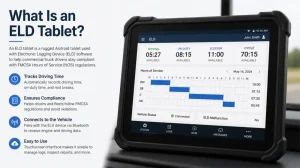
- FMCSA ELD capability via SAE J1939 and OBD-II interfaces.
- Why it matters: Automates Hours of Service (HOS) logging and DVIR workflows, helping fleets stay compliant and avoid DOT penalties.
- FMCSA ELD capability via SAE J1939 and OBD-II interfaces.
- Vehicle-winning factors
- 9–36V vehicle power input, 5000 mAh battery, docking options, and secure mounting.
- Why it matters: Flexible power design for vehicle environments; easy installation and reliable power management for long shifts.
- 9–36V vehicle power input, 5000 mAh battery, docking options, and secure mounting.
- Real-world deployment indicators
- Notable case references include fleets of 500+ trucks achieving 100% ELD compliance and real-time fuel monitoring, mining uses in dusty environments, and public transit applications.
- Why it matters: Demonstrates a proven, scalable path for diverse fleet sectors.
- Notable case references include fleets of 500+ trucks achieving 100% ELD compliance and real-time fuel monitoring, mining uses in dusty environments, and public transit applications.
Table: Q777 feature mapping to common fleet pain points
| Durability | Harsh environments, vibration, dust | IP65, MIL-STD-810H, -20°C to 70°C | Long-term reliability in trucks, warehouses, deserts, and cold storage |
| Readability & UX | Glare, glove use, complex UI | 7″ high-brightness IPS display, glove-friendly input | Improved readability and safer driver interaction |
| Vehicle integration | Needs data from CAN/ECM, sensors | Built-in CAN (J1939/OBD-II), RS232/RS485, GPIO, AHD input | Direct, low-latency data collection and device interoperability |
| Connectivity | Remote areas with poor signal | 4G LTE, GNSS, Wi-Fi, eSIM-ready options (assumed) | Stable telematics, real-time tracking, offline caching |
| Compliance | ELD/HOS or data security gaps | FMCSA ELD via SAE J1939/OBD-II, secure OS | Regulatory compliance and auditable data trails |
| Power & mounting | Vehicular power stability, theft risk | 9–36V input, docking, VESA/RAM mounting | Reliable power, secure installation, and vandal resistance |
| Maintenance | Downtime for repairs | 1)1.2m drop protection, 2) MTBF >50,000 hours | Higher uptime, predictable maintenance cycles |
| Ecosystem readiness | Integration with TMS/WMS/ERP | MDM-friendly, standard APIs and OEM/ODM options | Faster integration and easier lifecycle management |
Note: The above reflects the stated specifications and capabilities of the Waysion Q777 as presented on their product page, including IP65 rating, -20°C to 70°C operating temperature, MIL-STD-810H resilience, CAN/J1939/OBD-II, 4G LTE, GPS/GLONASS/BEIDOU, 5000 mAh battery, 9–36V vehicle power, and docking/mounting options.
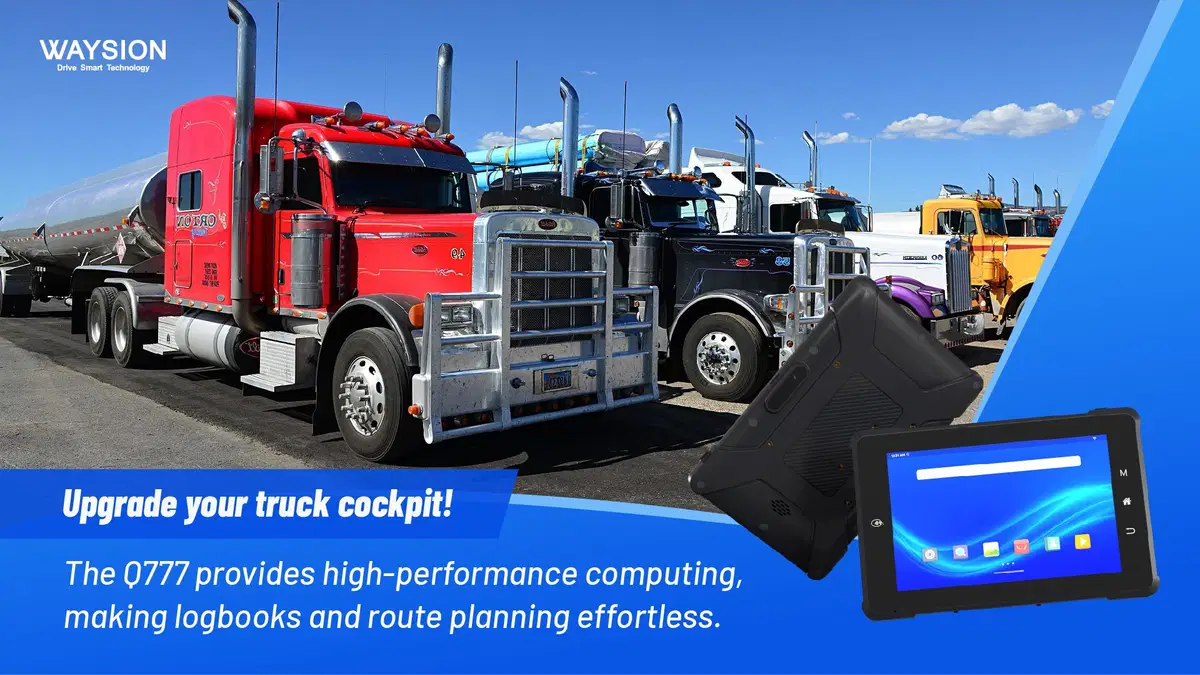
Architecture and deployment: turning capabilities into a scalable solution
To maximize the value of a rugged in-vehicle tablet like the Q777, fleets should align hardware, software, and data layers in a coherent deployment model. Here’s a practical blueprint.
1) Hardware and installation
- Rugged chassis for environmental resilience: IP65 protection, MIL-STD-grade shock/vibration handling, and a broad operating temperature envelope enable use cases in warehouses, cold storage, open-pit mining, and outdoor fleets.
- Vehicle power integration: Connect to 9–36V vehicles’ electrical systems with ignition-aware power management to minimize battery drain and ensure devices power on/off with the vehicle.
- Mounting and docking: Use VESA/RAM mounting with a docking station to simplify hot-swapping and secure cab installation; consider a locking dock to prevent theft and tampering.
- Peripherals and sensors: Leverage built-in CAN, RS232/RS485, and GPIO to connect ECM data, sensor arrays, cameras, and auxiliary devices (e.g., OBD adapters, AHD cameras).
2) Software and app ecosystem
- Operating system and security: Android 14 with up-to-date security patches; ensure devices are enrolled in an MDM (Mobile Device Management) for policy enforcement, app whitelisting, and remote management.
- Core telematics and compliance apps: ELD/HOS logging, DVIR, engine diagnostics, driver behavior analytics, route optimization, and maintenance scheduling, all accessible from a unified UI.
- Offline-first capabilities: Local caching of maps and essential data for operations in tunnels, basements, or remote regions with intermittent connectivity; synchronizing data when a reliable connection is restored.
- UX simplification: A driver-friendly interface with large icons, simplified task flows, contextual help, and voice-assisted controls to reduce in-cab workload and distraction.
3) Data, integration, and governance
- Standardized data models: Align how ECU data (J1939/OBD-II), telematics events, and maintenance records are structured to minimize integration friction with TMS/WMS/ERP systems.
- API strategy and middleware: Use standardized REST/JSON APIs with versioning; implement data transformation layers to map internal data formats to external APIs as needed.
- Time synchronization and integrity: Ensure consistent time stamps across devices and cloud services to prevent misalignment in reporting and dashboards.
- Security and privacy: End-to-end encryption for data in transit, secure storage on device, robust authentication, and role-based access to sensitive data. Remote wipe and device lockdown are essential for lost/stolen devices.
4) Network strategy and edge considerations
- Multi-network resilience: Support for 4G/5G (where available), Wi-Fi, and eSIM configurations to minimize single-point connectivity failure.
- Edge capabilities: Local processing of critical tasks (ELD calculations, data cleaning, event filtering) to reduce cloud latency and bandwidth usage.
- Depot-first data strategy: Prioritize cache and batch uploads when vehicles return to a depot with strong network coverage to ensure data integrity.
5) Compliance and safety
- ELD/HOS and DVIR readiness: Built-in compliance capabilities with auditable logs and automatic reporting to satisfy FMCSA and similar regulatory regimes globally.
- Access controls and data governance: Implement least-privilege user roles, audit trails, and activity monitoring to minimize insider threat and data leakage.
Industry use cases: how the Q777 fits real-world fleets
- North American trucking fleets
- Use case: Real-time asset tracking, HOS/DVR compliance, and engine diagnostics interwoven with dispatch systems.
- Benefit: Reduced DOT compliance risk, streamlined driver logs, and improved routing accuracy in cross-border operations.
- Geo context: Dominant FMCSA regulatory environment; essential for U.S. and Canada operations.
- Use case: Real-time asset tracking, HOS/DVR compliance, and engine diagnostics interwoven with dispatch systems.
- Mining and heavy industry (APAC and ANZ)
- Use case: In-cab telemetry for engine health, remote monitoring, and rugged human-machine collaboration in dusty, high-vibration environments.
- Benefit: Reduced maintenance downtime, safer operation, and better asset utilization in remote mining sites.
- Use case: In-cab telemetry for engine health, remote monitoring, and rugged human-machine collaboration in dusty, high-vibration environments.
- Public transportation and smart mobility
- Use case: In-vehicle terminals for fleet management, fare collection interfaces, passenger information, and driver performance analytics.
- Benefit: Improved service reliability and data-driven scheduling with robust on-vehicle hardware.
- Use case: In-vehicle terminals for fleet management, fare collection interfaces, passenger information, and driver performance analytics.
- Warehousing and forklift fleets
- Use case: In-vehicle data capture for warehouse management, vehicle diagnostics, and safety monitoring.
- Benefit: Enhanced warehouse throughput, operator safety, and equipment utilization.
- Use case: In-vehicle data capture for warehouse management, vehicle diagnostics, and safety monitoring.
Security, compliance, and lifecycle management
- Enterprise-grade security: Android 14 provides modern security architecture; pairing with an MDM allows centralized policy enforcement, app control, and remote updates.
- Data integrity and auditability: ELD/HOS and DVIR capabilities ensure compliant, auditable logs with traceable data lineage for safety and regulatory reporting.
- Ownership and upgrades: Long MTBF (>50,000 hours) and rugged design translate into predictable maintenance cycles. OEM/ODM customization capabilities support branding, pre-installed apps, and hardware accessories tailored to fleet needs.
ROI, cost considerations, and deployment roadmap
- Cost of ownership
- Upfront: Rugged devices typically cost more than consumer tablets, but the durability reduces total repairs and downtime.
- Ongoing: Data plans, software subscriptions, and maintenance—structure these as modular, per-vehicle or per-deployment costs to optimize ROI.
- Upfront: Rugged devices typically cost more than consumer tablets, but the durability reduces total repairs and downtime.
- Deployment strategy
- Phase 1: Pilot with a single route or a subset of the fleet (4–6 weeks) to test hardware durability, app workflows, and data integration.
- Phase 2: Scale to the full fleet, guided by KPI improvements such as MTTR, ELD compliance rate, data latency, and driver adoption.
- Phase 3: Optimize and iterate with ongoing training, new feature rollouts, and additional integrations with TMS/WMS/ERP systems.
- Phase 1: Pilot with a single route or a subset of the fleet (4–6 weeks) to test hardware durability, app workflows, and data integration.
- KPIs to track
- Device availability and MTTR
- ELD compliance rate and DVIR completion time
- Data synchronization latency and accuracy
- Driver engagement and task completion time
- Total cost of ownership and ROI within defined time horizons
- Device availability and MTTR
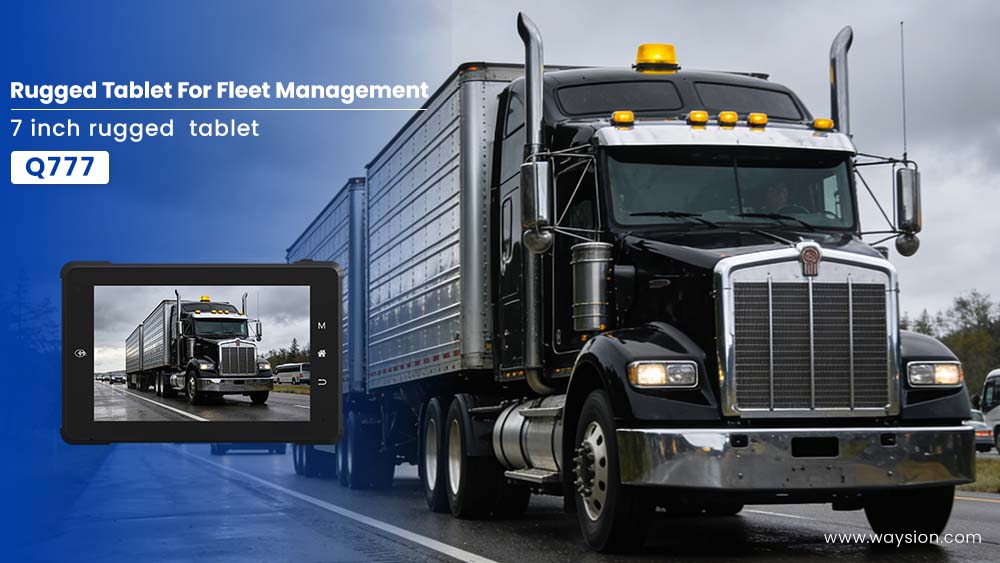
Practical setup guide for a Waysion-inspired fleet rollout
- Select the right rugged hardware baseline: Prioritize an IP65/MIL-STD-rated tablet with robust power input (9–36V) and a reliable docking solution for cab installations.
- Plan CAN/J1939 integration early: Ensure ECUs, engine monitoring, and telematics sensors can feed the tablet via built-in CAN or accessible OBD-II interfaces.
- Invest in a unified software stack: Use an ELD/HOS-compliant fleet management app alongside route planning, maintenance scheduling, and driver safety tools. Ensure it works in offline mode and syncs automatically when online.
- Design for security and governance: Enforce strict access controls, encryption, and audit logging. Use MDM to manage the fleet at scale.
- Build for maintainability: Manufacturer MTBF estimates, spare parts availability, and local service partnerships are critical in reducing downtime.
Frequently Asked Questions
What makes a rugged tablet essential for fleet management?
- A rugged tablet is designed to withstand dust, water, vibration, and extreme temperatures while delivering reliable connectivity, durable mounting, and secure software management. This is critical for compliance, safety, and uptime in fleets operating across diverse environments.
Does the Waysion Q777 support FMCSA ELD compliance?
- Yes. The Q777 includes ELD capabilities via SAE J1939 and OBD-II interfaces, enabling automated Hours of Service (HOS) logging and DVIR workflows to help fleets stay compliant with FMCSA regulations.
Can the Q777 connect to a vehicle’s CAN bus and other sensors?
- Yes. The device features built-in CAN (J1939/OBD-II), RS232, RS422/RS485, and GPIO interfaces, enabling direct data capture from engine ECU, sensors, and peripheral devices.
What are the environmental specs of the Q777?
- It is IP65-rated, drop-tested to 1.2 meters, and rated for an operating temperature range of -20°C to 70°C, making it suitable for harsh in-vehicle environments and outdoor use.
How does a rugged tablet impact total cost of ownership?
- While upfront costs may be higher than consumer tablets, rugged tablets reduce downtime, maintenance, and replacement costs, improving TCO when deployed across a fleet with long service lifetimes and high utilization.
What deployment strategy works best with rugged fleet tablets?
- A phased approach: start with a pilot on a subset of the fleet to validate hardware durability, software workflows, and data integrations; then scale up while tracking KPIs such as ELD compliance, MTTR, and data latency.
Is there a docking solution for the Q777?
- Yes. The Q777 offers docking options and a professional in-cab installation system designed for secure mounting and reliable power delivery.
Which industries benefit most from the Q777 form factor?
- Trucking fleets, warehousing and forklift operations, mining, construction, public transit, and precision agriculture are all strong candidates due to the device’s durability, rugged interfaces, and connectivity.
Conclusion and next steps
The Right fleet tablet is not just a device—it’s a deployment architecture. The Waysion Q777 embodies a practical blueprint for addressing core fleet pain points: durability, readability, connectivity, compliance, and secure data governance. By aligning hardware resilience with an integrated vehicle interface, modern Android OS capabilities, and a disciplined deployment approach, fleets can unlock higher uptime, better safety, and stronger regulatory compliance.
Resources and reference
- Waysion Q777 Rugged Tablet product page (design, specs, and use cases): https://www.waysion.com/q777-rugged-android-tablet/
Tags: CAN bus integration rugged tablet, docking-ready vehicle tablet for fleet telematics, ELD compliant in-vehicle tablet, IP65 rugged tablet for trucking, rugged Android tablet for fleet management