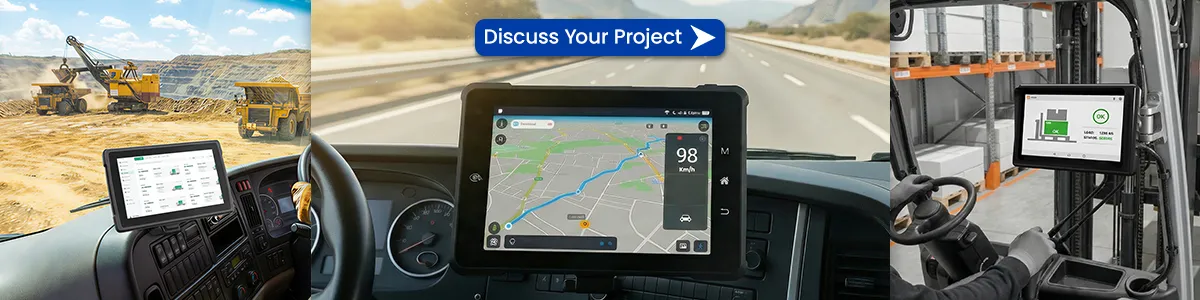
- 1. Field Service & Mobile Workforce Productivity
- 2. Logistics, Warehousing & Fleet Management
- 3. Industrial Manufacturing & Asset Maintenance
- 4. Public Safety, Emergency Response & Military
- 5. Agriculture & Environmental Monitoring
- 6. How to Choose the Right Rugged Tablet: A Spec Checklist
- 7. Cost-Benefit: When Is Rugged Worth It?
- 8. Deployment Best Practices
- 9. Emerging Trends in 2026 Rugged Tablets
- 10. Where to Go Next
TL;DR
Rugged tablets are deployed in environments where consumer-grade devices fail physically or functionally. Key applications include outdoor logistics (GPS/Wi-Fi 6E in rain/cold), industrial asset management (IP67+ dust/water resistance), and hazardous location monitoring (intrinsically safe models for Zones 1/2). The core value isn’t just “durability”—it’s uptime reliability. A rugged tablet prevents $5,000–$50,000 in lost labor and delayed jobs caused by device failure, battery death in extreme temps, or lost connectivity. Choose based on IP rating, drop rating (MIL-STD-810H/G), and thermal operating range, not just brand name.

1. Field Service & Mobile Workforce Productivity
Field technicians (HVAC, telecom, utility workers) spend 70%+ of their day outside or in uncontrolled environments. Consumer tablets fail here due to:
- Thermal limits: Standard lithium-ion batteries degrade rapidly below -10°C or above 45°C. Rugged units use lithium iron phosphate (LiFePO4) or reinforced Li-ion with thermal management to operate from -20°C to 55°C.
- Glove usability: Field workers wear insulated gloves. Rugged tablets require touchscreens rated for gloved operation (minimum 3mm fabric glove detection). Consumer glass screens often require removing gloves, increasing error rates and safety risks.
- Real-time sync: Using Wi-Fi 6/6E and 5G cellular modules, rugged tablets ensure data sync even in dead zones. Example: A gas utility tech using a Zebra GT750-like device transmits meter readings instantly, reducing truck rolls by 15% (per 2025 Field Service Institute benchmark).
Key Pain Point Addressed
Battery death in winter/summer. If your techs’ devices die after 4 hours in -10°C cold, you’re losing productivity. Rugged units with hot-swappable batteries keep operations moving.
2. Logistics, Warehousing & Fleet Management
Warehouses and loading docks are harsh: concrete floors, forklift impacts, chemical spills, and constant vibration.
- Drop & Impact Resistance: Spec MIL-STD-810H 26.5 (1.5m concrete drop) or IP68 (submersion up to 1.5m). A tablet falling off a forklift fork (1.2m) must survive. Consumer tablets shatter.
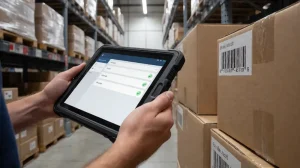
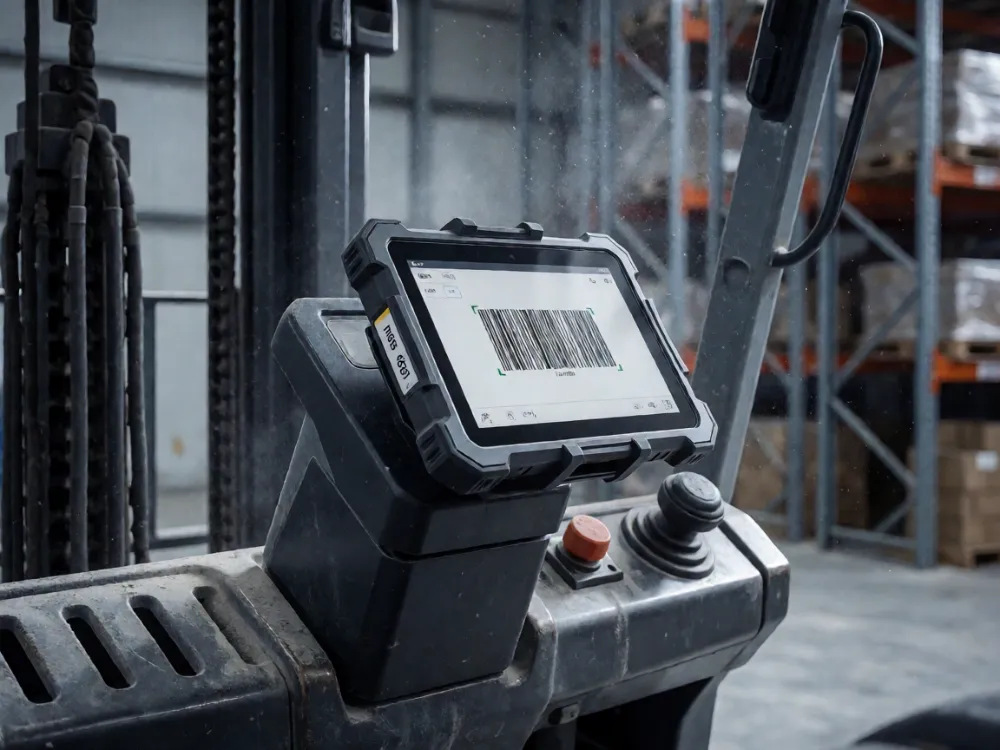
- Barcode Scanning: Integrated 1D/2D imager modules eliminate handheld scanners. Faster scan rates (30+/sec) reduce line delays. Brands like Honeywell and Motorola Solutions embed these directly into rugged tablets for seamless WMS (Warehouse Management System) integration.
- GPS Accuracy: Fleet dispatchers need ±1.5m GPS accuracy (without SBAS) to track vehicles in dense urban areas. Rugged tablets often include SBAS (WAAS/EGNOS) correction for ±0.5m precision, critical for geofencing and proof-of-delivery.
Data Point (2026 Context)
A 2026 Gartner forecast notes that 68% of 3PL providers plan to replace handsets with rugged tablets by Q3 2027, driven by multi-functionality (camera for damage claims + scanner + comms in one device), cutting per-device cost by 22%.
3. Industrial Manufacturing & Asset Maintenance
In factories, tablets monitor PLCs, SCADA systems, and IoT sensor networks. The environment includes:
- Electromagnetic Interference (EMI): Motors, welders, and transformers create RF noise. Rugged tablets feature shielded chassis and EMI-filtered connectors to prevent data corruption.
- Dust & Particles: IP65/67 rating seals against cement dust, metal filings, and flour. An IP67 tablet can be submerged; an IP54 tablet only resists limited dust spray.
- Hazardous Locations: In oil & gas, electronics must not produce sparks. IECEx/ATEX certified rugged tablets (intrinsically safe) are required for Zone 1/2 areas. Examples: AAEON Rugged PC series or Getac F410 (certified for explosive atmospheres). Never use non-certified devices in these zones.
Critical Spec
Operating Temperature Range: Industrial plants can hit 70°C near ovens/furnaces. Standard tablets max out at 35°C. Rugged industrial tablets must spec min -20°C / max 70°C operating range to avoid shutdowns.
4. Public Safety, Emergency Response & Military
First responders and defense units need devices that function under physical stress and network degradation.
- Shock & Vibration: MIL-STD-810H testing includes 11 shock profiles. Rugged tablets survive 30G shock and continuous vibration from vehicle mounting (patrol cars, helicopters).
- Encrypted Comms: Many include hardware-based encryption (AES-256) and secure boot to protect sensitive data. For military use, look for FIPS 140-2 Level 3 certification.
- Long-Term Reliability: MTBF (Mean Time Between Failures) for rugged tablets is >100,000 hours vs. ~20,000 for consumer. In a 90-day deployment, this means 3–4x fewer support tickets.
2026 Update
The U.S. DoD now mandates Zero Trust architecture for field devices. Rugged tablets must support hardware-based identity (e.g., TPM 2.0) and remote kill switches via MDM (Mobile Device Management). Look for devices with integrated eSIM for secure, carrier-independent connectivity.
5. Agriculture & Environmental Monitoring
Farmers and environmental scientists work outdoors daily, facing rain, mud, and extreme sun.
- Solar Reflection: Rugged tablets often include anti-glare screens (400+ nits brightness) with AG (Anti-Glare) coating. Consumer screens are too dark to read in direct sunlight.
- Humidity & Mud: IP65/IP67 prevents mud ingress. A farmer tracking crop health with a multi-spectral camera needs a device that can be wiped clean and survive a downpour.
- Connectivity in Remote Areas: LTE Cat-M/NB-IoT modules allow low-power, long-range comms for sensor data aggregation. Rugged tablets act as mobile gateways for LoRaWAN or Sigfox sensors.
Use Case
A 2025 study in Precision Agriculture Journal showed that using rugged tablets with edge AI processing reduced nitrate detection errors by 40% vs. cloud-only analysis, thanks to on-device ML models running on Qualcomm QCS6490 chips in rugged form factors.
6. How to Choose the Right Rugged Tablet: A Spec Checklist
Don’t just buy “rugged.” Match specs to your actual failure modes.
| Factor | What to Look For | Why It Matters |
|---|---|---|
| ——– | —————— | —————- |
| IP Rating | IP65 (dust/dustjet) / IP67 (submersion 1m) / IP68 (deeper submersion) | Dust is the #1 killer of internal components. Water is #2. |
| Drop Rating | MIL-STD-810H/G, 1.2m–1.8m to concrete | Simulates falling off ladders/vehicles. Higher = safer. |
| Temperature Range | -20°C to 50°C+ (check operating, not storage) | Batteries fail outside range. Spec must match your climate. |
| Connectivity | Wi-Fi 6/6E, 5G, LTE-A, Bluetooth 5.3, NFC | Future-proofing. 5G is critical for HD video uploads from field. |
| Battery Life | 10+ hours (typical), hot-swappable option | Downtime = lost wages. Swappable = zero downtime. |
| Certifications | ATEX/IECEx (hazloc), CE, FCC, RoHS | Legal requirement in hazardous zones. |
| OS Support | Windows 11 IoT Enterprise, Android 13+ | Long-term security patches (7+ years) are critical. |
Red Flags
- “Rugged” label with no IP/MIL spec listed. Marketing fluff.
- No 3-year warranty on battery/keyboard. Rugged devices degrade. Warranty must cover thermal cycles.
- Locked-down OS. You need MDM access for updates.
7. Cost-Benefit: When Is Rugged Worth It?
Rule of Thumb: If device failure causes >2 hours of downtime or >1000 USD in labor/equipment costs, rugged is justified.
- Consumer Tablet: $300–$500, lasts 1–2 years, high failure rate in harsh env.
- Rugged Tablet: $1,500–$3,000, lasts 5–7 years, <5% failure rate.
- TCO (Total Cost of Ownership): Over 5 years, rugged tablets often cost less due to:
- Fewer replacements (1 vs. 3)
- Reduced support tickets
- Higher uptime (>99.5% vs. 92%)
2026 Insight: With 5G RAN deployment expanding, rugged tablets with 5G modems now have a 30% faster data offload time, enabling real-time AI video analytics from the field. This shifts value from “durability” to “edge computing capability.”
8. Deployment Best Practices
- Start with a Pilot: Test 5–10 units in your hardest environment for 90 days. Track battery drain, drop events, and connectivity drops.
- Mount & Carry Solutions: Use padded holsters, vehicle mounts, and anti-slip grips. A tablet in a loose pocket still takes 30cm drops—rugged specs assume controlled drop heights.
- MDM from Day 1: Enforce encryption, remote wipe, and app whitelisting before field deployment.
- Battery Rotation: For 24/7 use, rotate batteries weekly. Lithium degrades with full cycles.
- Firmware Updates: Rugged OEMs (Zebra, Getac, Dell Rugged, Honeywell) push security patches quarterly. Never ignore updates—zero-day exploits in embedded Linux/Android are common.
9. Emerging Trends in 2026 Rugged Tablets
- Edge AI Acceleration: Devices now include NPU (Neural Processing Units) with 10+ TOPS. This enables on-device computer vision for defect detection, license plate recognition, and facial ID—without cloud latency.
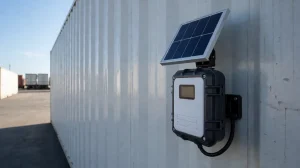
- Energy Harvesting: Some industrial tablets integrate solar skins for semi-permanent outdoor monitoring (weather stations, pipeline markers).
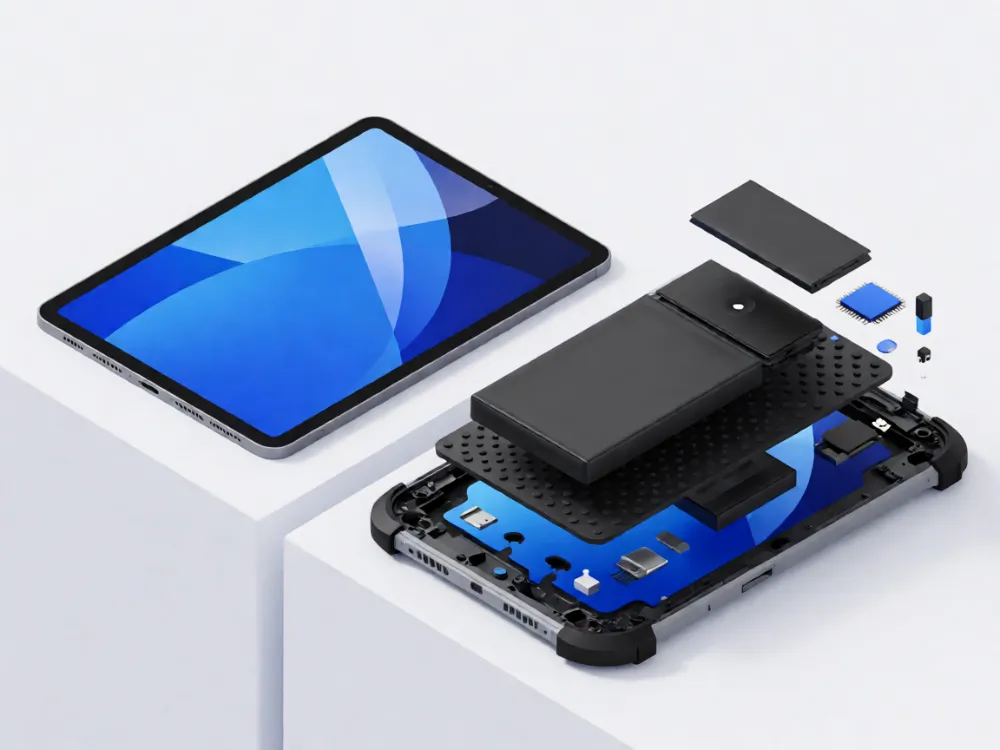
- Modular Design: Detachable scanners, batteries, and 5G modules allow field upgrades without replacing the whole device. Extends lifecycle to 8–10 years.
- Cybersecurity Hardening: TPM 2.0 + measured boot is now standard. Look for devices with hardware root of trust to prevent firmware tampering.
10. Where to Go Next
If you’re evaluating rugged tablets for your operation, don’t just compare specs. Map your failure scenarios:
- Where do devices break?
- When do they die?
- What data is lost?
Then match specs to those pain points. For a deeper dive, our team can provide a Rugged Tablet Deployment Guide covering MDM strategies, battery management for extreme temps, and integration playbooks for major ERP/SCADA systems.
Tags: ATEX certified tablets hazardous locations, industrial tablet vs consumer durability specs, IP67 tablet operating temperature range, rugged tablet TCO calculation manufacturing, rugged tablet use cases field service