Choosing between a 5-inch and a 7-inch Android tablet is not just about screen size; it is about defining your primary use case. For content creators, mobile gamers, and professionals on the go, the physical dimensions of the device directly impact usability, battery life, and productivity. A 5-inch tablet functions almost identically to a large smartphone, prioritizing portability and one-handed operation. Conversely, a 7-inch tablet offers a distinct compromise, providing enough real estate for true multitasking and media consumption without the bulk of a full-sized 10-inch slab. This comparison breaks down the critical specifications, ergonomic differences, and performance implications of each form factor to help you select the right tool for your needs.
Ergonomics and Portability: The Handheld Advantage
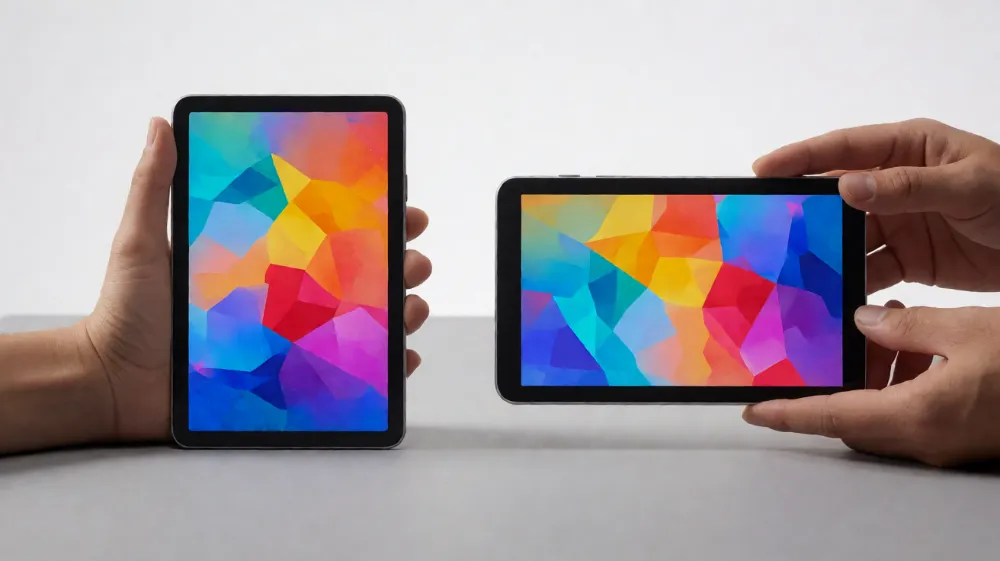
The most immediate difference between these two categories is how you hold and carry the device. A 5-inch Android tablet is essentially a pocketable device. It fits comfortably into a pants pocket or a small sling bag. Because of its compact footprint, users can operate it with one hand, scrolling through feeds, answering emails, or navigating maps without needing to shift their grip. This makes the 5-inch class ideal for travelers, logistics workers, or anyone who wants a device that stays with them at all times without feeling like an accessory.
A 7-inch tablet, however, requires two hands for comfortable reading and viewing. It is too large for a standard pocket but small enough to fit into a jacket pocket or a lightweight tote. While it sacrifices the “pocketability” of the 5-inch model, it gains in stability. When using a stylus or typing on an on-screen keyboard, the 7-inch frame provides a more stable surface, reducing hand fatigue during longer sessions. If you plan to use the device as a secondary display for a laptop or for reading lengthy PDFs, the 7-inch screen reduces the need for excessive scrolling, which is a significant ergonomic advantage.
Display Quality and Visual Real Estate

Screen size is a direct proxy for visual comfort. A 5-inch display is sufficient for streaming videos in casual settings and for navigating apps, but it can feel cramped for productivity tasks like writing documents or viewing data-heavy dashboards. The pixel density is usually high enough to avoid visible grain, but the physical limits of the panel mean you see less content at once.
In contrast, a 7-inch tablet offers roughly 30-40% more screen area than its 5-inch counterpart. This additional space is critical for split-screen multitasking. On a 5-inch screen, running two apps side-by-side often results in a cluttered, unreadable interface where the text becomes too small to tap accurately. On a 7-inch display, you can comfortably view a video in one half while taking notes in the other, or run a web browser next to an email client. For users who value immersive media experiences without the bulk of a 10-inch device, the 7-inch size is the sweet spot for balance.
Battery Life and Charging Considerations
Battery capacity generally scales with device size, but efficiency also plays a role. Because 5-inch tablets house smaller batteries, they often offer shorter total run times, typically ranging from 8 to 10 hours of mixed use. However, their smaller form factor allows for faster charging cycles due to lower total energy requirements.
7-inch tablets usually ship with larger batteries, capable of sustaining 12 to 15 hours of video playback or web browsing. This extended endurance is vital for users who travel without guaranteed access to power outlets. Additionally, the larger body of a 7-inch tablet allows for better thermal dissipation, which helps maintain performance during sustained loads, such as gaming or video rendering, without throttling as quickly as a compact 5-inch device might.
Performance Specifications and Hardware Capabilities
To make an informed decision, you must look beyond the marketing descriptions. The hardware inside these two classes often differs significantly due to the thermal constraints of the compact 5-inch chassis. Below is a detailed comparison of typical specifications found in modern flagship devices of each class.
| Feature | 5-Inch Android Tablet | 7-Inch Android Tablet |
|---|---|---|
| Primary Use Case | Portable browsing, quick tasks, one-handed use | Multitasking, media consumption, light productivity |
| Screen Size | 5.0 – 5.5 inches | 7.0 – 7.9 inches |
| Resolution | 1920 x 1080 (FHD) | 2000 x 1200 to 2560 x 1600 |
| Processor | Mid-range SoC (e.g., Snapdragon 6 series) | High-performance SoC (e.g., Snapdragon 8 series) |
| RAM | 4GB – 6GB | 8GB – 16GB |
| Storage | 128GB – 256GB | 256GB – 512GB |
| Battery Capacity | 4,000 mAh – 5,000 mAh | 6,000 mAh – 8,000 mAh |
| Weight | 150g – 200g | 250g – 350g |
| Multitasking | Limited to dual apps | Advanced split-screen and drag-and-drop |
The table above highlights a crucial trend: 7-inch tablets are frequently equipped with higher-tier processors and more RAM. This is because the larger chassis can accommodate the heat generated by more powerful chips. A 5-inch tablet with a flagship processor would struggle with thermal throttling, so manufacturers often limit the hardware to ensure consistent performance over long periods. If you intend to use the tablet for mobile game development, video editing, or running virtual machines, the 7-inch option with its superior thermal headroom is the professional choice.
Connectivity and Accessory Ecosystem
While both sizes support standard USB-C or micro-USB connectivity, the accessory ecosystem differs. The 5-inch class is often designed to be standalone, relying on wireless accessories. The 7-inch class, however, frequently supports Bluetooth keyboards and external monitors more effectively due to the greater processing power. Some 7-inch devices even include magnetic docking features for keyboard cases, transforming the tablet into a mini-laptop replacement. For users who need to type extensively, the 7-inch platform is far superior. The 5-inch tablet lacks the space to support a comfortable typing experience without a bulky add-on, making it less practical for text-heavy workflows.
Which One Should You Buy?
The decision ultimately hinges on your daily routine. If your primary need is a backup device for travel, quick reference, or mobile gaming on the go, the 5-inch Android tablet offers the best portability-to-performance ratio. It is the digital companion that lives in your pocket.
However, if you are looking for a dedicated productivity tool, a media hub for long flights, or a flexible workstation that can handle split-screen apps, the 7-inch Android tablet is the superior investment. It provides the necessary screen real estate and hardware power to function as a serious computing device while remaining significantly more portable than a standard laptop or 10-inch tablet.
Frequently Asked Questions
Is a 7-inch tablet too small for reading books?
No, 7 inches is the ideal size for reading books. It offers a clear, legible view without requiring the user to hold the device at a very close distance. The larger aspect ratio allows for more text per screen, reducing the frequency of page turns. Additionally, the extra space allows for easier navigation of menus and footnotes, which can be cumbersome on a 5-inch screen.
Can I use a 5-inch tablet as a secondary monitor for my laptop?
Yes, you can, but the experience is limited. The 5-inch screen is small for detailed secondary tasks like reading code or spreadsheets. It works well for quick notifications, audio control, or video calls, but for serious multitasking where you need to drag files or view complex interfaces, the 7-inch tablet provides significantly more usable space and better usability when docked.
Which has better battery life for video streaming: 5-inch or 7-inch?
The 7-inch tablet typically has better battery life in hours. Although it has a larger screen that consumes power, it houses a much larger battery capacity (often 40-60% larger than a 5-inch model). This results in longer total playback time, making it a better choice for long-haul travel where you may not have access to a charger for several hours.
Ready to find the perfect device for your needs? Explore our curated selection of premium 5-inch and 7-inch Android tablets, or contact our sales team for a personalized recommendation based on your specific productivity and entertainment requirements. We are here to help you make the right choice.
Tags: 5 inch android tablet, 7 inch android tablet, 7 inch rugged tablet