- What is a CAN Bus Rugged Tablet?
- Understanding CAN Bus Technology
- Core Features of CAN Bus Rugged Tablets
- Seven Game-Changing Benefits for Fleet Telematics
- CAN Bus Rugged Tablet Applications Across Industries
- Implementing CAN Bus Rugged Tablet Systems
- Selecting the Right CAN Bus Rugged Tablet
- Future Trends in CAN Bus Telematics
Modern fleet operations demand real-time visibility into vehicle performance, driver behavior, and maintenance needs. A CAN Bus rugged tablet represents the technological convergence that enables fleet managers to access comprehensive vehicle diagnostics directly from the driver’s cab or dispatch center. This specialized device combines industrial durability with direct vehicle network integration, transforming how fleets approach telematics and operational intelligence.
What is a CAN Bus Rugged Tablet?
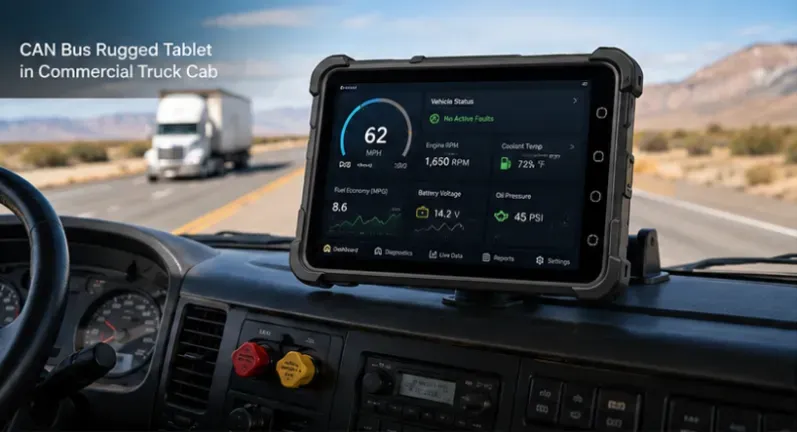
A CAN Bus rugged tablet is a purpose-built mobile computing device engineered to interface directly with a vehicle’s Controller Area Network (CAN Bus). The CAN Bus is the vehicle’s internal communication network—the digital backbone connecting engines, transmissions, braking systems, and dozens of other electronic components.
Unlike standard rugged tablets that merely display generic GPS or cellular data, a CAN Bus rugged tablet reads native vehicle signals directly from the CAN Bus interface. This direct connection provides access to critical diagnostic information: engine parameters, fuel consumption, fault codes, driver behavior metrics, and maintenance alerts—all in real-time.
The rugged construction ensures reliable operation in demanding fleet environments, while the CAN Bus integration transforms the tablet into a comprehensive fleet telematics hub.
Understanding CAN Bus Technology
The Vehicle Network Foundation
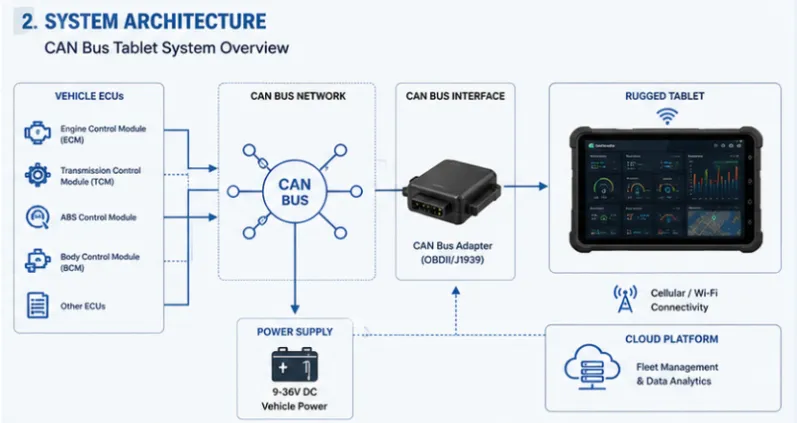
The CAN Bus protocol emerged from automotive engineering requirements for reliable, real-time communication between vehicle systems. Modern commercial vehicles contain dozens of electronic control units (ECUs) managing everything from engine timing to brake pressure distribution. The CAN Bus enables these systems to communicate efficiently without dedicated point-to-point wiring.
Data Flow and Accessibility
Vehicles continuously broadcast diagnostic information across the CAN Bus:
- Engine RPM, temperature, and load
- Transmission status and gear selection
- Fuel consumption and efficiency metrics
- Brake system pressure and status
- Door open/close events
- Seatbelt engagement status
- Diagnostic trouble codes (DTCs)
A CAN Bus rugged tablet equipped with proper interface hardware captures this information stream, enabling real-time monitoring and analysis.
Core Features of CAN Bus Rugged Tablets
Real-time Vehicle Diagnostics
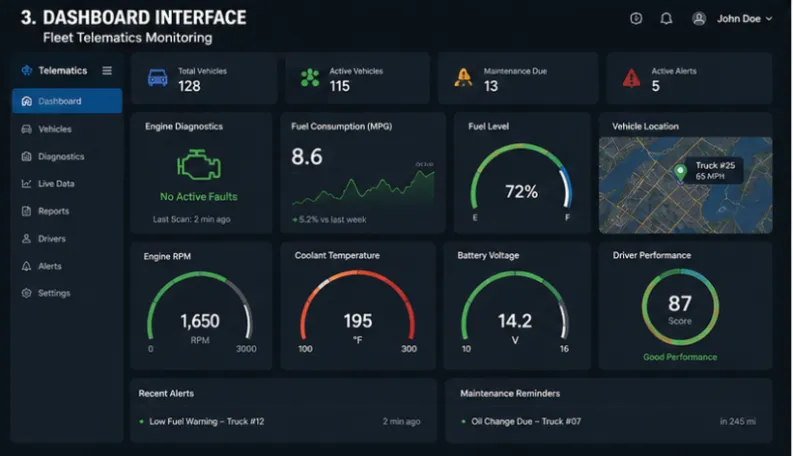
The primary advantage of CAN Bus rugged tablet technology is immediate access to vehicle health data. Drivers and technicians identify emerging problems before they become critical failures:
- Engine warning indicators appear instantly
- Transmission issues surface before catastrophic failure
- Fuel system anomalies become visible for optimization
- Brake system parameters trigger preventive maintenance alerts
Integration with Fleet Telematics Platforms
Modern CAN Bus rugged tablet systems integrate seamlessly with comprehensive fleet management software:
- Automatic fault code reporting to dispatch centers
- Real-time driver performance scoring
- Predictive maintenance scheduling
- Route optimization based on vehicle condition
- Fuel consumption tracking and analysis
Rugged Construction for Mobile Environments
These tablets withstand the harsh conditions of fleet operations:
- IP65-IP67 ratings protect against water and dust
- Military-grade drop testing (MIL-STD-810G) ensures durability
- Reinforced frames handle vibration and shock
- Extended temperature operation (-10°C to +50°C)
- Multi-year lifespan in demanding conditions
Multi-Protocol Support
Advanced CAN Bus rugged tablet devices support multiple communication standards:
- CAN 2.0 (standard automotive CAN)
- CAN FD (CAN with flexible data-rate)
- J1939 (heavy-duty vehicle protocol)
- ISO 14229 (unified diagnostic services)
- OBD-II (on-board diagnostics standard)
Seven Game-Changing Benefits for Fleet Telematics
1. Predictive Maintenance and Reduced Downtime
By monitoring CAN Bus signals, fleet managers identify maintenance needs before failures occur. A CAN Bus rugged tablet displaying early warning signs enables preventive service scheduling, reducing unexpected breakdowns by 30-40% and extending vehicle lifespan.
2. Real-time Driver Coaching and Safety Improvement
CAN Bus data reveals driver behavior patterns: harsh braking, rapid acceleration, excessive idling. Fleet managers use this intelligence to coach drivers toward safer, more efficient operation, reducing accident rates and insurance costs.
3. Fuel Efficiency Optimization
Direct access to engine and transmission parameters enables precise fuel consumption analysis. Fleets identify inefficient driving patterns, route optimization opportunities, and maintenance issues affecting fuel economy. Average fuel savings of 5-15% are achievable through data-driven optimization.
4. Compliance and Regulatory Reporting
Commercial fleets must comply with Hours of Service (HOS) regulations, vehicle maintenance standards, and safety requirements. A CAN Bus rugged tablet automatically collects compliance data, simplifying regulatory reporting and reducing audit burden.
5. Rapid Fault Diagnosis and Reduced Repair Costs
When vehicles experience issues, technicians access complete diagnostic histories directly from the tablet. This comprehensive fault information accelerates diagnosis, reduces unnecessary component replacement, and minimizes labor hours spent troubleshooting.
6. Integration with Autonomous and Advanced Driver Assistance Systems (ADAS)
Modern commercial vehicles increasingly incorporate autonomous features and ADAS technology. CAN Bus rugged tablet systems monitor these advanced systems, ensuring proper operation and logging performance data for continuous improvement.
7. Data-Driven Fleet Management Decision Making
Aggregating CAN Bus data across entire fleets reveals patterns and trends impossible to detect from individual vehicles. Fleet managers make informed decisions about vehicle replacement, driver training priorities, and operational adjustments based on comprehensive data intelligence.
CAN Bus Rugged Tablet Applications Across Industries
Commercial Trucking and Logistics
Long-haul carriers use CAN Bus rugged tablet systems to monitor driver compliance, optimize fuel consumption, and predict maintenance needs across large vehicle fleets. Real-time diagnostics prevent costly roadside breakdowns.
Public Transportation and Bus Operations
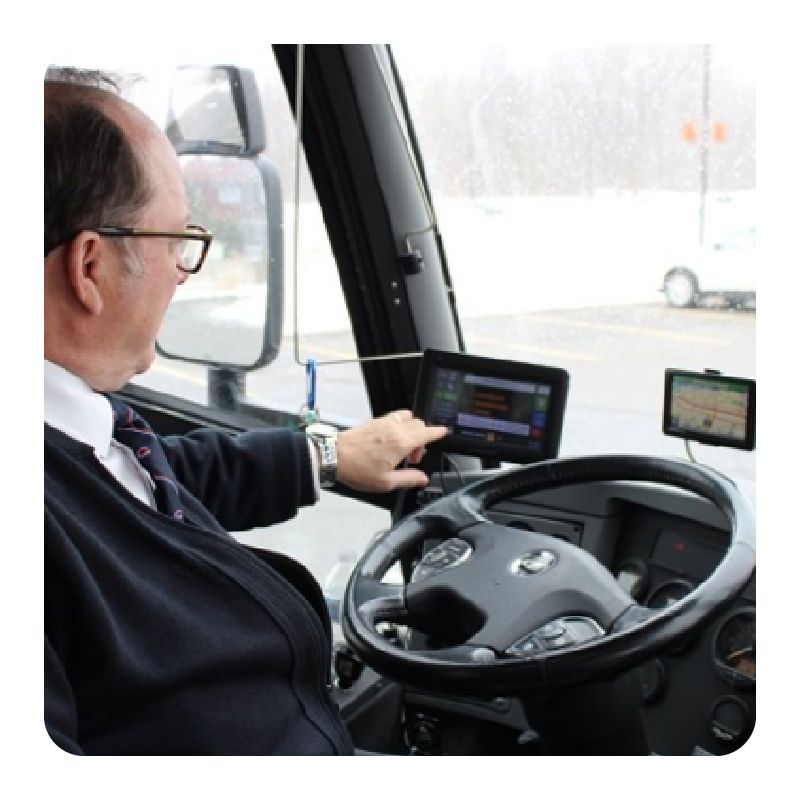
Transit agencies deploy CAN Bus tablets for fleet-wide monitoring, ensuring vehicle reliability and passenger safety. Driver behavior monitoring improves service quality and reduces accident liability.
Construction and Heavy Equipment
Construction companies monitor equipment health, track fuel consumption, and optimize utilization across heavy machinery fleets. Predictive maintenance prevents project delays caused by equipment failure.
Emergency Services and Government Fleets
Police, fire, and emergency medical services depend on vehicle reliability. CAN Bus rugged tablet systems ensure critical vehicles remain operational and provide real-time status information to dispatch centers.
Delivery and Last-Mile Operations
Package delivery companies use CAN Bus telematics to monitor vehicle condition, track driver performance, and optimize delivery routes based on real-time vehicle diagnostics.
Implementing CAN Bus Rugged Tablet Systems
Hardware Requirements
Successful implementation requires:
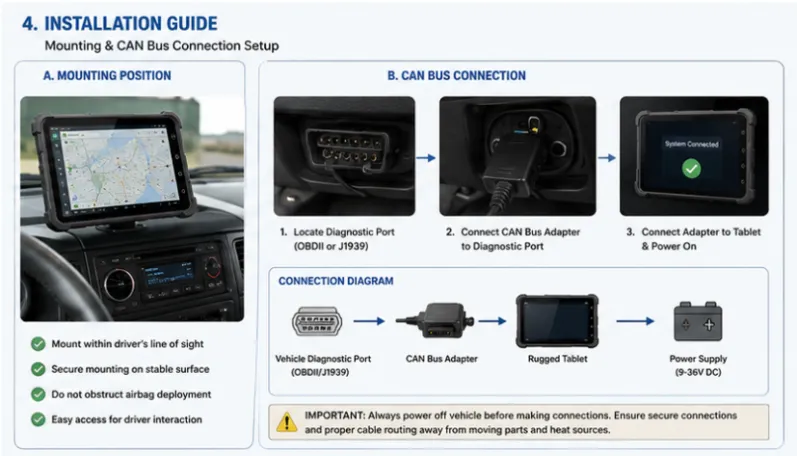
- CAN Bus interface hardware (OBD-II adapters or direct CAN connections)
- Rugged tablet with appropriate processor power and memory
- Cellular or satellite connectivity for remote areas
- Mounting hardware suitable for vehicle environment
- Backup power solutions for continuous operation
Software Integration
Modern CAN Bus rugged tablet systems require:
- Vehicle diagnostic software supporting your fleet’s vehicle types
- Fleet management platform integration
- Driver interface applications
- Data analytics and reporting tools
- Cloud connectivity for central fleet monitoring
Network Architecture
Consider your connectivity approach:
- Cellular networks: 4G/LTE for urban and suburban operations
- Satellite connectivity: For remote operations beyond cellular coverage
- Hybrid solutions: Combining cellular and satellite for reliability
- On-board data storage: Local caching for offline capability
Driver and Technician Training
Successful adoption requires comprehensive training:
- Proper device operation and maintenance
- Understanding diagnostic information displayed
- Troubleshooting common connectivity issues
- Integration with existing dispatch procedures
Selecting the Right CAN Bus Rugged Tablet
Vehicle Compatibility Assessment
Verify that your chosen tablet supports all CAN protocols used in your fleet:
- Confirm OBD-II compatibility for light-duty vehicles
- Verify J1939 support for heavy-duty trucks
- Assess CAN FD capability for newer vehicles
- Check diagnostic software availability for your vehicle makes/models
Performance and Processing Power
Select tablets with sufficient computing capability:
- Multi-core processors for simultaneous data processing
- Adequate RAM for complex diagnostic applications
- Storage capacity for historical data retention
- Graphics capability for clear data visualization
Connectivity Options
Evaluate available connectivity:
- Dual SIM capability for network redundancy
- Wi-Fi for depot-based data synchronization
- Bluetooth for wireless peripheral connections
- GPS for location tracking integration
Future Trends in CAN Bus Telematics
Artificial Intelligence and Predictive Analytics
Machine learning algorithms analyzing CAN Bus data will predict failures with increasing accuracy, enabling proactive maintenance scheduling.
Edge Computing Integration
Processing data locally on CAN Bus rugged tablet devices reduces latency and enables real-time decision-making without cloud dependency.
Vehicle-to-Infrastructure (V2I) Communication
Future systems will integrate CAN Bus data with road infrastructure, enabling enhanced safety features and optimized routing.
Electrification and Battery Management
As electric vehicles proliferate, CAN Bus telematics will evolve to monitor battery health, charging optimization, and energy efficiency.
Tags: CAN Bus vehicle diagnostics, fleet telematics integration, fleet telematics system, rugged tablet fleet management, vehicle data monitoring