- GPS Fleet Tracking vs. Telematics vs. Fleet Management: What's the Difference?
- Core Components of a GPS Fleet Management System
- What Data Does GPS Fleet Tracking Collect?
- Who Uses GPS Fleet Tracking?
- GPS Fleet Tracking vs. Traditional Fleet Management
- Is GPS Fleet Tracking Right for You?
- Frequently Asked Questions
GPS fleet tracking is a system that uses satellite-based GPS devices installed in vehicles to transmit real-time location, speed, and diagnostic data to a cloud platform, allowing fleet managers to monitor, dispatch, and optimize their entire fleet from a single dashboard. According to the FMCSA, electronic tracking systems have become standard practice for commercial fleets in the United States.
GPS Fleet Tracking vs. Telematics vs. Fleet Management: What’s the Difference?
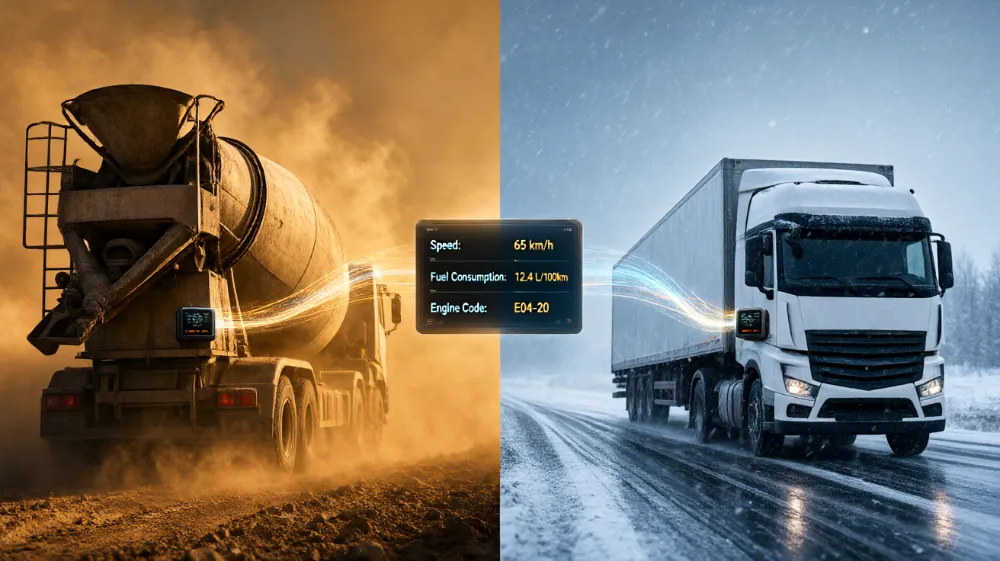
These three terms are often used interchangeably, but they mean different things — and understanding the difference helps you buy the right solution.
| Term | What It Means | Scope |
|---|---|---|
| GPS Tracking | Knowing where your vehicles are in real time | Location only |
| Telematics | GPS + vehicle diagnostics (engine data, fuel, driver behavior) | Vehicle data |
| Fleet Management | Telematics + operations: maintenance, compliance, dispatch, cost control | Entire operation |
In plain terms: GPS tracking is a component. Telematics is the data layer. Fleet management is the complete system built on top of both. When vendors say “GPS fleet management,” they usually mean a telematics platform with fleet management features.
Core Components of a GPS Fleet Management System
Every complete system has three building blocks:
1. GPS Tracking Devices (In the Vehicle)
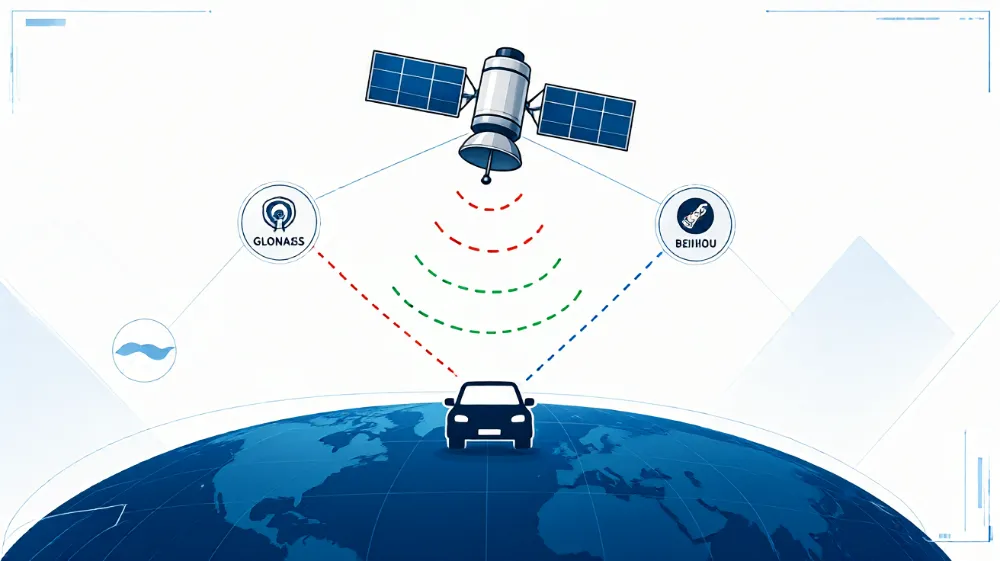
The device receives signals from GPS satellites orbiting Earth and calculates the vehicle’s position. Common form factors include:
- OBD-II plug-and-play trackers — plug into the diagnostic port; installed in seconds
- Hardwired trackers — connected to the vehicle’s power system; harder to tamper with
- Battery-powered asset trackers — for trailers and equipment without a power source
- Smartphone-based tracking — driver apps for very small fleets
(→ See our full guide: GPS Fleet Tracking Devices: Types, Costs & How to Choose)
2. Telematics Data & Cellular Networks
The device sends position and vehicle data over 4G/5G cellular networks to the provider’s servers. Most systems update every 30 seconds to 3 minutes depending on the plan.
3. Cloud Dashboard & Mobile Apps
This is where managers see everything: live map view, alerts, reports, and driver scores. Modern platforms also offer APIs to connect with dispatch, accounting, or ERP software.
What Data Does GPS Fleet Tracking Collect?
A typical system collects and reports:
| Data Point | Why It Matters |
|---|---|
| Real-time location & route history | Dispatch, theft recovery, customer ETAs |
| Speed & harsh braking/acceleration | Driver safety coaching; per NHTSA, speeding is a factor in ~29% of traffic fatalities |
| Idle time | Idling burns ~0.8 gal/hour of fuel (per Dept. of Energy estimates) |
| Fuel consumption | Detects fuel theft and inefficiency |
| Engine fault codes (DTC) | Predictive maintenance before breakdowns |
| Geofence entry/exit alerts | Job site verification, unauthorized use |
| Hours of service (ELD data) | FMCSA compliance for commercial drivers |
💡 Key insight from our testing: The location data is nearly identical across providers — what differentiates systems is what they do with the data: reporting, alerting, and integrations.
Who Uses GPS Fleet Tracking?
GPS fleet tracking has spread far beyond long-haul trucking. Common users include:
- Trucking & logistics — route optimization and HOS compliance
- Construction — equipment theft prevention (asset trackers)
- Field service (plumbing, HVAC, electrical) — dispatching the nearest technician
- Delivery & last-mile fleets — customer-facing ETAs
- Rental car companies & dealerships — asset recovery
- Government & public works fleets — utilization audits and GSA compliance
- Passenger transport & shuttles — safety and ETA sharing
(→ Industry-by-industry breakdown: GPS Fleet Management Use Cases)
GPS Fleet Tracking vs. Traditional Fleet Management
| Aspect | Traditional (Paper/Phone) | GPS-Based System |
|---|---|---|
| Vehicle location | Call the driver | Live map, 30-sec updates |
| Mileage & fuel logs | Manual entry | Automatic capture |
| Maintenance | Reactive (after breakdown) | Predictive (fault-code alerts) |
| Driver disputes | Word vs. word | Objective route data |
| Theft recovery | Rarely successful | Average recovery within hours |
| Overtime verification | Timesheets | Verified engine-on/engine-off times |
The trade-off is cost (typically 15–35/vehicle/month — see our Pricing Guide) and the need for a clear driver privacy policy.
Is GPS Fleet Tracking Right for You?
You probably need it if:
- ✅ You operate 5+ vehicles
- ✅ Drivers work unsupervised in the field
- ✅ Fuel or overtime costs are rising without explanation
- ✅ Customers ask “where’s my technician/truck?”
You may not need it yet if:
- ❌ You have 1–2 vehicles used locally (a phone tracker app may suffice)
- ❌ Your vehicles never leave a depot
Frequently Asked Questions
Q: What is GPS fleet tracking in simple terms?
It’s a system that shows you where all your company vehicles are in real time, plus how they’re being driven, using small GPS devices and an online map dashboard.
Q: Is GPS fleet tracking the same as telematics?
No. GPS tracking covers location only; telematics adds engine and driver-behavior data; fleet management is the full operational system built on telematics.
Q: How accurate is GPS fleet tracking?
Modern devices are typically accurate to 3–10 meters under open sky, per GPS.gov. Accuracy drops in tunnels, underground parking, and urban canyons.
Q: Is it legal to track company vehicles?
In the US, tracking company-owned vehicles is generally legal, but several states (e.g., California) require employee disclosure. In the EU, GDPR requires transparency and proportionality. Always consult local law.
Q: How much does GPS fleet tracking cost?
Typically 15–35 per vehicle per month for software, plus 50–200 per device. See our full pricing guide.
Tags: fleet management gps tracker, fleet management gps tracking, gps tracking and fleet management, gps tracking for fleet management