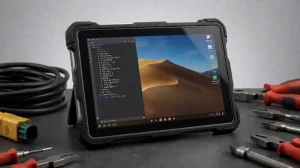
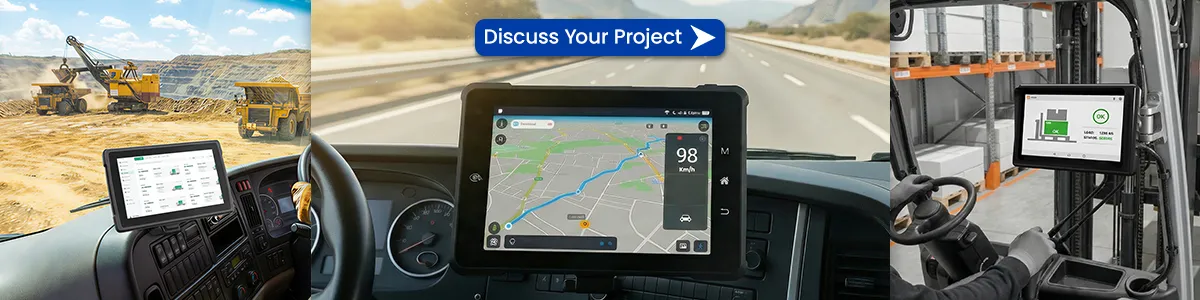
Rugged driver tablets combine durability, connectivity, and specialized software to streamline fleet operations. With IP67 ratings, long battery life (8-12 hours), and real-time GPS tracking, they reduce delivery times by 20-30% and improve driver safety. Top models support 4G/5G, weigh under 2kg, and cost $800-$2,500, making them essential investments for logistics companies managing 50+ vehicles.
- Why Do Professional Drivers Need Specialized Rugged Tablets?
- What Key Features Define a High-Quality Rugged Driver Tablet?
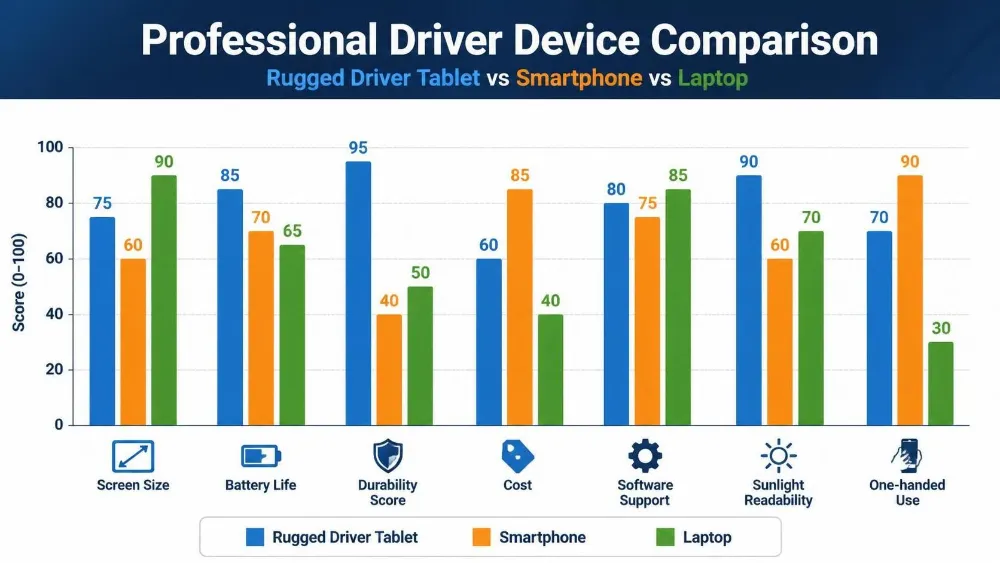
- How Do Rugged Driver Tablets Compare to Smartphones and Laptops?
- What Software and Applications Maximize Rugged Tablet Value?
- How Do Environmental Conditions Affect Tablet Performance and Durability?
- What Connectivity Solutions Ensure Reliable Fleet Operations?
- Frequently Asked Questions About Rugged Driver Tablets
Why Do Professional Drivers Need Specialized Rugged Tablets?
Rugged driver tablets are purpose-built for harsh environments, not consumer-grade devices adapted for business use.
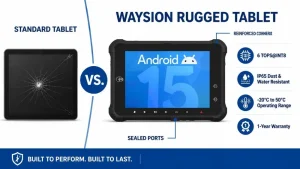
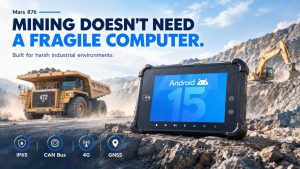
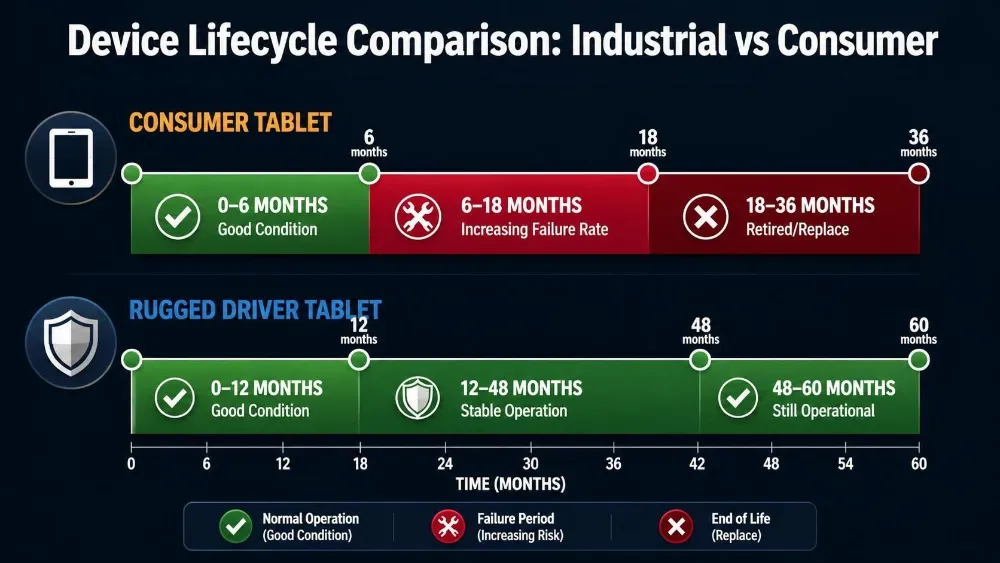
Professional drivers operate in conditions far beyond typical office settings. They face dust, moisture, vibration, and temperature extremes daily. Consumer tablets fail in these environments within months, resulting in costly replacements and operational disruptions. Rugged driver tablets address these challenges through military-grade construction, specialized operating systems, and industry-specific applications.
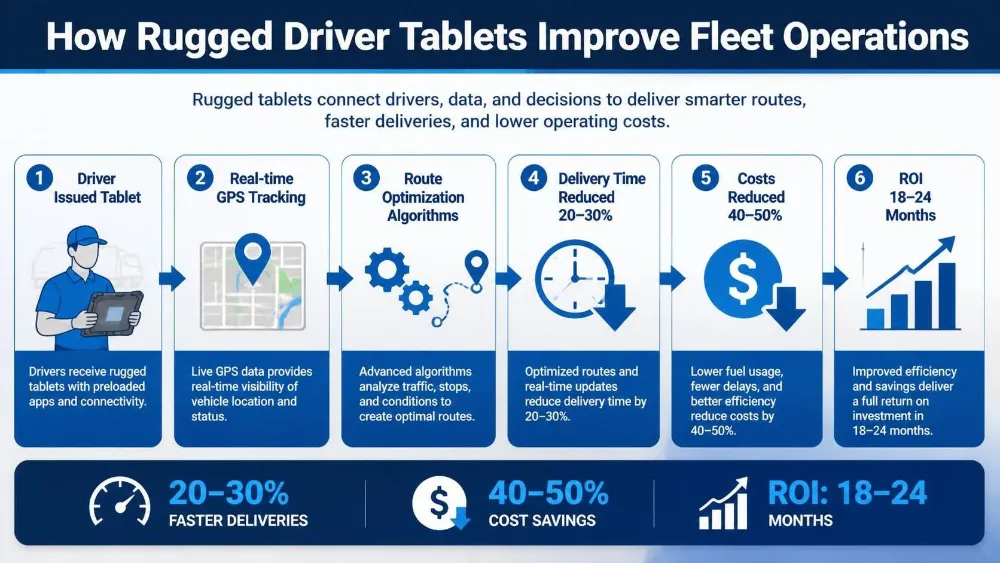
The distinction matters significantly. A consumer tablet might survive a few drops, but a rugged tablet withstands 6-foot drops onto concrete, 1,000+ drop cycles, and submersion in water. This durability translates directly to lower total cost of ownership. Fleet managers report 60-70% fewer device failures when switching to rugged tablets, recovering investment within 18-24 months through reduced replacement costs and improved uptime.
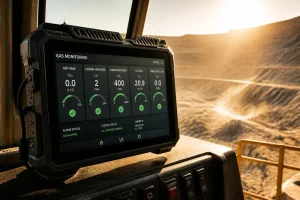
Beyond durability, rugged tablets integrate seamlessly with fleet management software, GPS systems, and communication networks. They support real-time tracking, electronic proof of delivery, and driver behavior monitoring—capabilities that standard tablets require extensive customization to achieve.
What Key Features Define a High-Quality Rugged Driver Tablet?
Essential features include IP67 waterproofing, sunlight-readable displays, 4G/5G connectivity, and specialized fleet software integration.
Display quality stands paramount for driver tablets. Standard tablets become useless in bright sunlight, forcing drivers to shield screens or miss critical information. Professional rugged tablets feature 500-1,000 nits brightness—comparable to outdoor billboards—ensuring readability in direct sunlight. This prevents dangerous distractions and ensures drivers can quickly reference routes, customer information, and delivery instructions.
Battery performance directly impacts operational efficiency. Most rugged driver tablets offer 10-12 hour battery life, sufficient for full-shift operations. Fast-charging capabilities (30-60 minutes to full capacity) enable quick turnarounds during lunch breaks or shift changes. Some models include hot-swappable batteries, allowing drivers to maintain operations without downtime.
Connectivity options have evolved dramatically. Modern rugged tablets support 4G LTE and emerging 5G networks, ensuring consistent communication with dispatch centers. Dual SIM capabilities enable automatic failover between carriers, preventing connectivity loss in areas with spotty coverage. GPS accuracy within 5-10 meters allows precise location tracking and geofencing applications.
Processing power matters for multitasking. Tablets with 6-8GB RAM and octa-core processors handle simultaneous applications—GPS navigation, communication apps, delivery management software, and camera feeds—without lag. This responsiveness reduces driver frustration and enables faster information access during deliveries.
How Do Rugged Driver Tablets Compare to Smartphones and Laptops?
Tablets offer the optimal balance between screen size, portability, and processing power for driver workflows.
| Feature | Rugged Tablet | Smartphone | Laptop |
|---|---|---|---|
| Screen Size | 7-10 inches | 5-7 inches | 13-17 inches |
| Portability | Excellent (hand-held) | Excellent | Moderate |
| Durability Rating | IP67 (military-grade) | IP67-68 | Standard (no rating) |
| Battery Life | 10-12 hours | 8-10 hours | 6-8 hours |
| Typical Cost | $800-2,500 | $200-800 | $600-2,000 |
| Fleet Software Support | Comprehensive | Limited | Full |
| Sunlight Readability | Excellent (500+ nits) | Good (300-400 nits) | Poor (200-300 nits) |
| One-Handed Operation | Good | Excellent | Poor |
Smartphones, while ubiquitous, present significant limitations for professional drivers. Screen sizes between 5-7 inches require constant squinting when reading detailed information. Navigation maps become cramped, customer details are difficult to read, and multitasking becomes frustrating. Additionally, consumer smartphones lack the specialized fleet management software integration that rugged tablets provide.
Laptops offer superior processing power and screen real estate but sacrifice the portability essential for drivers. Drivers cannot operate laptops while walking to customer locations, and setup/shutdown times waste valuable operational minutes. Rugged tablets eliminate this friction, providing immediate access to information upon arrival at delivery locations.
Rugged tablets represent the Goldilocks solution—not too small, not too large, not too powerful, not too underpowered. They’re optimized specifically for driver workflows, with form factors designed for single-handed operation while holding packages or documents.
What Software and Applications Maximize Rugged Tablet Value?
Industry-specific applications for route optimization, electronic proof of delivery, and real-time communication transform tablets from hardware into operational tools.
Fleet management software forms the backbone of tablet utility. Applications like Samsara, Verizon Connect, and Geotab integrate real-time GPS tracking, enabling dispatch centers to monitor driver locations, optimize routes, and respond to emergencies. Drivers receive updated delivery sequences, reducing inefficient backtracking and cutting delivery times by 20-30%.
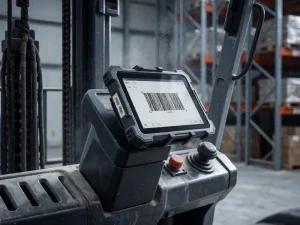
Electronic proof of delivery (ePOD) systems revolutionize customer interactions. Instead of paper signatures and manual data entry, drivers capture digital signatures, photos, and notes directly on tablets. This information syncs immediately to central systems, eliminating data entry errors and enabling same-day invoicing. Customers receive instant delivery confirmations, improving satisfaction scores.
Driver behavior monitoring applications track metrics like harsh braking, excessive speeding, and idle time. This data drives targeted coaching, reducing accidents by 30-40% and insurance costs by 10-15%. Gamification elements—leaderboards and incentives for safe driving—encourage positive behavior changes.
Communication platforms ensure drivers stay connected with dispatch and customers. Integrated messaging, voice calls, and video conferencing enable real-time problem resolution. When delivery complications arise, drivers can instantly contact dispatch or customers rather than making multiple phone calls, reducing resolution times from hours to minutes.
How Do Environmental Conditions Affect Tablet Performance and Durability?
Temperature extremes, moisture, dust, and vibration demand specialized engineering that consumer tablets cannot provide.
Temperature stability proves critical for outdoor operations. Rugged tablets operate reliably from -10°C to 50°C (-14°F to 122°F), covering most global climates. Battery performance degrades significantly outside this range, but rugged tablets include thermal management systems that maintain functionality. Consumer tablets often shut down in cold weather, preventing critical operations.
Moisture resistance defines rugged tablet superiority. IP67 ratings guarantee operation after 30 minutes of submersion in 1 meter of water. This protection prevents failures during rainstorms, accidental spills, or washdowns common in delivery environments. Corrosion-resistant materials—stainless steel fasteners, anodized aluminum frames—ensure long-term reliability in humid or coastal environments.
Dust ingress causes silent failures in consumer devices. Rugged tablets feature sealed ports, gasket-protected openings, and filtered vents that prevent dust accumulation inside. This engineering extends device lifespan by 2-3 years compared to consumer alternatives.
Vibration from vehicle movement and rough handling creates cumulative stress on device components. Rugged tablets undergo MIL-STD-810G testing, simulating 4-8 hours of continuous vibration at various frequencies. This rigorous testing ensures components remain secure and functional after years of daily use.
What Connectivity Solutions Ensure Reliable Fleet Operations?
Multi-band 4G/5G, dual SIM, and offline-capable applications eliminate connectivity dead zones that compromise operations.
Modern rugged tablets support Band 1-32 4G frequencies, ensuring compatibility with carriers worldwide. 5G-ready models future-proof investments while current 4G networks remain dominant. Dual SIM capabilities enable automatic carrier switching—if primary carrier signal drops below usable levels, tablets automatically switch to secondary carriers, maintaining uninterrupted connectivity.
GPS accuracy has become increasingly important for delivery verification and geofencing. A-GPS (assisted GPS) combines satellite positioning with cellular network triangulation, achieving 5-10 meter accuracy even in urban canyons or light tree cover. This precision enables arrival confirmations without manual intervention, reducing disputes over delivery times.
Offline capabilities address connectivity gaps in remote areas. Critical applications cache essential data—customer information, delivery sequences, maps—enabling drivers to continue operations without live connectivity. Upon reconnection, data automatically syncs, ensuring no information loss.
WiFi 6 support enables high-speed data transfer at distribution centers. Tablets can upload delivery photos, signatures, and data simultaneously across multiple devices, reducing dock time by 10-15 minutes per vehicle.
Frequently Asked Questions About Rugged Driver Tablets
Q: How long do rugged driver tablets typically last before replacement?
A: With proper maintenance, rugged driver tablets last 4-5 years in fleet environments. This compares to 2-3 years for consumer tablets. The extended lifespan, combined with lower failure rates, results in 40-50% lower total cost of ownership despite higher initial purchase prices.
Q: Can rugged tablets run standard Android or iOS applications?
A: Most rugged tablets run Android or Windows operating systems. Android tablets access the Google Play Store, supporting thousands of applications. However, fleet managers typically deploy curated app selections to minimize distractions and security risks. Specialized fleet management applications provide superior integration compared to consumer alternatives.
Q: What security features protect sensitive driver and customer data?
A: Enterprise-grade rugged tablets include encryption, biometric authentication, remote wipe capabilities, and VPN support. Mobile device management (MDM) software enables IT teams to enforce policies, monitor compliance, and secure devices remotely. These features protect sensitive customer information and prevent unauthorized access.
Q: How much can rugged tablets improve delivery efficiency?
A: Fleet studies show 20-30% reductions in delivery times through optimized routing and ePOD systems. Additional benefits include 30-40% accident reductions through driver monitoring, 10-15% insurance cost savings, and 60-70% fewer device failures. ROI typically occurs within 18-24 months.
Q: Are rugged tablets suitable for small delivery businesses?
A: Yes, rugged tablets scale effectively from small operations (5-10 vehicles) to large fleets (500+ vehicles). Subscription-based fleet management software enables pay-as-you-grow models. Small businesses benefit particularly from reduced device failures and improved delivery accuracy, which directly impact customer satisfaction and retention.
Q: What is the typical weight and size of professional rugged tablets?
A: Most rugged driver tablets weigh 400-800 grams (0.9-1.8 lbs) and measure 7-10 inches diagonally. This form factor balances screen real estate with one-handed operability. Mounting solutions enable secure vehicle installation, while compact size allows easy pocket or bag storage when drivers visit customer locations.
Tags: durable delivery tablets, enterprise tablets, Fleet management tablets, GPS fleet tablets, industrial tablets for drivers, professional driver devices, rugged driver tablet