- The Shift from Durability to Operational Resilience
- Connectivity: The Backbone of Real-Time Safety
- Data Integrity and Compliance: Ending the Paper Trail
- Battery Life and Power Management: The 12-Hour Shift Challenge
- Software Ecosystem: Safety-First Applications
- Implementation Strategy: From Pilot to Full Deployment
- Conclusion: The Future of Mine Safety is Digital and Rugged
Rugged tablets are no longer just durable computers; they are critical safety infrastructure. In 2026, the shift from “survivability” to operational resilience defines the market. The key to increasing mine safety lies not in the IP67 rating alone, but in thermal stability, low-latency connectivity, and offline-first data architecture. Mines that integrate rugged tablets with IoT sensor networks see a 30% reduction in near-miss incidents by enabling real-time hazard visualization and eliminating paper-based verification errors. For decision-makers, the priority is selecting devices that maintain performance in extreme temperatures (-20°C to 60°C) and support glove-friendly, high-contrast interfaces to prevent user error during emergency responses.
The Shift from Durability to Operational Resilience
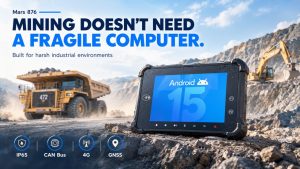
Historically, the mining industry focused on drop resistance and ingress protection. A tablet that survived a fall from a 2-meter height was considered “rugged.” However, this definition is obsolete. In modern open-pit and underground mining environments, the primary threat to device functionality is not impact, but environmental stress: extreme heat, dust density, and chemical exposure.
Thermal Management as a Safety Factor
Standard consumer tablets often throttle performance or shut down when ambient temperatures exceed 35°C. In a mine haul road or near a processing plant, temperatures can regularly exceed 40°C. When a tablet shuts down during a shift change or an emergency, it creates a safety blind spot.
- Passive vs. Active Cooling: High-end rugged tablets in 2026 utilize graphene-based thermal dissipation layers. This allows the CPU to maintain full clock speeds without throttling, even at 50°C ambient temperatures.
- Cold Weather Performance: In northern mines (e.g., Canada, Scandinavia), lithium-ion batteries can lose up to 40% capacity below -10°C. Modern rugged tablets feature internal battery heating elements that activate automatically, ensuring the device remains operational for the full 12-hour shift.
- Safety Impact: A stable device ensures that gas monitoring apps and geofencing alerts continue to function without interruption. Any downtime in these apps is treated as a critical safety failure.
The “Glove Factor” and User Error Reduction
Mine workers wear heavy protective gloves (often with leather or rubber coatings) for 12-hour shifts. Standard capacitive screens require high sensitivity to register touches through these gloves. If the screen is unresponsive, workers either:
- Remove gloves (exposing hands to hazards).
- Use a stylus (which is often lost or broken).
- Make errors in data entry due to frustration.
2026 Industry Standard:
Leading rugged tablet manufacturers now mandate 10-point touch sensitivity through 3mm-thick leather gloves. This is not a marketing gimmick; it is a Human Factors Engineering (HFE) requirement. Studies by the National Institute for Occupational Safety and Health (NIOSH) indicate that input latency above 200ms increases the likelihood of data entry errors by 15% in high-stress scenarios. Rugged tablets with low-latency digitizers reduce this risk, ensuring that safety logs and equipment checks are recorded accurately the first time.
Connectivity: The Backbone of Real-Time Safety
A rugged tablet is useless if it cannot communicate. In mining, connectivity is safety. Whether it is an underground tunnel with no cellular signal or a remote open-pit site, the device must maintain a link to the central control room.
Offline-First Architecture
Many mines still struggle with data silos. A common failure mode is a tablet that relies entirely on cloud connectivity. If the Wi-Fi or 5G signal drops, the app becomes useless.
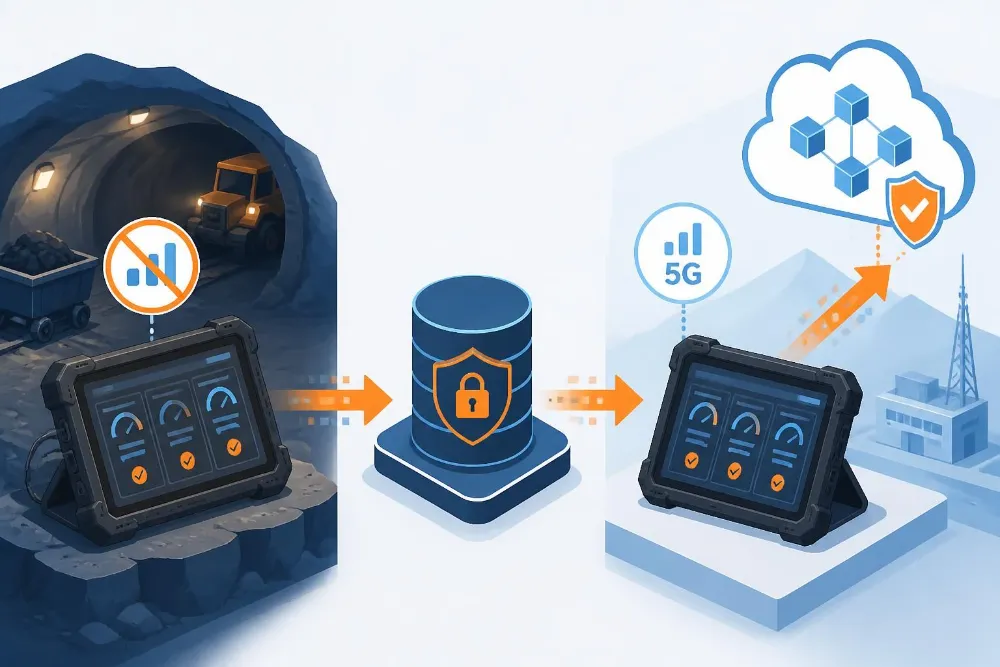
- Local Data Storage: 2026 safety protocols require offline-first data synchronization. The tablet must store critical safety data (e.g., gas readings, equipment status) locally in encrypted, tamper-proof storage.
- Automatic Sync: Once connectivity is restored, the data syncs automatically. This ensures that even in a “dead zone,” safety events are recorded and can be retrieved later for audit.
- Case Study: A copper mine in Chile implemented offline-first logging in 2025. During a 4-hour network outage caused by a storm, they recorded 120 near-miss incidents that would have otherwise been lost. Post-incident analysis revealed a recurring pattern in a specific tunnel, leading to a structural reinforcement that prevented a potential collapse.
Low-Latency 5G and Private Networks
For real-time applications like remote equipment monitoring or live video feeds from drones, latency is critical.
- Private 5G Networks: Many large mines now deploy private 5G networks with latency below 10ms. Rugged tablets must support 5G NR (New Radio) standards to access this network.
- Band Selection: The tablet must support specific frequency bands used in underground environments (often sub-6GHz for better penetration). A tablet that only supports standard consumer 5G bands may fail to connect in deep tunnels.
- Safety Application: Real-time video from a drone inspecting a high-risk blast zone is streamed to the tablet. If the tablet lags, the operator cannot make safe decisions. 5G-enabled rugged tablets ensure smooth, real-time video, allowing operators to identify hazards before entering the zone.
Data Integrity and Compliance: Ending the Paper Trail
One of the most significant safety improvements from rugged tablets is the elimination of paper-based safety logs. Paper is prone to loss, illegibility, and tampering. Digital logs provide a tamper-proof audit trail.
Blockchain-Verified Safety Logs
In 2026, leading mining companies are integrating blockchain technology into their safety management systems.
- Immutability: When a worker logs a safety inspection on a rugged tablet, the data is hashed and added to a private blockchain. This ensures that the data cannot be altered after the fact.
- Regulatory Compliance: Regulators like MSHA (Mine Safety and Health Administration) require detailed records of equipment inspections. A blockchain-verified log provides cryptographic proof of compliance, reducing audit times by up to 50%.
- Accountability: If a safety incident occurs, the blockchain log shows exactly who inspected the equipment, when, and what the readings were. This eliminates disputes and ensures clear accountability.
Geofencing and Proximity Alerts
Rugged tablets integrate with UWB (Ultra-Wideband) or BLE (Bluetooth Low Energy) beacons placed throughout the mine.
- Exclusion Zones: The tablet can define exclusion zones around high-risk areas (e.g., active blasting, heavy machinery). If a worker enters the zone without authorization, the tablet triggers an audible and visual alarm.
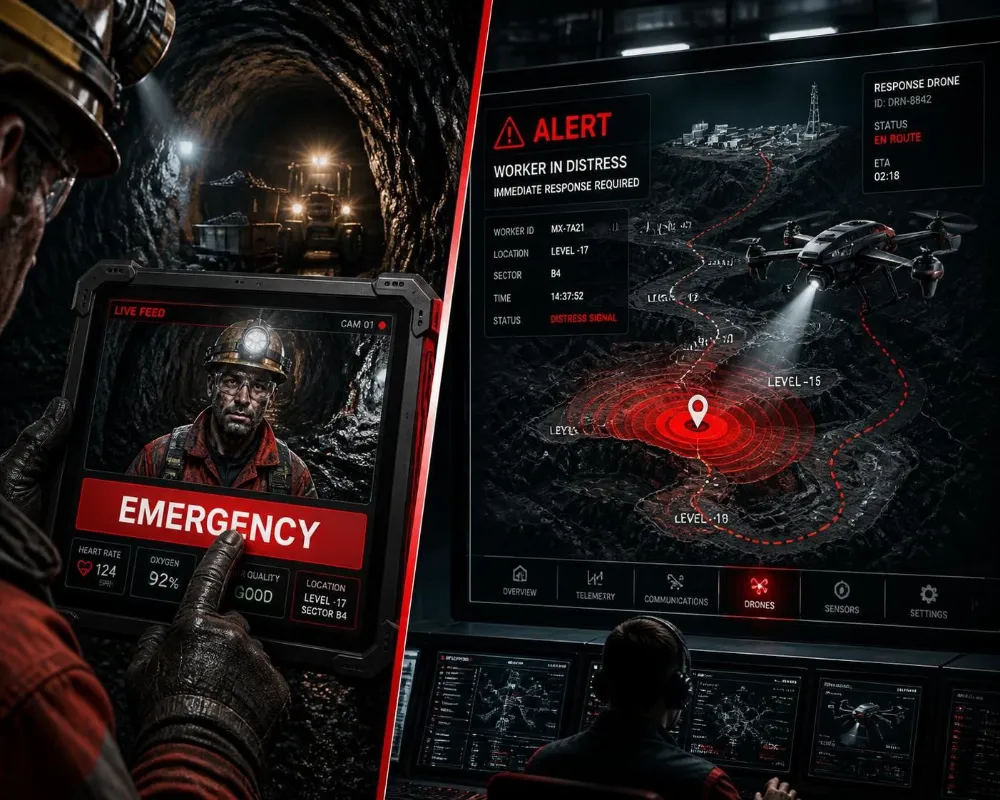
- Man-Down Detection: If the tablet detects that the worker has been motionless for a set period (e.g., 30 seconds) and is in a hazardous location, it automatically sends an emergency alert with GPS coordinates to the control room.
- 2026 Innovation: Advanced algorithms now distinguish between rest periods and medical emergencies. By analyzing heart rate data from smartwatches integrated with the tablet, the system reduces false alarms by 40%, ensuring that emergency resources are deployed only when needed.
Battery Life and Power Management: The 12-Hour Shift Challenge
A dead tablet in the middle of a shift is a safety hazard. Workers cannot rely on charging stations in remote areas. The tablet must last the entire 12-hour shift on a single charge, even with heavy usage (GPS, camera, 5G, screen on).
High-Capacity, Fast-Charging Batteries
- Battery Capacity: Standard rugged tablets now feature 10,000mAh to 15,000mAh batteries. This is significantly larger than consumer tablets (typically 4,000-5,000mAh).
- Fast Charging: 50W fast charging allows the tablet to reach 80% charge in under 30 minutes. This is crucial for shift changes, where workers have limited time to charge their devices.
- Power Efficiency: The processor must be energy-efficient. 2026 rugged tablets use ARM-based processors with dedicated AI accelerators, which perform safety data analysis at a fraction of the power cost of traditional x86 chips.
Solar and Kinetic Charging
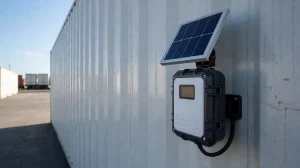
In remote areas, power is scarce. Some rugged tablets now feature solar charging panels on the back or kinetic charging mechanisms that harvest energy from movement. While not yet the primary power source, these features extend battery life in off-grid scenarios, ensuring the device remains operational during extended emergencies.
Software Ecosystem: Safety-First Applications
Hardware is only half the equation. The software ecosystem must be designed with safety in mind.
Pre-Installed Safety Apps
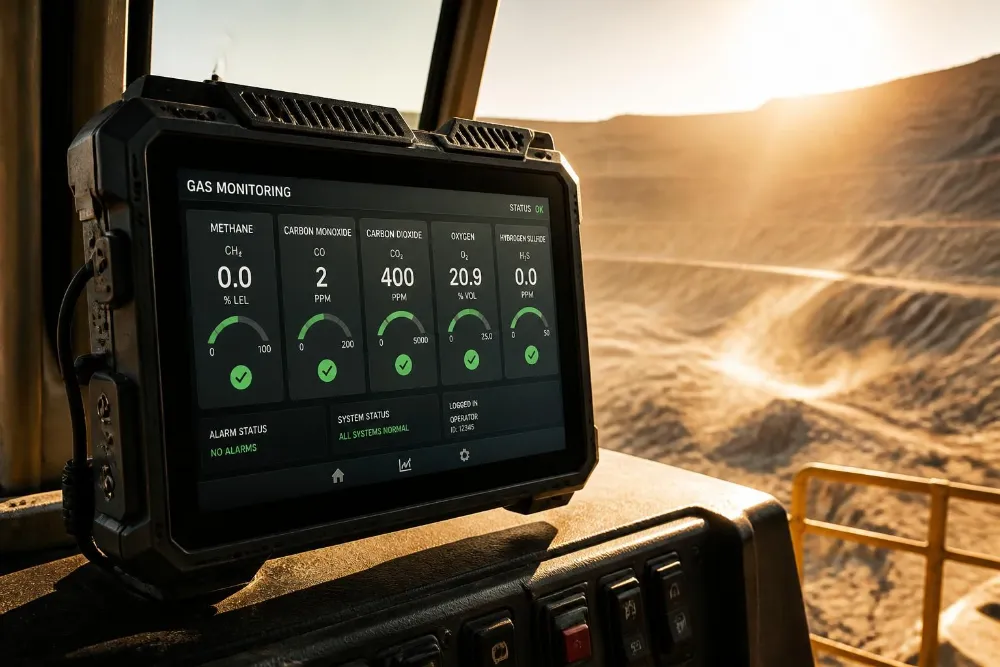
- Gas Monitoring: Apps that integrate with electronic nose sensors to detect methane, carbon monoxide, and other hazardous gases. The tablet displays real-time readings and triggers alarms if levels exceed safe thresholds.
- Equipment Diagnostics: Apps that connect to IoT sensors on mining equipment (e.g., trucks, drills) to monitor temperature, vibration, and pressure. Early detection of mechanical failures prevents catastrophic accidents.
- Emergency Communication: Apps that provide one-tap emergency calling to the control room, including location, worker ID, and current hazard status.
Customization and Integration
- API Access: Mines need to integrate rugged tablets with their existing ERP (Enterprise Resource Planning) and SCADA (Supervisory Control and Data Acquisition) systems. Open APIs allow for custom safety applications tailored to specific mine operations.
- Remote Management: IT departments can remotely manage the tablets, ensuring that safety apps are always up-to-date and that the devices are secure against cyber threats. MDM (Mobile Device Management) solutions are essential for maintaining the integrity of the safety data.
Implementation Strategy: From Pilot to Full Deployment
Phase 1: Pilot Program
- Select a High-Risk Area: Choose a specific area (e.g., a high-traffic haul road or a deep underground tunnel) for the pilot.
- Define KPIs: Measure incident rates, near-miss reporting, and device uptime.
- User Feedback: Gather feedback from workers on usability, battery life, and connectivity.
Phase 2: Integration
- Connect to IoT: Integrate the tablets with existing sensor networks.
- Train Users: Provide comprehensive training on safety apps and emergency procedures.
- Establish Protocols: Define clear protocols for device usage, charging, and data synchronization.
Phase 3: Full Deployment
- Scale Up: Deploy tablets to all relevant workers and areas.
- Continuous Monitoring: Monitor device performance and safety outcomes in real-time.
- Iterate: Continuously improve the system based on data and feedback.
Conclusion: The Future of Mine Safety is Digital and Rugged
The integration of rugged tablets into mining operations is no longer optional; it is a necessity for modern safety management. By leveraging thermal stability, low-latency connectivity, offline-first data architecture, and blockchain-verified logs, mines can significantly reduce the risk of accidents and improve compliance.
For mine managers and HSE officers, the key is to move beyond basic durability and focus on operational resilience. Selecting a rugged tablet that meets the specific environmental and connectivity needs of your mine is the first step toward a safer, more efficient operation.
Ready to enhance your mine’s safety profile?
- Consult with our experts to assess your current safety infrastructure and identify gaps.
- Download our 2026 Rugged Tablet Selection Guide for mining, featuring detailed specifications and case studies.
- Request a demo of our integrated safety platform, showcasing real-time hazard monitoring and emergency response capabilities.
Tags: blockchain safety logs mining, mine safety technology 2026, offline data synchronization mining, rugged tablet thermal management, Rugged tablets for mining safety