- What is a Rugged Mobile Data Terminal for Bus Tracking?
- How Rugged Mobile Data Terminals Enable Bus Tracking
- Eight Game-Changing Benefits of Rugged Mobile Data Terminals for Bus Tracking
- Real-World Implementation: Bus Fleet Management Case Study
- Key Features of Production-Grade Rugged Mobile Data Terminals
- Integration with Public Transportation Systems
- Selection Criteria for Rugged Mobile Data Terminals
Modern public transportation depends on reliable, real-time data to optimize operations and improve passenger experience. At the core of this digital transformation is the rugged mobile data terminals bus tracking system—specialized vehicle-mounted hardware that serves as the central computing hub for buses. A rugged mobile data terminals bus tracking system integrates GPS positioning, driver communication, passenger information, and fleet management into a single integrated platform, fundamentally changing how transit agencies operate.
What is a Rugged Mobile Data Terminal for Bus Tracking?
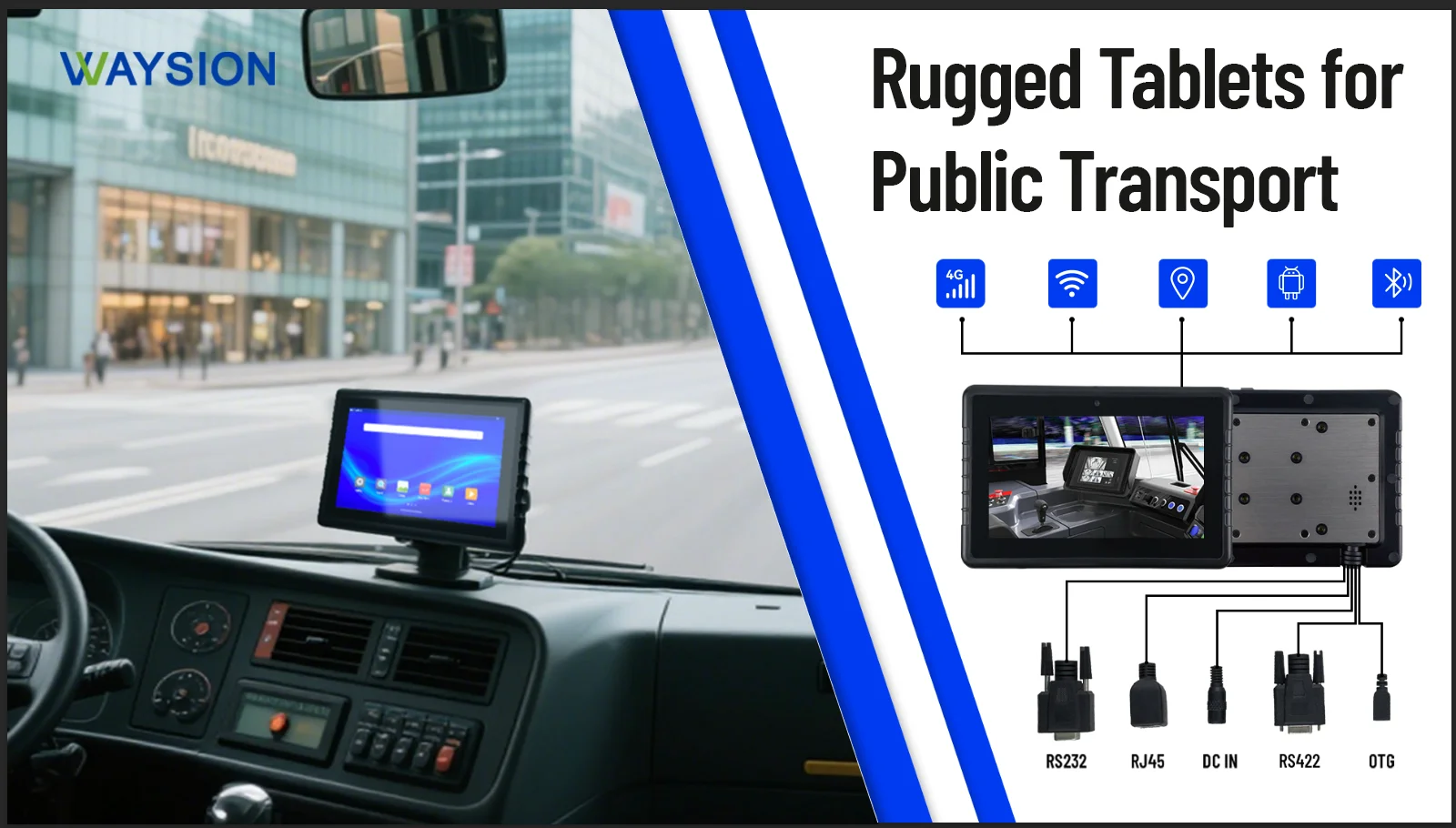
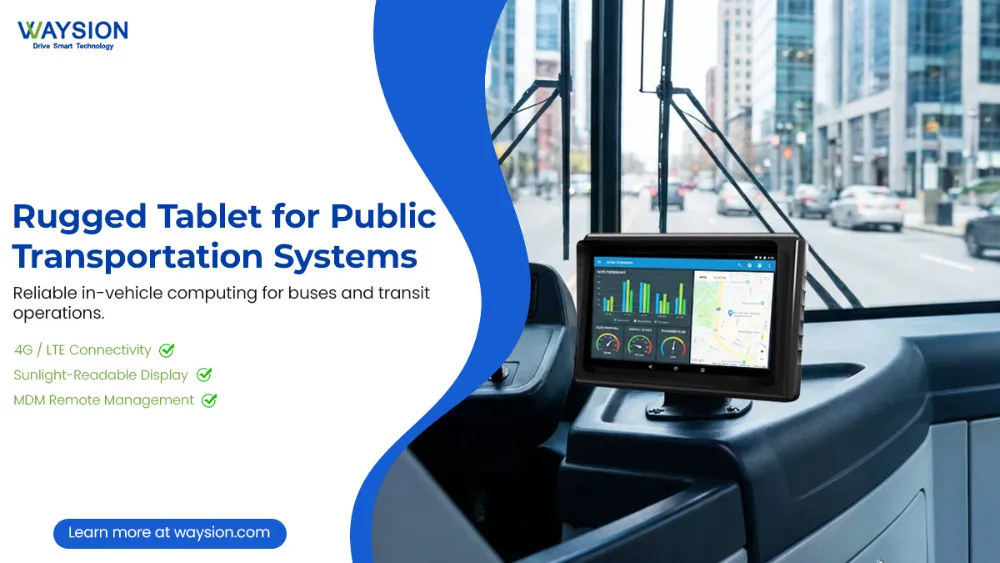
A rugged mobile data terminals bus tracking device is a specialized vehicle-mounted computer engineered specifically for public transit operations. Unlike consumer tablets that fail under harsh vehicle conditions, these industrial-grade terminals are designed to withstand continuous vibration, temperature extremes, dust exposure, and long daily operation cycles.
Modern rugged mobile data terminals bus tracking systems typically feature:
- GPS/GNSS Integration: Real-time positioning for accurate vehicle location tracking
- Touchscreen Interface: Intuitive driver controls for navigation and communication
- Wireless Connectivity: 4G/LTE, 5G, and satellite backup for continuous communication
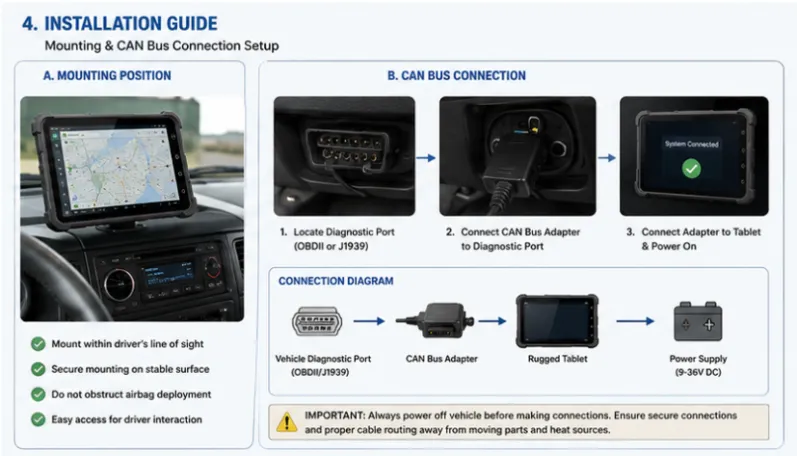
- Vehicle Integration: CAN Bus access to engine diagnostics and vehicle sensors
- Multi-Camera Support: Integration with onboard surveillance systems
- Driver Communication: Two-way messaging with dispatch centers
- Passenger Information: Real-time arrival displays and next-stop announcements
- Extended Battery: All-day operation without mid-shift charging
The global rugged mobile data terminals market demonstrates the broader trend toward intelligent vehicle systems, with North America accounting for 44.6% of the market in 2025. In public transportation specifically, rugged mobile data terminals bus tracking deployments are accelerating, driven by the need for real-time operational visibility and passenger engagement.
How Rugged Mobile Data Terminals Enable Bus Tracking
System Architecture
A typical rugged mobile data terminals bus tracking system operates through a multi-layer architecture:
Bus Tracking System Architecture├─ GPS/GNSS Positioning Module├─ Mobile Data Terminal (vehicle computer)├─ Wireless Connectivity (4G/LTE/5G)├─ Vehicle Sensor Integration (CAN Bus)├─ Onboard Camera Systems└─ Central Fleet Management Platform
The MDT serves as the vehicle edge computing device, collecting data from GPS modules, vehicle sensors, and driver inputs, then transmitting it to the central fleet management platform. This architecture enables real-time rugged mobile data terminals bus tracking, route monitoring, and operational visibility across the entire public transport fleet.
Real-Time Data Collection
Modern rugged mobile data terminals bus tracking systems continuously capture:
- Vehicle GPS coordinates and speed
- Engine temperature, fuel consumption, and diagnostics
- Door open/close events and passenger boarding
- Driver behavior (acceleration, braking patterns)
- Schedule adherence and route deviations
- Passenger counts and crowding levels
- Incident and accident documentation
Eight Game-Changing Benefits of Rugged Mobile Data Terminals for Bus Tracking
1. Real-Time Fleet Visibility and Operational Control
Embedded in rugged mobile data terminals bus tracking devices is a GPS receiver enabling dispatch to track bus location in real-time. Agencies can monitor headways, bus loads, schedule and route adherence, and make service adjustments based on real-time information. Tracking each vehicle’s location, speed, and performance in real-time allows agencies to make informed operational decisions instantly.
2. Improved Driver Communication and Dispatch Efficiency
Traditional radio communication creates delays and misunderstandings. Rugged mobile data terminals bus tracking systems enable structured, documented messaging between drivers and dispatch centers. Drivers receive route updates, schedule changes, and emergency alerts instantly, reducing confusion and improving response times. This streamlined communication reduces radio chatter and ensures organized, documented communication across the entire fleet.
3. Enhanced Passenger Information and Satisfaction
Modern rugged mobile data terminals bus tracking systems integrate with passenger information displays, providing real-time arrival updates, next-stop announcements, and service alerts. Passengers receive accurate information about delays and schedule changes, reducing frustration and improving service perception. This integration transforms the passenger experience from uncertainty to reliable, transparent communication.
4. Reduced Operational Expenses Through Route Optimization
Real-time data from rugged mobile data terminals bus tracking systems enables dynamic route adjustments. When traffic congestion or unexpected events occur, dispatchers can reroute buses in real-time, reducing fuel consumption and improving schedule adherence. Fleet managers receive comprehensive data on fuel efficiency, driver behavior, and maintenance needs, identifying cost-saving opportunities. Research shows telematics-enabled fleets can reduce fuel costs by up to 25% through route and driver optimization.
5. Proactive Maintenance and Reduced Downtime
Rugged mobile data terminals bus tracking systems monitor vehicle health through engine diagnostics and sensor data. Early warning signs of mechanical issues trigger maintenance alerts before failures occur. This predictive maintenance approach reduces unexpected breakdowns, minimizes service interruptions, and extends vehicle lifespan. Fleet managers can schedule maintenance during off-peak hours rather than responding to emergency failures.
6. Enhanced Driver Safety and Accountability
Rugged mobile data terminals bus tracking systems monitor driver behavior including speed, acceleration, braking patterns, and cornering. This data enables targeted coaching for unsafe driving practices. Drivers receive immediate feedback on performance, promoting safer habits. Additionally, real-time monitoring provides accountability and can reduce insurance costs through verified driving logs.
7. Compliance and Regulatory Reporting Automation
Public transit agencies must comply with numerous regulations including service hour documentation, accessibility requirements, and safety standards. Rugged mobile data terminals bus tracking systems automate compliance reporting by capturing required data automatically. This reduces administrative burden and ensures accurate, auditable records.
8. Data-Driven Decision Making and Service Planning
Aggregating data from rugged mobile data terminals bus tracking across entire fleets reveals patterns and trends impossible to detect from individual vehicles. Transit agencies identify which routes experience peak demand, which times generate the most complaints, and which drivers demonstrate exceptional performance. This intelligence guides strategic decisions about service expansion, schedule optimization, and resource allocation.
Real-World Implementation: Bus Fleet Management Case Study
A major transportation operator deployed rugged mobile data terminals bus tracking across its fleet to address critical operational challenges:
Original Challenges:
- Limited passenger information about real-time arrival times
- Driver communication delays during traffic congestion or route changes
- Consumer tablets failing frequently due to vibration, dust, and heat exposure
- Increased maintenance costs from hardware failures
- Inability to track schedule adherence or operational efficiency
Solution Deployed: The operator deployed rugged Android Mobile Data Terminals integrated with their Fleet Management System.
Results Achieved:
- 98% system uptime compared to previous consumer tablet failures
- Real-time passenger information reduced customer complaints by 35%
- Driver communication delays eliminated through instant messaging
- Maintenance costs reduced by 40% through predictive diagnostics
- Schedule adherence improved from 82% to 94%
- Fuel consumption reduced by 18% through optimized routing
Key Features of Production-Grade Rugged Mobile Data Terminals
Durability and Environmental Resistance
Enterprise rugged mobile data terminals bus tracking devices meet military-grade durability standards:
- IP65-IP67 ingress protection for water and dust resistance
- MIL-STD-810G drop testing certification
- Operating temperature range: -10°C to +50°C
- Continuous vibration resistance for vehicle environments
- 5-7 year product lifecycle for fleet deployment
Flexible Mounting Options
Rugged mobile data terminals bus tracking systems support multiple installation configurations:
- Dashboard mounts for driver visibility
- Overbed table mounts for accessibility
- Anti-vibration mounts to reduce shock transmission
- Flexible arm mounts for easy repositioning
- Ceiling mounts for passenger information displays
Operating System Flexibility
Modern rugged mobile data terminals bus tracking solutions support:
- Android systems: Application flexibility and customization
- Windows platforms: Compatibility with existing transit software
- Linux systems: Customized integration and security hardening
Connectivity Options
Enterprise rugged mobile data terminals bus tracking systems provide redundant connectivity:
- 4G/LTE cellular for urban and suburban operations
- 5G connectivity for next-generation bandwidth requirements
- Satellite backup for remote routes beyond cellular coverage
- Wi-Fi for depot-based data synchronization
- Dual SIM capability for network redundancy
Integration with Public Transportation Systems
Fleet Management Platforms
Rugged mobile data terminals bus tracking serves as the hardware foundation for comprehensive fleet management:
- Real-time vehicle monitoring and tracking
- Automated dispatch system updates
- Operational analytics and reporting
- Predictive maintenance scheduling
- Driver performance management
Passenger Information Systems
Modern rugged mobile data terminals bus tracking integrates with passenger-facing technology:
- Real-time arrival displays at bus stops
- Next-stop announcements and alerts
- Mobile app integration for trip planning
- Service alert distribution during disruptions
- Accessibility features for diverse passengers
Video Surveillance Integration
Rugged mobile data terminals bus tracking consolidates video management:
- Integration with onboard camera systems
- Incident recording and documentation
- Driver coaching through video review
- Security monitoring during operation
- Evidence collection for disputes or accidents
Selection Criteria for Rugged Mobile Data Terminals
Fleet Size and Deployment Scope
Consider whether you’re equipping a small transit system (10-20 buses) or a major metropolitan fleet (500+ buses). Larger deployments require robust central management systems and proven scalability.
Route Characteristics
Evaluate your operational environment:
- Urban routes with dense cellular coverage
- Rural routes requiring satellite backup
- Routes with extreme temperature conditions
- High-vibration environments (unpaved roads)
- Coastal routes with salt spray exposure
Integration Requirements
Assess existing systems that rugged mobile data terminals bus tracking must integrate with:
- Existing fleet management software
- Passenger information systems
- Video surveillance platforms
- Scheduling and dispatch systems
- Fare collection systems
Budget and Total Cost of Ownership
Calculate long-term costs including:
- Hardware purchase and installation
- Software licensing and customization
- Connectivity subscriptions
- Maintenance and support
- Replacement cycles
FREQUENTLY ASKED QUESTIONS (FAQ)
General Questions
Q1: What is the difference between a rugged mobile data terminal and a consumer tablet?
A: Consumer tablets are designed for personal use with limited durability. Rugged mobile data terminals bus tracking devices are engineered specifically for vehicle environments with:
- Military-grade durability (MIL-STD-810G certification)
- 5-7 year lifecycle vs. 2-3 years for consumer tablets
- Continuous vibration resistance
- Temperature extremes (-10°C to +50°C)
- Professional-grade support and warranties
- Integration with fleet management systems
Consumer tablets typically fail within 6-12 months in bus environments due to vibration, dust, and thermal stress.
Q2: How does real-time GPS tracking work in a rugged mobile data terminal?
A: Rugged mobile data terminals bus tracking systems receive GPS signals from satellites, calculate precise position, and transmit coordinates to the central fleet management platform via cellular networks (4G/LTE/5G) or satellite communication. Updates typically occur every 10-30 seconds, enabling real-time tracking. The system also captures speed, heading, and altitude data for comprehensive vehicle monitoring.
Q3: What connectivity options are available for remote routes?
A: Rugged mobile data terminals bus tracking systems support multiple connectivity pathways:
- Primary: 4G/LTE cellular for urban/suburban areas
- Secondary: 5G for enhanced bandwidth
- Backup: Satellite communication for remote routes beyond cellular coverage
- Local: Wi-Fi for depot-based data synchronization
Redundant connectivity ensures continuous operation even if one network fails.
Implementation and Integration
Q4: How long does it take to deploy rugged mobile data terminals across a fleet?
A: Deployment timeline depends on fleet size and complexity:
- Small fleet (10-20 buses): 2-4 weeks including installation and staff training
- Medium fleet (50-100 buses): 6-12 weeks with phased rollout
- Large fleet (500+ buses): 3-6 months with staged implementation across routes
Most implementations use phased approaches, starting with pilot routes to identify integration issues before full deployment.
Q5: What staff training is required for rugged mobile data terminal deployment?
A: Comprehensive training includes:
- Driver training: 2-4 hours on device operation, messaging, and safety features
- Dispatch staff training: 4-8 hours on fleet management software and real-time monitoring
- Maintenance staff training: 4-6 hours on hardware troubleshooting and updates
- Management training: 2-3 hours on analytics dashboards and reporting
Most vendors provide on-site training during implementation.
Q6: How do rugged mobile data terminals integrate with existing fleet management software?
A: Rugged mobile data terminals bus tracking systems integrate through:
- API connections: Direct data exchange with existing software platforms
- Middleware solutions: Translation layers for systems with different data formats
- Cloud integration: Centralized data collection and storage
- Custom development: Tailored integration for unique requirements
Most major transit software providers (Trapeze, NextBus, RouteMatch) offer native integration with modern MDT systems.
Cost and ROI
Q7: What is the typical cost of rugged mobile data terminals for bus tracking?
A: Pricing varies based on specifications and scale:
- Hardware cost: $800-$2,000 per unit depending on size and features
- Installation: $200-$500 per bus
- Connectivity subscription: $30-$80 per device monthly
- Software licensing: $50-$150 per device monthly
For a 50-bus fleet, total first-year investment typically ranges from $75,000-$150,000 including hardware, installation, and connectivity.
Q8: What is the return on investment (ROI) timeline for rugged mobile data terminals?
A: Most transit agencies report ROI within 18-36 months through:
- Fuel savings: 15-25% reduction through route optimization
- Maintenance savings: 20-30% reduction through predictive diagnostics
- Labor efficiency: 10-15% reduction in administrative overhead
- Improved ridership: 5-10% increase from better service reliability
A 50-bus fleet typically saves $150,000-$250,000 annually, justifying initial investment within 2-3 years.
Technical and Operational
Q9: How is passenger data protected in rugged mobile data terminal systems?
A: Rugged mobile data terminals bus tracking systems employ multiple security layers:
- Encryption: All data transmission uses industry-standard encryption (TLS/SSL)
- Authentication: Multi-factor authentication for staff access
- HIPAA/GDPR compliance: Meets regulatory requirements for data protection
- Audit logging: Complete records of data access and modifications
- Regular updates: Security patches deployed automatically
Personal passenger data is minimized—systems typically capture only boarding/alighting times, not passenger identities.
Q10: What happens if connectivity is lost during operation?
A: Rugged mobile data terminals bus tracking systems employ offline-first architecture:
- Local data storage: Device stores data locally during connectivity loss
- Automatic synchronization: Data uploads when connectivity resumes
- Driver notification: Visual/audio alerts inform drivers of connectivity status
- Satellite backup: Automatic failover to satellite communication if available
- Graceful degradation: Core functions (navigation, communication) continue operating
Buses can operate for hours or days without connectivity, with data syncing automatically when connection returns.
Q11: How do rugged mobile data terminals handle extreme weather conditions?
A: Enterprise rugged mobile data terminals bus tracking devices are engineered for environmental extremes:
- Temperature range: -10°C to +50°C operating range
- Humidity resistance: IP67 rating protects against moisture
- Salt spray resistance: Corrosion-resistant materials for coastal operations
- Thermal management: Active cooling prevents overheating in hot climates
- Low-temperature operation: Heating elements prevent freezing in cold regions
Most devices include environmental sensors that alert maintenance if operating conditions exceed specifications.
Q12: What maintenance is required for rugged mobile data terminals?
A: Minimal maintenance is required:
- Monthly: Visual inspection for physical damage, screen cleaning
- Quarterly: Software updates and security patches
- Annually: Professional servicing and battery health check
- As-needed: Repair of damaged units or component replacement
Most vendors offer extended warranty programs covering repairs and replacements.
Performance and Outcomes
Q13: How much can transit agencies improve schedule adherence with rugged mobile data terminals?
A: Real-world implementations show significant improvements:
- Baseline: Most transit systems operate at 82-88% schedule adherence
- With MDT: Improvement to 92-96% through real-time monitoring and dynamic routing
- Driver coaching: Additional 2-3% improvement through behavioral feedback
- Passenger communication: Reduced complaints by 30-40% even without schedule improvements
Schedule adherence directly impacts customer satisfaction and ridership retention.
Q14: Can rugged mobile data terminals help with accessibility compliance?
A: Yes, rugged mobile data terminals bus tracking systems support accessibility:
- ADA compliance: Automated documentation of accessibility features (wheelchair lifts, audio announcements)
- Service interruption tracking: Records when accessibility equipment fails
- Passenger feedback: Collects accessibility-related complaints for analysis
- Real-time announcements: Supports audio and visual next-stop announcements
- Accessible design: Touchscreen interfaces support accessibility features
This documentation helps transit agencies demonstrate compliance with accessibility regulations.
Q15: How do rugged mobile data terminals support sustainable transportation goals?
A: Rugged mobile data terminals bus tracking systems enable sustainability through:
- Route optimization: Real-time data reduces unnecessary mileage and fuel consumption
- Driver coaching: Promotes efficient driving habits reducing emissions
- Predictive maintenance: Keeps engines running efficiently
- Electric bus integration: Monitors battery health and charging efficiency
- Ridership analytics: Identifies underutilized routes for optimization or consolidation
Transit agencies using MDT systems typically reduce fuel consumption by 15-25%, directly supporting sustainability goals.
Tags: bus GPS tracking telematics, How Mobile Data Terminals Transform Transit Operations, mobile data terminal fleet management, public transit MDT systems, real-time vehicle monitoring, Rugged Mobile Data Terminals for Bus Tracking, Rugged Vehicle Tablet for Smart Public Transit, vehicle-mounted data terminals