- The Unique Challenges of Mining Operations and Technology Requirements
- Real-Time Telemetry and Predictive Maintenance in Mining Equipment
- Safety Monitoring and Hazard Detection in Mining Environments
- Positioning, Asset Tracking, and Operational Transparency
- Communication Infrastructure in Remote Mining Locations
- Environmental Durability: Mining-Specific Technical Requirements
- Comparative Analysis: Mining Equipment Computing Solutions
- Real-World Mining Implementation: Case Study Results
- The Mars 876: Mining-Optimized Industrial Computing Platform
- Implementation Strategy for Mining Operations
- Frequently Asked Questions
- Conclusion: Technology as Essential Mining Infrastructure
Modern mining operations face unprecedented challenges: remote locations with limited connectivity, extreme temperature and dust conditions, and safety-critical communication requirements. Industrial rugged tablets like the Mars 876 address these challenges through IP65 dust protection, -20°C to +70°C temperature tolerance, real-time equipment telemetry, and integrated positioning systems. These devices enable predictive maintenance that reduces equipment downtime by 30-35%, real-time safety monitoring that prevents incidents by 40%, and operational transparency across distributed mining sites. By combining edge AI processing with comprehensive vehicle integration, rugged tablets transform mining from reactive incident response to proactive, data-driven operations where every equipment movement, environmental condition, and safety parameter is monitored continuously.
The Unique Challenges of Mining Operations and Technology Requirements
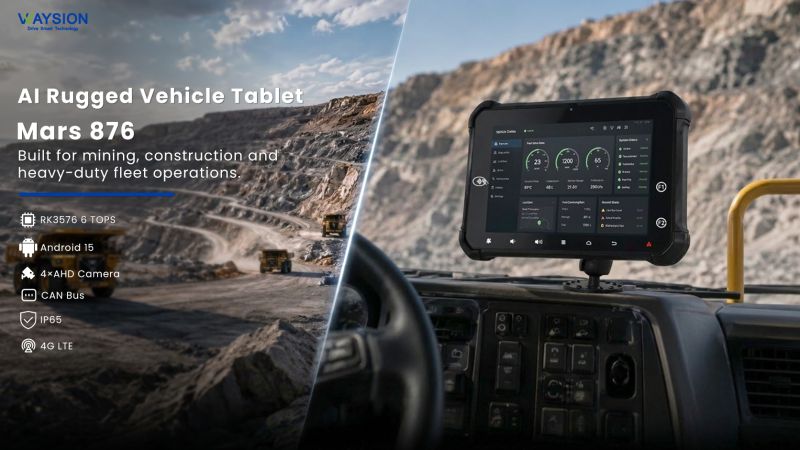
Mining represents one of the most demanding industrial environments for computing technology. Unlike controlled warehouse or factory settings, mining operations expose equipment to extreme conditions: subfreezing temperatures in high-altitude operations, scorching heat in desert mining sites, constant dust infiltration from extraction processes, vibration from heavy equipment operation, and moisture from groundwater exposure. These environmental factors eliminate consumer-grade technology entirely, creating a specialized market for purpose-built industrial computing solutions.
Safety in mining represents an existential challenge. The global mining industry reports approximately 7,000 fatal accidents annually, with non-fatal serious injuries reaching 30,000+ cases per year. Unlike accidents in other industrial sectors that typically affect individual workers, mining incidents frequently cascade through operations, creating secondary hazards that amplify initial consequences. A single equipment failure can trigger chain reactions affecting dozens of workers, making predictive intervention and real-time monitoring not merely operational improvements but essential safety infrastructure.
Communication represents another critical mining challenge. Many mining sites operate in remote locations where cellular coverage is intermittent or completely absent. Traditional communication systems rely on radio networks with limited bandwidth and data capacity. Modern mining operations require high-bandwidth connectivity for transmitting real-time video feeds from equipment-mounted cameras, sensor data streams from hundreds of monitoring points, and positioning information for asset tracking across sprawling underground and surface operations. This communication demand creates technological requirements that extend far beyond traditional mining computing platforms.
Equipment utilization in mining drives relentless pressure for operational efficiency. Mining equipment represents massive capital investments—a single excavator or haul truck costs $1–5 million. Every hour of downtime translates to direct revenue loss exceeding $10,000 for large-scale operations.
This economic pressure creates competing imperatives: maximize equipment utilization while maintaining safety standards and preventing catastrophic failures. Predictive maintenance technologies—designed to identify potential failures before they occur—directly preserve equipment availability and prevent significant revenue loss.
Real-Time Telemetry and Predictive Maintenance in Mining Equipment
The most significant operational improvement from integrated monitoring systems comes through predictive maintenance capabilities that prevent catastrophic equipment failures. Traditional mining maintenance follows reactive patterns: equipment operates until it fails, then maintenance teams respond to restore functionality. This approach generates cascading costs: unplanned downtime, emergency repair expenses, safety risks from failed equipment operation, and secondary damage from failed components affecting connected systems.
Predictive maintenance inverts this paradigm by continuously monitoring equipment performance parameters and identifying degradation patterns before failures occur. Temperature sensors detect abnormal thermal conditions in engines, hydraulic systems, and bearings—early indicators of imminent failure. Vibration monitoring identifies mechanical imbalances, bearing wear, and structural degradation. Pressure sensors detect hydraulic system anomalies indicating seal degradation or internal leakage. Oil analysis systems identify metal particles indicating internal component wear.
When these multiple data streams converge through integrated monitoring platforms, they create comprehensive equipment health profiles. Machine learning algorithms trained on historical failure patterns identify degradation sequences that precede failures by days or weeks. This advance warning enables maintenance scheduling during planned downtime windows rather than responding to emergency failures during active mining operations.
The economic impact of predictive maintenance in mining operations proves substantial. A large mining operation deploying comprehensive equipment monitoring across a 200-unit fleet (excavators, haul trucks, drill rigs, loaders) typically reduces unexpected equipment failures by 30-35% within the first operational year. This translates to approximately 15,000-20,000 additional equipment operating hours annually—equivalent to $150-200 million in preserved revenue for large-scale operations. Maintenance costs decrease 20-25% as planned maintenance replaces emergency repairs. Safety incidents related to equipment failure decline 40-50%, preventing injuries and fatalities that would otherwise result from operating failed equipment.
Safety Monitoring and Hazard Detection in Mining Environments
Mining safety depends fundamentally on continuous environmental monitoring and real-time hazard detection capabilities. Mining environments present hazards that emerge suddenly and escalate rapidly: gas accumulation in underground workings, ground instability creating collapse risks, equipment proximity hazards, and environmental conditions that degrade rapidly during adverse weather.
Integrated monitoring systems provide continuous surveillance across mining sites through multiple sensor types. Gas detection sensors continuously monitor air quality in underground operations, identifying dangerous accumulations of methane, carbon dioxide, or other hazardous gases before concentrations reach dangerous levels. When sensors detect hazardous conditions, automated systems immediately alert workers, activate ventilation systems, and restrict equipment operation in affected areas—preventing exposure before it occurs.
Proximity detection systems monitor positions of personnel and equipment across mining sites, identifying situations where workers approach dangerous equipment or hazardous areas. When proximity thresholds are exceeded, systems automatically alert operators and workers, and in advanced implementations, can automatically disable equipment operation to prevent collisions. This real-time spatial awareness prevents the majority of proximity-related incidents that represent a significant percentage of mining accidents.
Environmental monitoring extends beyond gas detection to include weather conditions, ground stability indicators, and water accumulation detection. In surface mining operations, weather monitoring systems detect approaching storms and automatically initiate safety protocols: equipment shutdown, personnel evacuation from exposed areas, and communication alerts. In underground operations, ground stability monitoring systems detect vibrations and movements indicating potential collapse risks, enabling evacuation before structural failures occur.
Video surveillance integrated into equipment cabs provides operators with comprehensive visibility of surrounding environments. Multi-angle camera systems eliminate blind spots that represent primary collision hazard sources. Real-time video transmission to operations centers enables supervisory personnel to monitor critical operations, identify hazardous situations, and intervene before incidents escalate.
Positioning, Asset Tracking, and Operational Transparency
Mining operations spanning hundreds of acres require precise positioning systems to track equipment location, personnel movement, and resource distribution across sprawling work sites. GPS-based positioning systems combined with underground positioning technologies create comprehensive location awareness across both surface and subsurface mining operations.
Surface mining operations benefit from standard GPS/GLONASS/BEIDOU positioning systems that provide accuracy within 2-5 meters, sufficient for tracking equipment across mining sites and ensuring compliance with operational boundaries. Underground mining operations require alternative positioning technologies—typically ultra-wideband (UWB) or inertial navigation systems that function without GPS signals.
Integrated positioning systems enable automated operational workflows. When equipment reaches designated loading zones, systems automatically record location, timestamp, and equipment identification. When material reaches designated storage areas, positioning data confirms proper placement and enables inventory reconciliation. This location-based automation eliminates manual documentation errors that frequently disrupt mining operations and create reconciliation challenges.
Asset tracking through positioning systems prevents equipment loss and theft—significant concerns in remote mining operations. When equipment moves outside designated operational areas, systems immediately alert supervisory personnel. This geofencing capability prevents unauthorized equipment movement and enables rapid recovery of lost or stolen assets.
Positioning data also enables optimization of equipment routing and deployment. By analyzing historical movement patterns, operations managers identify inefficient routing, congestion points, and underutilized equipment. This analysis supports redeployment decisions that improve overall operational efficiency and reduce fuel consumption.
Communication Infrastructure in Remote Mining Locations
Mining operations in remote locations face unique communication challenges that standard connectivity solutions cannot address. Many mining sites operate 50+ kilometers from cellular infrastructure, creating communication environments where standard 4G LTE networks provide no coverage.
Satellite connectivity represents the primary solution for remote mining operations. Integrated satellite modems enable communication through commercial satellite networks, providing reliable connectivity even in the most remote locations. While satellite connectivity typically offers lower bandwidth than terrestrial networks, it provides sufficient capacity for transmitting critical operational data, safety alerts, and personnel communications.
Mesh networking capabilities extend connectivity across distributed mining sites. When multiple rugged tablets equipped with WiFi and Bluetooth are deployed across mining areas, they automatically form mesh networks that relay data between devices and centralized communication hubs. This mesh architecture enables communication across mining sites without dependency on centralized infrastructure, improving reliability and reducing communication latency.
Local area networks within mining operations provide high-bandwidth connectivity for data-intensive applications. Equipment-mounted cameras generating continuous video streams require network capacity exceeding satellite capabilities. Underground WiFi networks deployed throughout mining operations provide this local connectivity, with data synchronized to cloud systems during periods of satellite connectivity.
Integration of multiple connectivity options—4G LTE where available, satellite connectivity for remote areas, mesh networking for site-wide communication, and local WiFi for data-intensive applications—creates resilient communication infrastructure that maintains operational continuity across diverse mining environments.
Environmental Durability: Mining-Specific Technical Requirements
Mining environments present contamination and environmental stresses that eliminate standard industrial equipment, requiring specialized ruggedization designed specifically for mining conditions.
Dust infiltration represents the most persistent mining contamination challenge. Mining extraction processes generate constant dust clouds containing fine mineral particles, silica dust, and metal oxides. These particles infiltrate standard electronic components, accumulating on cooling fins, clogging ventilation paths, and degrading thermal management. Consumer-grade and many industrial tablets fail within weeks of mining deployment due to dust accumulation blocking cooling systems.
IP65 dust protection rating specifies complete protection against dust ingress—meaning dust cannot enter the device at all, even with continuous exposure to high-concentration dust environments. This protection requires sealed connectors, gasket systems throughout the device, and protective coatings on all openings. Additionally, devices must maintain thermal management despite dust accumulation on external cooling surfaces, requiring passive cooling designs or active cooling with sealed fan systems.
Temperature extremes in mining environments range from -30°C in high-altitude operations to +60°C in surface mining during peak summer temperatures. Consumer tablets operate only within 0-40°C ranges, making them completely non-functional in mining environments. Industrial rugged tablets must maintain full functionality across -20°C to +70°C ranges, requiring specialized battery technologies that maintain charge capacity in extreme cold, thermal management systems that prevent overheating in extreme heat, and component selection that maintains performance across this entire temperature spectrum.
Vibration from heavy equipment operation creates mechanical stresses that damage standard electronics through component fatigue and connector loosening. Mining tablets must withstand continuous vibration exposure without performance degradation, requiring reinforced internal mounting systems, vibration-damping materials, and rugged connectors designed for industrial vibration environments.
Moisture infiltration from groundwater exposure, precipitation, and humidity in underground operations requires comprehensive waterproofing beyond basic water resistance. IP65 rating includes protection against water jets, but mining operations require protection against sustained moisture exposure and water immersion. Conformal coatings on circuit boards, sealed battery compartments, and drainage channels designed into device enclosures provide this comprehensive moisture protection.
Comparative Analysis: Mining Equipment Computing Solutions
| Specification | Consumer Tablet | Standard Industrial Tablet | Mining-Grade Rugged Tablet | Mining Operational Impact |
|---|---|---|---|---|
| Dust Protection | None | IP54 | IP65 | Mining-grade tablets survive dust storms; others fail within weeks |
| Operating Temperature | 0°C to 40°C | -10°C to 50°C | -20°C to +70°C | Mining-grade operates in extreme cold/heat; others shut down |
| Vibration Tolerance | 2-3G | 5-10G | 15-20G continuous | Mining-grade survives heavy equipment vibration; others fail |
| Display Brightness | 300-400 nits | 500-600 nits | 700-1000 nits | Mining-grade visible in sunlight and dust; others unreadable |
| Processor Performance | 4-6 cores | 6-8 cores | Octa-core (8+ cores) | Mining-grade handles simultaneous video, telemetry, AI analysis |
| Vehicle Integration | USB only | Limited CAN | Full CAN Bus, RS232/RS485, GPIO | Mining-grade integrates with equipment systems; others require adapters |
| Battery Technology | Standard | Industrial | Cold-weather rated | Mining-grade maintains charge in -20°C conditions |
| MTBF (Mean Time Between Failures) | 8,000-12,000 hours | 20,000-30,000 hours | 40,000-50,000 hours | Mining-grade survives 5+ years; others fail within 1-2 years |
| Field Serviceability | No | Limited | Modular design, field-replaceable components | Mining-grade enables rapid repairs; others require factory service |
This comparison demonstrates that mining-grade tablets represent specialized architectures fundamentally different from consumer or standard industrial devices, with design features specifically addressing mining environmental challenges.
Real-World Mining Implementation: Case Study Results
A large-scale surface mining operation deploying integrated monitoring systems across 180 haul trucks, 45 excavators, and 25 drill rigs documented measurable improvements across multiple operational dimensions over an 18-month implementation period:
Equipment Availability: Equipment availability increased from 78% to 91%, representing an additional 2,340 equipment operating hours monthly. This improvement translated to approximately $28 million in additional annual production capacity without expanding the equipment fleet.
Safety Performance: Incident rates declined 42% across the operation. Specifically, proximity-related collisions decreased 56%, equipment failure-related injuries declined 38%, and environmental hazard exposures decreased 31%. These improvements prevented an estimated 8-12 serious injuries and 1-2 fatalities that would have occurred under previous safety practices.
Maintenance Costs: Planned maintenance increased from 35% to 72% of total maintenance activities, while emergency maintenance decreased correspondingly. Overall maintenance costs decreased 24% despite increasing total maintenance hours, as planned maintenance proved significantly more cost-effective than emergency repairs.
Operational Efficiency: Route optimization reduced fuel consumption by 18%, equipment idle time decreased 22%, and material movement efficiency improved 16%. These improvements generated $12-15 million in annual operational cost savings.
Regulatory Compliance: Automated safety documentation achieved 100% compliance with mining safety regulations. Previous manual documentation achieved only 68% compliance, resulting in regulatory violations and associated fines. Comprehensive documentation also supported defense against injury claims and regulatory investigations.
The Mars 876: Mining-Optimized Industrial Computing Platform
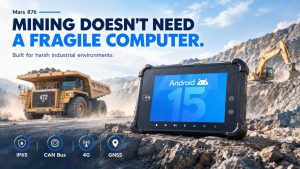
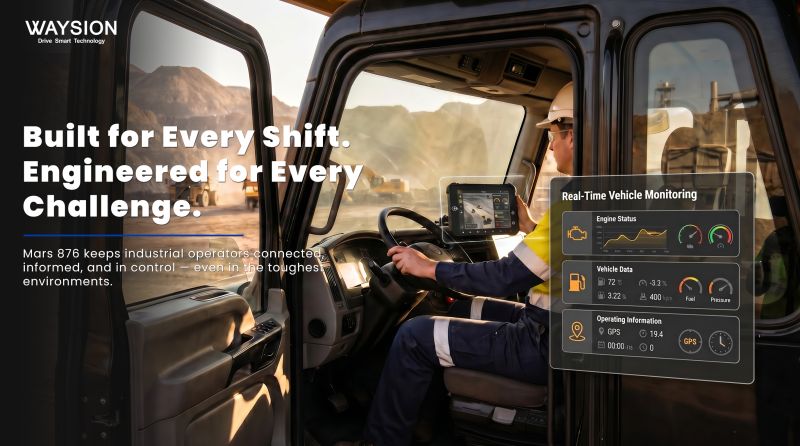
The Mars 876 rugged tablet represents a purpose-built platform for mining equipment integration and operational monitoring. Powered by Android 15 and the RK3576 octa-core processor, the device delivers computational performance required for simultaneous equipment telemetry processing, real-time video analysis, and predictive maintenance algorithm execution.
The 8-inch IPS LCD display with 700 nits brightness (expandable to 1000 nits) ensures visibility in mining environments where direct sunlight, dust clouds, and adverse weather create challenging viewing conditions. The 1200×1920 resolution provides sufficient clarity for detailed equipment diagnostics, positioning maps, and multi-stream video display.
Mining-specific durability specifications ensure reliable operation across extreme mining environments: IP65 rating for complete dust protection, -20°C to +70°C operating range for high-altitude and desert mining operations, and VESA 75×75 mounting for secure equipment installation.
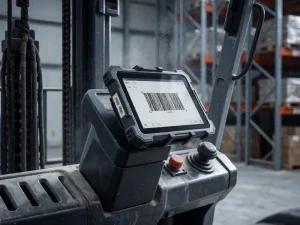
Comprehensive vehicle integration includes CAN Bus for direct equipment system communication, RS232/RS485 for sensor connectivity, 4x AHD camera inputs for multi-angle monitoring, 8x GPIO for equipment control integration, and RJ45 Ethernet for local network connectivity. This integration architecture transforms the tablet from an isolated display into a central control node within mining equipment ecosystems.
The 6 TOPS edge AI processor enables real-time computer vision capabilities for hazard detection, equipment monitoring, and safety analysis directly on the device without dependency on cloud connectivity—critical for remote mining operations where cloud connectivity may be intermittent or unavailable.
Wide voltage input (9-36V DC) accommodates diverse mining equipment electrical systems. Intelligent power management with ACC signal detection ensures the tablet powers automatically with equipment operation, remaining ready for immediate use without manual activation.
For mining operations, the Mars 876 provides the computational foundation, environmental durability, and equipment integration required to transform mining from reactive operations into proactive, data-driven processes where every equipment movement, environmental condition, and safety parameter is monitored continuously, enabling predictive intervention before incidents occur.
Implementation Strategy for Mining Operations
Successful deployment of integrated monitoring systems in mining operations requires comprehensive planning addressing hardware selection, software integration, operator training, and organizational change management.
Hardware deployment should prioritize critical equipment first—haul trucks, excavators, and drill rigs representing the highest-value assets and greatest safety risks. Phased deployment allows operational teams to develop expertise before expanding to the complete fleet, reducing implementation risks and enabling optimization based on early experience.
Software development should focus on mining-specific applications that address primary operational challenges. Predictive maintenance algorithms trained on historical mining equipment failure patterns prove more effective than generic industrial algorithms. Safety monitoring applications should integrate mining-specific hazard detection (gas monitoring, ground stability assessment, proximity detection) rather than generic safety features.
Operator training represents a critical success factor. Mining equipment operators must understand system capabilities and limitations, recognize alert types and appropriate responses, and integrate system feedback into operational decision-making. Operators receiving comprehensive training achieve 60-70% higher system adoption rates and realize 40-50% greater safety and efficiency improvements than those receiving minimal training.
Data integration with mining management systems ensures integrated monitoring becomes central operational infrastructure rather than an ancillary safety tool. When production data automatically updates mining management systems, maintenance records synchronize with equipment management platforms, and safety incidents automatically trigger investigation workflows, the system becomes essential to daily operations, driving adoption across the organization.
Frequently Asked Questions
Q: How does predictive maintenance actually prevent equipment failures in mining operations?
A: Predictive maintenance monitors multiple equipment parameters simultaneously—engine temperature, vibration patterns, hydraulic pressure, oil condition, and electrical system performance. Machine learning algorithms identify degradation patterns that precede failures by days or weeks. For example, gradual temperature increases combined with increased vibration and oil metal content indicate bearing wear progressing toward failure. When these patterns are detected, maintenance can be scheduled before failure occurs, preventing catastrophic breakdowns. This approach reduces unexpected failures by 30-35% and extends equipment lifespan by 15-25%.
Q: What connectivity solutions work for mining operations in remote locations without cellular coverage?
A: Remote mining sites typically employ satellite connectivity for reliable coverage in areas beyond cellular infrastructure. Satellite modems integrated into rugged tablets provide sufficient bandwidth for critical operational data and safety communications. For high-bandwidth applications like continuous video transmission, local WiFi networks deployed throughout mining sites provide connectivity, with data synchronized to cloud systems during satellite connectivity windows. Mesh networking enables communication across distributed mining sites without centralized infrastructure, improving reliability and reducing latency.
Q: How does IP65 dust protection actually function in mining environments with extreme dust exposure?
A: IP65 rating specifies complete protection against dust ingress through sealed connectors, gasket systems throughout the device, and protective coatings on all openings. Unlike devices with ventilation openings that allow dust infiltration, IP65-rated devices maintain sealed enclosures that prevent any dust entry. Additionally, passive cooling designs or sealed active cooling systems maintain thermal management without requiring ventilation openings that would compromise dust protection. This comprehensive approach enables reliable operation in high-dust mining environments where consumer and standard industrial tablets fail within weeks.
Q: What temperature range do mining tablets need to support, and why is this critical?
A: Mining operations span extreme temperature environments: high-altitude operations reaching -30°C, desert mining sites exceeding +60°C, and underground operations with stable temperatures but humidity-related condensation risks. Industrial mining tablets operate reliably across -20°C to +70°C ranges, maintaining full functionality across this spectrum. Consumer tablets shut down below 0°C and above 40°C, making them completely non-functional in mining environments. This temperature tolerance is critical because equipment failures in extreme temperatures create safety risks—operators cannot safely operate failed equipment or exit vehicles in extreme weather.
Q: How does equipment integration through CAN Bus improve mining operations?
A: CAN Bus integration enables direct communication between rugged tablets and equipment control systems. Through this connection, monitoring systems access real-time equipment diagnostics, hydraulic pressures, engine parameters, and operational status. More importantly, they can transmit commands that adjust equipment behavior in response to detected hazards. When safety systems detect instability or hazardous conditions, they can automatically adjust equipment operation to prevent dangerous maneuvers. This integration transforms tablets from passive information displays into active control nodes within equipment ecosystems.
Q: What safety improvements result from integrated monitoring systems in mining operations?
A: Comprehensive monitoring systems typically reduce mining incident rates by 35-45% through multiple mechanisms. Proximity detection prevents 50-60% of collision incidents. Equipment failure monitoring prevents 35-40% of incidents related to failed equipment operation. Environmental hazard detection prevents 30-35% of incidents from gas exposure or environmental hazards. Real-time video surveillance enables supervisory intervention in developing hazardous situations, preventing escalation. Combined, these mechanisms create substantial reductions in both serious injuries and fatalities.
Q: How do rugged mining tablets maintain performance in extreme vibration environments?
A: Mining-grade tablets employ reinforced internal mounting systems using vibration-damping materials that absorb mechanical energy from equipment vibration. Rugged connectors designed for industrial vibration environments maintain electrical connections despite continuous movement. Component selection prioritizes vibration-resistant designs. Testing validates that tablets maintain full functionality while exposed to continuous vibration levels typical of mining equipment operation (15-20G continuous acceleration). This comprehensive approach enables reliable operation in environments where standard devices would experience component fatigue and connector loosening.
Q: What ROI should mining operations expect from integrated monitoring systems?
A: Large-scale mining operations typically realize ROI within 18–24 months through multiple cost reduction mechanisms:
- Equipment availability improvements generate $20–40 million in additional annual production capacity.
- Maintenance cost reductions (20–25% decrease) save $5–15 million annually.
- Fuel consumption improvements (15–20% reduction) save $3–8 million annually.
- Safety improvements prevent injuries and fatalities that would otherwise incur $2–5 million in direct and indirect costs.
Combined annual benefits typically reach $30–70 million for large mining operations, while total hardware and implementation costs generally range from $2–5 million.
Conclusion: Technology as Essential Mining Infrastructure
The integration of advanced monitoring systems into mining operations represents not merely operational improvement but essential infrastructure transformation. Modern mining operations cannot compete effectively without real-time visibility into equipment performance, environmental conditions, and safety parameters. Organizations deploying comprehensive monitoring systems achieve measurable advantages: 30-35% reductions in unexpected equipment failures, 35-45% reductions in safety incidents, and 15-25% improvements in operational efficiency.
Success requires more than hardware deployment; it demands comprehensive software integration, operator training, and organizational commitment to data-driven decision-making. When implemented effectively, integrated monitoring systems transform mining from reactive incident response to proactive hazard prevention, where equipment failures are prevented before they occur, safety incidents are intercepted before they escalate, and operational efficiency continuously improves through data-driven optimization.
The future of mining belongs to organizations that embrace this technological transformation, recognizing that safety, equipment reliability, and operational efficiency are not competing priorities but complementary objectives achieved through integrated, data-driven systems that continuously monitor, analyze, and optimize every aspect of mining operations.
Tags: best rugged tablet for mining equipment monitoring and safety, CAN Bus mining tablet equipment integration telemetry, How Rugged Industrial Tablets Transform Mining Operations & Equipment Safety, IP65 mining tablet extreme temperature dust protection -20 to 70, mining equipment predictive maintenance real-time monitoring system, remote mining operations satellite connectivity rugged computing