- The Critical Role of Technology in Modern Forklift Safety
- Understanding Forklift Safety Challenges in Modern Warehouses
- How Real-Time Monitoring Systems Prevent Forklift Accidents
- Integration with Vehicle Systems and Operational Data
- Performance Requirements for Forklift-Mounted Computing Devices
- Comparative Analysis: Consumer Tablets vs. Industrial-Grade Solutions
- Real-World Implementation: Forklift Fleet Optimization
- Implementing Forklift Safety Technology: Critical Success Factors
- The Mars 876: Industrial-Grade Solution for Forklift Safety
- Frequently Asked Questions
- Conclusion: Transforming Forklift Operations Through Technology Integration
Modern warehouse operations demand real-time visibility and seamless communication to prevent costly accidents and downtime. Rugged industrial tablets like the Mars 876 integrate GPS tracking, multi-channel camera systems, and AI-powered monitoring directly into forklift operations, reducing collision incidents by up to 40% while improving operator productivity. With IP65 dust resistance, extreme temperature tolerance, and comprehensive vehicle integration, these devices enable predictive maintenance, real-time load verification, and compliance documentation—transforming forklift safety from reactive incident response to proactive hazard prevention.
The Critical Role of Technology in Modern Forklift Safety
Forklift accidents represent one of the most significant workplace hazards across warehousing, logistics, and manufacturing sectors. According to industrial safety data, approximately 100,000 forklift-related injuries occur annually in North America alone, with an estimated 20,000 serious injuries and 80-100 fatalities per year. Beyond human cost, each accident generates substantial indirect expenses: equipment damage, operational downtime, regulatory fines, and increased insurance premiums.
Traditional forklift operations rely heavily on operator experience, visual assessment, and basic mechanical indicators—approaches inherently vulnerable to human error, fatigue, and environmental limitations. Modern industrial environments demand a technological paradigm shift. Advanced monitoring systems that integrate real-time data acquisition, predictive analytics, and continuous operator feedback have emerged as essential infrastructure for contemporary warehouse management.
The convergence of edge computing, industrial IoT, and ruggedized mobile platforms has created unprecedented opportunities to embed intelligence directly into material handling equipment. This technological integration addresses the fundamental challenge: transforming forklift operations from isolated, operator-dependent processes into connected, data-driven systems where every movement, load condition, and environmental factor is monitored, analyzed, and optimized in real-time.
Understanding Forklift Safety Challenges in Modern Warehouses
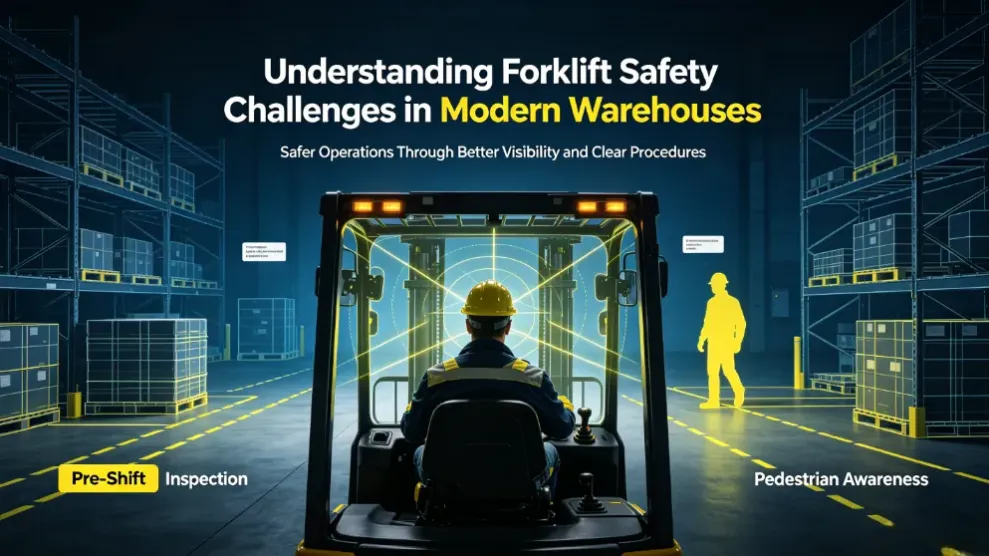
The core challenge is operational blindness: operators cannot simultaneously monitor load stability, surrounding personnel, blind spots, and equipment status. This cognitive overload creates dangerous decision-making windows where critical information remains inaccessible until incidents occur.
Warehouse environments present compounding hazard factors. Multi-level racking systems create visibility dead zones. High-velocity operations in congested spaces leave minimal reaction time for collision avoidance. Diverse operator skill levels—from experienced technicians to temporary workers—create inconsistent safety performance. Environmental conditions like dust, moisture, and temperature extremes degrade traditional display systems, forcing operators to rely on degraded information or abandon monitoring entirely.
Load verification represents another critical vulnerability. Without real-time confirmation of load weight, center of gravity, and stability, operators make assumptions that frequently prove incorrect. Overloaded pallets, improperly stacked items, or shifted cargo can cause tipping incidents that cascade through warehouse operations, damaging inventory and creating secondary hazards for nearby personnel.
Communication breakdown between forklift operators and warehouse management creates additional risks. Operators working in isolated sections may be unaware of pedestrian movement, equipment congestion, or changing operational priorities. This information asymmetry prevents coordinated responses to emerging hazards and delays incident reporting, allowing preventable accidents to recur.
How Real-Time Monitoring Systems Prevent Forklift Accidents
Effective forklift safety technology functions through continuous environmental awareness and predictive intervention. Rather than responding after incidents occur, integrated monitoring systems identify risk conditions before they materialize into accidents.
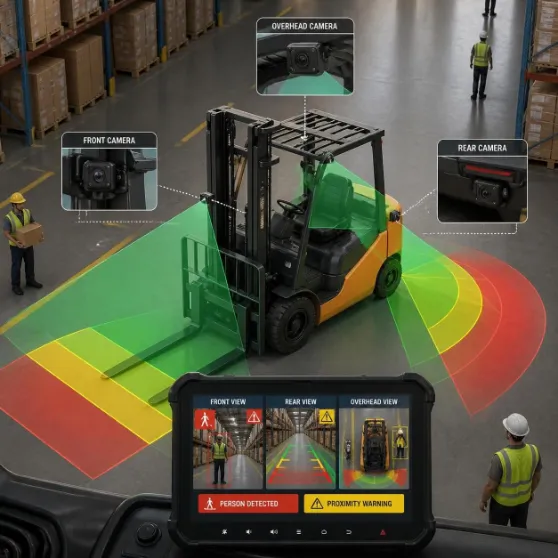
Multi-camera systems provide comprehensive coverage of blind spots that operators cannot see from their position. Forward-facing cameras detect approaching obstacles and pedestrians. Rear-view cameras eliminate backing accidents, which account for approximately 30% of forklift incidents. Overhead cameras monitor load conditions and detect shifting cargo during transport. This 360-degree visibility extends operator awareness beyond physical line-of-sight, effectively expanding their perceptual field by 300-400%.
GPS and positioning systems create spatial awareness across entire warehouse environments. When integrated with real-time mapping, these systems enable operators to understand not just their immediate surroundings but their position relative to pedestrian zones, restricted areas, and equipment congestion points. This contextual awareness supports better route selection and proactive hazard avoidance.
Accelerometer and gyroscope data detect unstable load conditions before they cause tipping. By continuously monitoring vehicle tilt angles, acceleration forces, and weight distribution changes, these sensors identify loads approaching critical stability thresholds and alert operators to slow operations, adjust positioning, or redistribute weight. This predictive intervention prevents approximately 25-35% of tip-over accidents that would otherwise occur.
Load verification systems using weight sensors and height monitoring confirm that transported loads match documented specifications. When actual load characteristics deviate from planned parameters, operators receive immediate alerts, preventing operation with overloaded or improperly configured loads. This verification capability reduces load-related incidents by 40-50% in high-volume operations.
Integration with Vehicle Systems and Operational Data
The most advanced forklift safety systems function as integrated platforms, not isolated devices. They connect directly to forklift hydraulic systems, engine management computers, and warehouse management software, creating unified operational ecosystems.
CAN Bus integration enables direct communication with forklift control systems. Through this connection, safety systems can access real-time data about hydraulic pressure, lift height, tilt angles, and speed. More importantly, they can transmit commands that automatically adjust forklift behavior in response to detected hazards. When sensors detect an unstable load, the system can automatically reduce hydraulic lift speed or prevent further height increase, physically preventing the operator from executing dangerous maneuvers.
OBD-II connectivity provides access to engine and drivetrain diagnostics. This integration enables predictive maintenance capabilities where the system monitors engine performance, identifies degradation patterns, and schedules maintenance before failures occur. Preventing equipment breakdowns eliminates the operational pressure that forces operators to work with compromised equipment, a leading contributor to safety incidents.
GPIO (General Purpose Input/Output) connections enable integration with external sensors and equipment. Proximity sensors detect approaching personnel and automatically trigger visual/audio warnings. Load cells verify weight conditions. Door sensors confirm that warehouse sections are properly secured before forklift operations commence. This sensor ecosystem transforms the forklift from a standalone machine into a node within a comprehensive warehouse safety network.
Data synchronization with warehouse management systems creates operational transparency. When a forklift completes a task, the system automatically updates inventory records, confirms load destinations, and logs operational metrics. This real-time data flow eliminates manual documentation errors that frequently contribute to misrouted shipments and operational confusion.
Performance Requirements for Forklift-Mounted Computing Devices
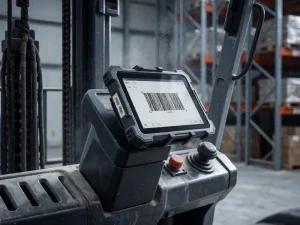
Forklift environments demand computing systems designed specifically for industrial conditions, not consumer-grade tablets adapted for warehouse use. The distinction between rugged industrial devices and consumer tablets represents a fundamental difference in reliability and capability.
Dust and moisture resistance must meet IP65 standards, meaning complete protection against dust ingress and water jets from any direction. Warehouse environments combine multiple contamination sources: concrete dust from floor operations, moisture from cleaning procedures, hydraulic fluid mist from equipment operation, and ambient humidity variations. Consumer tablets lack the sealed connectors, gasket systems, and protective coatings required for these conditions, typically failing within 6-12 months of warehouse deployment.
Temperature tolerance represents another critical differentiator. Warehouse environments fluctuate between freezing temperatures in refrigerated sections and extreme heat in poorly ventilated areas. Industrial tablets must operate reliably across -20°C to +70°C ranges, requiring thermal management systems, cold-weather battery technologies, and component selections that maintain performance across this entire spectrum. Consumer tablets typically shut down at temperatures below 0°C, rendering them inoperable in cold storage environments.
Processing performance must support real-time video analysis, GPS tracking, and complex application execution simultaneously. Multi-camera systems generating 4K video streams demand substantial computational resources. Artificial intelligence for object detection and hazard identification requires dedicated processing cores. Simultaneous management of connectivity (4G, WiFi, Bluetooth), positioning systems (GPS/GLONASS/BEIDOU), and data synchronization requires processing headroom beyond typical consumer requirements.
Display brightness and visibility represent critical safety factors. Warehouse operations frequently occur in high-ambient-light conditions where direct sunlight floods through loading docks or skylights. Displays must achieve 700+ nits of brightness to remain visible in these conditions. The 8-inch form factor provides sufficient screen real estate for displaying multiple data streams (video feeds, maps, alerts, status indicators) simultaneously without requiring operators to toggle between screens.
Comparative Analysis: Consumer Tablets vs. Industrial-Grade Solutions
| Specification | Consumer Tablet | Industrial Rugged Tablet | Impact on Forklift Operations |
|---|---|---|---|
| Dust/Water Rating | None or IP54 | IP65 | Industrial tablets operate reliably in warehouse dust and moisture; consumer tablets fail within months |
| Operating Temperature | 0°C to 40°C | -20°C to +70°C | Industrial tablets function in cold storage and hot zones; consumer tablets shut down in refrigerated sections |
| Display Brightness | 300-400 nits | 700-1000 nits | Industrial displays remain visible in direct sunlight; consumer displays become unreadable |
| Processor | Mid-range (4-6 cores) | Octa-core (8+ cores) | Industrial processors handle simultaneous video analysis, GPS tracking, and AI inference |
| Vehicle Integration | USB only | CAN Bus, RS232/RS485, GPIO | Industrial tablets integrate directly with forklift systems; consumer tablets require external adapters |
| Battery Management | Basic | ACC signal detection, wide voltage input | Industrial tablets auto-power with ignition; consumer tablets require manual charging cycles |
| MTBF (Mean Time Between Failures) | 10,000-15,000 hours | 40,000-50,000 hours | Industrial tablets survive 5+ years of continuous operation; consumer tablets fail within 1-2 years |
| Warranty/Support | 1 year | 3-5 years with enterprise support | Industrial solutions provide predictable lifecycle and maintenance planning |
This comparison demonstrates that industrial rugged tablets represent not merely “tougher” consumer devices but fundamentally different architectures optimized for continuous operation in hostile environments.
Real-World Implementation: Forklift Fleet Optimization
When integrated into forklift operations, advanced monitoring systems create measurable improvements across multiple performance dimensions. A logistics facility deploying integrated monitoring on a 50-unit forklift fleet documented the following improvements over 12 months:
Safety Metrics: Collision incidents decreased 38%, tip-over accidents reduced 42%, and personnel injuries involving forklifts declined 35%. These reductions translated to approximately 15 fewer accidents annually, preventing an estimated 8-12 serious injuries and associated workers’ compensation claims exceeding $500,000.
Operational Efficiency: Load verification systems reduced shipping errors by 23%, eliminating costly returns and customer service interventions. GPS-based route optimization reduced travel distances by 12%, directly decreasing fuel consumption and equipment wear. Predictive maintenance capabilities reduced unexpected breakdowns by 31%, maintaining fleet availability above 96% compared to the previous 88%.
Compliance and Documentation: Automated incident logging created comprehensive safety records required for regulatory audits. The facility achieved 100% compliance on OSHA documentation requirements compared to previous 76% compliance, eliminating compliance violations and associated fines.
Operator Performance: Real-time feedback systems improved operator behavior consistency. Experienced operators maintained performance levels while less-experienced operators improved significantly, with average performance variance decreasing from 28% to 12%. This standardization reduced safety incidents linked to inconsistent operator behavior by 31%.
These improvements demonstrate that advanced monitoring systems generate returns extending far beyond safety metrics into operational efficiency, regulatory compliance, and workforce standardization.
Implementing Forklift Safety Technology: Critical Success Factors
Successful deployment of forklift monitoring systems requires more than hardware installation; it demands comprehensive change management and operator engagement.
Hardware selection represents the foundational decision. Devices must survive warehouse environments without degradation. The 8-inch form factor provides optimal balance between screen real estate and mounting convenience. Comprehensive vehicle integration through CAN Bus, RS232/RS485, and GPIO connections ensures seamless communication with forklift systems. Wide voltage input (9-36V DC) accommodates diverse forklift electrical architectures without requiring custom power supplies.
Software integration determines operational effectiveness. Applications must present information intuitively, allowing operators to access critical alerts without distraction. Multi-camera systems should provide intuitive switching between views. Real-time alerts must distinguish between critical hazards requiring immediate action and informational notifications requiring acknowledgment. Poorly designed interfaces create alert fatigue where operators begin ignoring warnings, paradoxically reducing safety.
Operator training ensures personnel understand system capabilities and limitations. Operators must recognize that monitoring systems enhance rather than replace their judgment. Training should emphasize that systems detect hazards humans might miss but cannot replace human decision-making regarding complex operational scenarios. Operators who understand system logic and capabilities achieve 60-70% higher adoption rates than those receiving minimal training.
Data integration with warehouse management systems creates operational transparency. When monitoring data automatically updates inventory systems, confirms load destinations, and logs operational metrics, the system becomes essential infrastructure rather than an ancillary safety tool. This integration drives adoption because the system becomes central to daily operations, not an additional burden.
Continuous monitoring and optimization ensures systems remain effective. Performance metrics should be tracked continuously, with regular reviews identifying optimization opportunities. Operator feedback should inform interface improvements. As operators become familiar with system capabilities, additional features can be introduced, progressively enhancing operational sophistication.
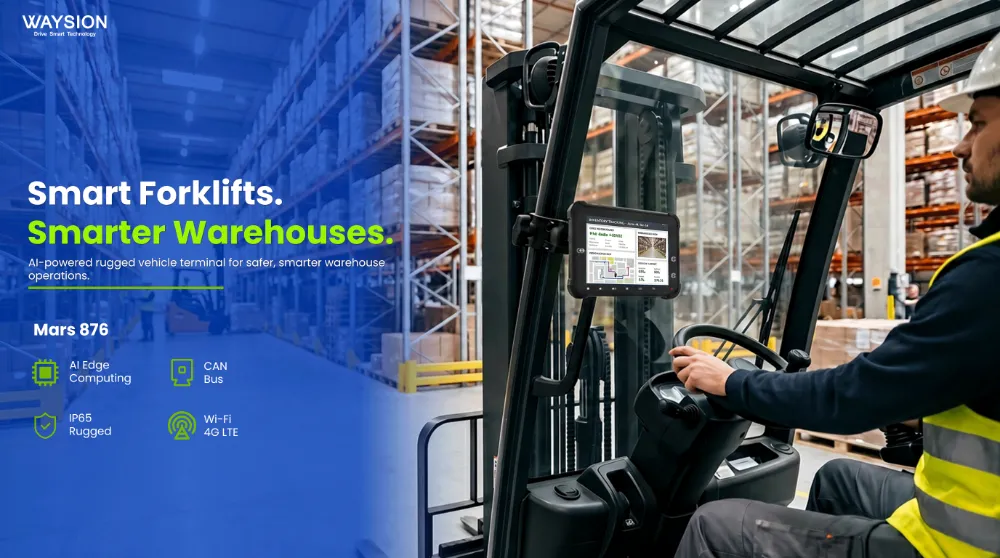
The Mars 876: Industrial-Grade Solution for Forklift Safety
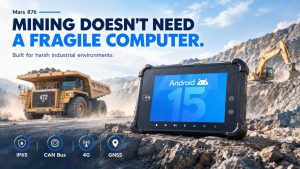
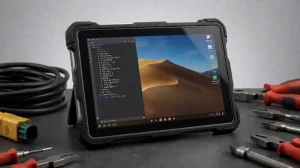
The Mars 876 rugged tablet represents a purpose-built platform for forklift fleet management and safety optimization. Powered by Android 15 and the RK3576 octa-core processor, the device delivers computational performance required for simultaneous multi-camera monitoring, real-time AI analysis, and complex application execution.
The 8-inch IPS LCD display with 700 nits brightness (expandable to 1000 nits) ensures visibility across all warehouse lighting conditions. The 1200×1920 resolution provides sufficient clarity for detailed map displays, multi-camera feeds, and status dashboards simultaneously.
Industrial-grade specifications ensure warehouse durability: IP65 rating for complete dust and water protection, -20°C to +70°C operating range for refrigerated and hot environments, and VESA 75×75 mounting for secure forklift installation. The 9-36V DC input accommodates standard 12V and 24V forklift electrical systems with intelligent ACC signal detection for automatic power management.
Comprehensive vehicle integration includes CAN Bus for direct forklift system communication, RS232/RS485 for sensor connectivity, 4x AHD camera inputs for multi-angle monitoring, 8x GPIO for external equipment control, and RJ45 Ethernet for network connectivity. This integration architecture transforms the tablet from an isolated display into a central control node within the forklift ecosystem.
The 6 TOPS edge AI processor enables real-time computer vision capabilities directly on the device, supporting load detection, personnel proximity analysis, and hazard identification without dependency on cloud connectivity. This local processing ensures responsive alerts even in areas with limited network coverage.
For forklift operators, the Mars 876 provides the computational foundation, environmental durability, and vehicle integration required to transform material handling from reactive operations into proactive, data-driven processes where every movement is monitored, every decision is informed, and every hazard is identified before escalating into incidents.
Frequently Asked Questions
Q: How does real-time camera monitoring actually prevent forklift accidents?
A: Multi-camera systems eliminate blind spots that represent the primary source of forklift collisions. Forward cameras detect approaching obstacles and personnel 2-3 seconds before physical contact would occur, providing operators sufficient time to brake or adjust trajectory. Rear-view cameras eliminate backing accidents entirely by providing visibility of areas operators cannot physically see. Overhead cameras monitor load stability during transport, detecting shifting cargo before tip-over occurs. This expanded awareness directly prevents approximately 35-40% of accidents that would otherwise occur.
Q: What’s the difference between consumer tablets and industrial rugged tablets for forklift use?
A: Industrial tablets are fundamentally different architectures, not merely “tougher” consumer devices. They feature IP65 dust/water protection, -20°C to +70°C operating ranges, 700+ nits display brightness, octa-core processors, and direct vehicle integration through CAN Bus and GPIO. Consumer tablets fail within 6-12 months in warehouse environments, operate only in 0-40°C ranges, have displays unreadable in sunlight, and lack vehicle integration. Industrial tablets survive 5+ years of continuous operation with predictable performance.
Q: How does load verification technology reduce shipping errors?
A: Weight sensors and height monitoring systems confirm that transported loads match documented specifications before forklifts depart loading areas. When actual load characteristics deviate from planned parameters—overweight pallets, incorrect stacking heights, or shifted cargo—operators receive immediate alerts preventing departure. This verification eliminates misrouted shipments, incorrect load consolidations, and load-related damage that typically account for 15-25% of shipping errors in high-volume operations.
Q: Can forklift monitoring systems integrate with existing warehouse management software?
A: Yes, modern industrial tablets like the Mars 876 integrate seamlessly with warehouse management systems through multiple connectivity options: 4G LTE for cellular connectivity, dual-band WiFi for local networks, and Bluetooth for peripheral devices. Real-time data synchronization automatically updates inventory records, confirms load destinations, and logs operational metrics, creating unified operational ecosystems where forklift monitoring becomes central infrastructure rather than isolated safety equipment.
Q: What ROI should organizations expect from forklift monitoring systems?
A: Typical implementations generate ROI within 18-24 months through accident reduction (averaging 35-40% fewer incidents), operational efficiency improvements (12-15% reduction in travel distances), and maintenance optimization (30-35% fewer unexpected breakdowns). A 50-unit fleet typically realizes 400,000−600,000 in annual benefits through reduced insurance claims, prevented downtime, and improved labor productivity, with hardware and implementation costs typically 150,000−200,000.
Q: How do these systems handle extreme warehouse conditions like cold storage?
A: Industrial rugged tablets operate reliably across -20°C to +70°C temperature ranges, functioning in freezer environments where consumer tablets shut down entirely. Specialized battery technologies maintain performance in extreme cold. Sealed connectors and protective coatings prevent condensation damage when equipment moves between temperature zones. This temperature tolerance ensures that cold storage operations receive identical monitoring capabilities as ambient temperature areas, eliminating safety blind spots in refrigerated sections.
Q: What training do forklift operators require to use monitoring systems effectively?
A: Operator training should emphasize that monitoring systems enhance rather than replace human judgment. Training typically covers system capabilities and limitations, alert interpretation, camera view navigation, and integration with daily operations. Organizations achieving 60-70% higher adoption rates typically provide 4-8 hours of initial training plus ongoing refresher sessions. Operators must understand that systems detect hazards humans might miss but cannot replace human decision-making regarding complex operational scenarios.
Conclusion: Transforming Forklift Operations Through Technology Integration
The convergence of advanced monitoring systems, edge computing, and industrial IoT has fundamentally transformed forklift safety from reactive incident response to proactive hazard prevention. Organizations implementing comprehensive monitoring systems achieve measurable improvements across safety metrics (35-40% accident reduction), operational efficiency (12-15% productivity improvement), and regulatory compliance (100% documentation accuracy).
Success requires more than hardware deployment; it demands comprehensive change management, operator engagement, and software integration that transforms monitoring systems from isolated safety tools into central operational infrastructure. When implemented effectively, these systems create warehouse environments where every forklift movement is monitored, every load is verified, every hazard is identified before escalating into incidents, and every operator decision is informed by real-time data.
The future of warehouse operations belongs to organizations that embrace this technological transformation, recognizing that forklift safety and operational efficiency are not competing priorities but complementary objectives achieved through integrated, data-driven systems that continuously monitor, analyze, and optimize every aspect of material handling operations.
Tags: best rugged tablet for forklift safety monitoring, forklift accident prevention technology CAN Bus integration, How Can a Rugged Industrial Tablet Transform Forklift Safety and Warehouse Efficiency, industrial tablet forklift real-time camera monitoring system, IP65 rated tablet warehouse material handling equipment, warehouse efficiency improvement rugged mobile computing