Why Rugged Tablets Are Transforming Fleet Operations
In today’s fast-paced logistics and transportation industry, fleet managers face constant pressure to improve efficiency, reduce downtime, and maintain real-time visibility across vehicles, drivers, and assets. Standard consumer tablets and smartphones simply cannot withstand the harsh conditions of daily fleet operations. Extreme temperatures, constant vibration, dust, moisture, drops, and continuous outdoor exposure quickly render ordinary devices unreliable or completely unusable.
This is where a rugged tablet for fleet management becomes an essential operational tool rather than an optional accessory. Engineered to military-grade standards such as MIL-STD-810H and IP65/IP67 ratings, these devices deliver consistent performance in environments where conventional electronics fail. From long-haul trucking and last-mile delivery to construction fleets, public transit, and emergency response vehicles, rugged tablets provide the durable computing platform that modern fleet management systems demand.
Beyond physical durability, today’s rugged tablets integrate advanced connectivity options including 4G/5G, Wi-Fi 6, Bluetooth 5.2, and optional satellite modules. They support barcode scanning, RFID reading, GPS/GLONASS positioning, and vehicle docking systems that enable seamless data capture and transmission. When paired with fleet management software, these tablets become the central nervous system of mobile operations—delivering navigation, electronic logging, proof of delivery, vehicle diagnostics, and driver communication in a single hardened device.
Organizations that adopt purpose-built rugged tablets consistently report measurable improvements in operational uptime, data accuracy, driver accountability, and overall return on investment. The following sections explore the technology, applications, selection criteria, and strategic advantages of deploying rugged tablets across fleet environments.
Core Benefits of Rugged Tablets in Fleet Management
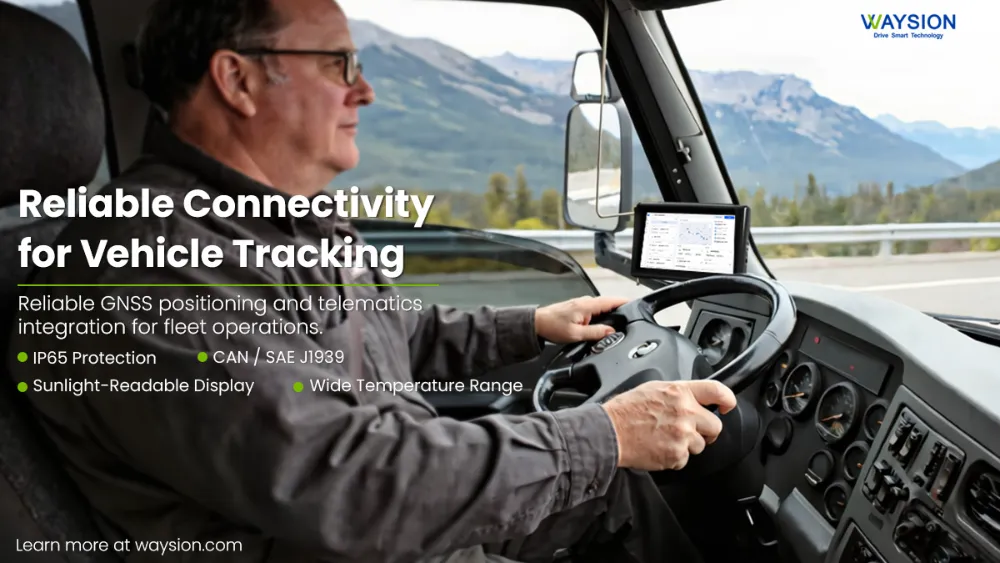
Unmatched Durability
MIL-STD-810H certified for drop, shock, vibration, and extreme temperature resistance. IP65/IP67 sealing protects against dust, rain, and high-pressure washdowns common in vehicle and yard environments.
Continuous Uptime
Hot-swappable batteries and vehicle docking stations with continuous charging eliminate power-related downtime. Devices remain operational through multi-shift schedules without interruption.
Real-Time Visibility
Integrated GPS, cellular, and Wi-Fi connectivity feed live location, status, and performance data into fleet management platforms, enabling proactive decision-making and exception management.
Data Accuracy & Compliance
Barcode, RFID, and camera capture reduce manual entry errors. Electronic logging device (ELD) compatibility and digital proof-of-delivery support regulatory compliance and audit readiness.
Essential Features of Modern Rugged Tablets for Fleets
Selecting the right rugged tablet requires understanding the specific hardware and software attributes that deliver value in fleet environments. Not every rugged device is optimized for vehicle-mounted or handheld fleet use. The following capabilities represent the current baseline for high-performing solutions.
High-Brightness Displays
Sunlight-readable screens with 800–1500 nits brightness, anti-glare coatings, and glove/wet-touch support ensure usability in all lighting and weather conditions.
Vehicle Docking Systems
Secure, vibration-resistant docks provide power, data, and peripheral connections while allowing quick removal for handheld tasks outside the cab.
Multi-Network Connectivity
Concurrent 5G, dual-band Wi-Fi 6, Bluetooth, and optional private network support maintain continuous data flow even in remote or congested areas.
Integrated Data Capture
2D barcode scanners, NFC/RFID readers, and high-resolution cameras streamline inventory checks, package scanning, and digital documentation.
Extended Battery Architecture
Hot-swappable dual batteries and intelligent power management support 12–24 hour operational cycles without returning to base for charging.
Enterprise Security
Hardware-backed encryption, secure boot, remote wipe, and compatibility with major MDM platforms protect sensitive operational and customer data.
Key Applications Across Fleet Industries
Rugged tablets have become foundational technology across virtually every segment of the transportation and logistics ecosystem. Their ability to function reliably in mobile, outdoor, and industrial settings makes them uniquely suited to the realities of fleet work.
Long-Haul Trucking & Freight
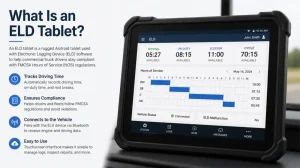
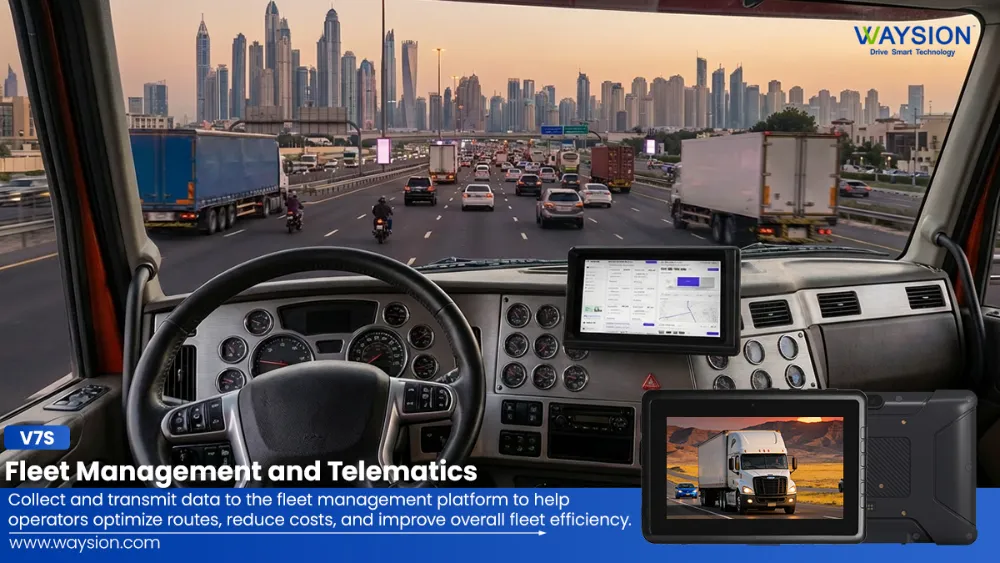
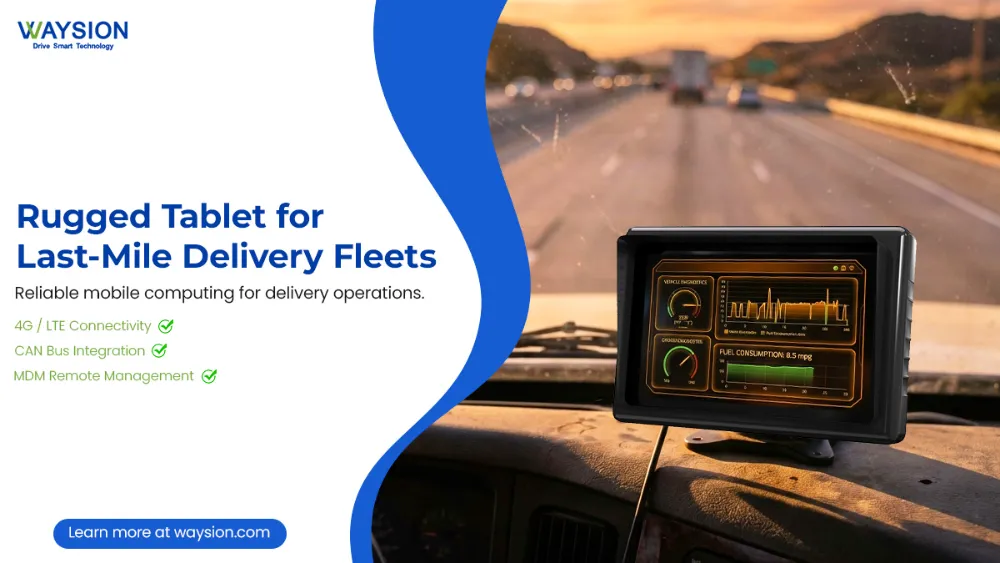
Over-the-road drivers rely on rugged tablets for electronic logging device (ELD) compliance, turn-by-turn navigation optimized for commercial vehicles, real-time load tracking, and digital document exchange. Vehicle-mounted docks keep the device charged and accessible while the truck is in motion, and the tablet can be undocked for inspections or yard operations. Integration with onboard telematics provides drivers and dispatchers with shared visibility into vehicle health, fuel consumption, and estimated arrival times.
Last-Mile & Parcel Delivery
Delivery fleets use rugged tablets for route optimization, proof-of-delivery capture with electronic signatures and photos, barcode scanning of packages, and real-time customer notifications. The devices withstand repeated handling, exposure to weather during doorstep deliveries, and the constant vibration of stop-and-go urban driving. High-brightness screens remain readable in direct sunlight, and glove-compatible touchscreens allow drivers to operate the device without removing protective gear in cold climates.
Construction & Heavy Equipment Fleets
In construction and mining environments, rugged tablets serve as mobile workstations for equipment operators and site supervisors. They support digital work orders, equipment inspection checklists, GPS-based asset tracking, and communication with central operations. Resistance to dust, mud, extreme temperatures, and accidental drops is critical when devices are used around heavy machinery and unfinished job sites.
Public Transit & Passenger Transport
Bus and rail operators deploy rugged tablets for driver manifests, passenger information systems, fare collection support, and incident reporting. The devices must operate reliably across temperature extremes and continuous vibration while providing clear visibility for route guidance and schedule adherence.
Field Service & Utility Fleets
Utility companies, telecom technicians, and maintenance crews use rugged tablets to access work orders, technical documentation, GIS maps, and inventory systems while on the road or at remote job locations. Offline capability ensures that critical information remains available even when cellular coverage is limited, with automatic synchronization once connectivity is restored.
Rugged Tablets vs. Consumer Devices: A Clear Comparison
Many organizations initially attempt to deploy consumer tablets for fleet applications to minimize upfront cost. Over time, the higher failure rates, shorter lifespans, and limited support for enterprise peripherals reveal a significantly higher total cost of ownership. The table below highlights the practical differences that matter in daily fleet operations.
| Evaluation Criteria | Consumer Tablet | Rugged Tablet for Fleet |
|---|---|---|
| Drop Resistance | Minimal (often fails after 1–2 drops) | MIL-STD-810H certified (multiple 1.2–1.8m drops) |
| Water & Dust Protection | Limited or none | IP65 / IP67 sealed |
| Operating Temperature | 0°C to 35°C typical | -20°C to 60°C or wider |
| Battery Strategy | Fixed battery, limited runtime | Hot-swappable, multi-shift capability |
| Vehicle Integration | Aftermarket mounts only | Certified docking with power & data |
| Expected Lifespan | 18–30 months in field use | 5–7+ years with proper support |
| Enterprise Support & MDM | Limited | Full MDM, remote management, long-term OS support |
How to Select the Right Rugged Tablet for Your Fleet
Choosing a rugged tablet is not a one-size-fits-all decision. Fleet size, vehicle types, software ecosystem, environmental conditions, and budget all influence the optimal configuration. The following considerations help ensure the selected platform delivers long-term value.
1. Define the Operating Environment
Assess temperature extremes, exposure to water or chemicals, likelihood of drops, and vibration levels. A device rated for warehouse use may not survive long-haul trucking or construction sites. Request detailed environmental specifications and, when possible, conduct pilot testing under real operating conditions.
2. Evaluate Form Factor and Mounting Needs
- Vehicle-mounted primary use favors larger 10–12 inch displays with robust docking.
- Frequent handheld use outside the vehicle benefits from lighter 7–8 inch models with comfortable ergonomics.
- Hybrid workflows often require both a secure dock and easy undocking capability.
3. Confirm Software and Peripheral Compatibility
Verify that the tablet’s operating system (typically Android or Windows) is fully supported by your fleet management, ELD, navigation, and warehouse software. Confirm availability of certified scanners, printers, and payment peripherals if required.
4. Prioritize Battery and Power Strategy
Multi-shift operations demand hot-swappable batteries or continuous vehicle charging. Calculate expected daily runtime under real application loads rather than manufacturer ideal conditions.
5. Assess Total Cost of Ownership
Look beyond the purchase price. Factor in expected lifespan, warranty terms, availability of spare parts, battery replacement costs, and the productivity impact of device failures. A higher initial investment in a quality rugged platform frequently yields lower cost per year of service.
Integration with Fleet Management Platforms
A rugged tablet delivers maximum value only when tightly integrated with the broader fleet technology stack. Modern devices support seamless connectivity to leading transportation management systems (TMS), fleet telematics platforms, electronic logging solutions, and warehouse management systems.
Key integration points include real-time GPS data feeds, two-way messaging between drivers and dispatch, automated status updates for deliveries and pickups, vehicle diagnostic information pulled from onboard systems, and digital forms that replace paper processes. When these capabilities operate on a reliable rugged platform, the result is a closed-loop information system that reduces phone calls, eliminates paperwork, and provides accurate data for continuous improvement.
Leading rugged tablet vendors and system integrators offer pre-validated configurations for popular software platforms, reducing deployment risk and accelerating time-to-value. Organizations should involve both IT and operations stakeholders early in the selection process to ensure that device capabilities align with current and planned software roadmaps.
Security considerations are equally important. Enterprise-grade rugged tablets support full disk encryption, certificate-based authentication, remote lock and wipe, and compliance with industry data protection requirements. When combined with a modern mobile device management (MDM) solution, fleets can maintain control over devices even when they operate far from the central office.
Measuring Return on Investment
Fleet managers increasingly treat rugged tablets as strategic investments rather than IT expenses. The return is realized through multiple channels that compound over the multi-year life of the device.
Primary Value Drivers
Reduced device replacement frequency • Lower downtime from hardware failures • Faster data capture and reduced administrative labor • Improved compliance and fewer regulatory penalties • Better route adherence and fuel efficiency through accurate navigation and tracking • Higher customer satisfaction from accurate ETAs and proof-of-delivery documentation.
Organizations that replace consumer-grade devices with properly specified rugged tablets commonly observe device failure rates drop by 60–80 percent. The resulting reduction in emergency replacements, lost productivity, and data recovery efforts often pays for the premium hardware within the first 18–24 months. Additional soft benefits—improved driver satisfaction, cleaner audit trails, and richer operational analytics—further strengthen the business case.
When evaluating proposals, request detailed total-cost-of-ownership models that include expected lifespan, support costs, and productivity assumptions. The most compelling solutions pair durable hardware with strong software integration and responsive local support.
Emerging Trends Shaping the Next Generation of Rugged Tablets
The rugged mobile computing category continues to evolve rapidly. Several trends are already influencing product roadmaps and will shape purchasing decisions over the next three to five years.
5G and Edge Computing
Higher bandwidth and lower latency enable richer real-time applications, including high-definition video streaming for remote assistance, AI-powered damage detection at delivery points, and more sophisticated predictive maintenance models that process data closer to the vehicle.
Advanced AI and Computer Vision
On-device AI accelerators allow tablets to perform local image analysis for package condition assessment, safety compliance checks, and automated inventory counting without constant cloud connectivity.
Improved Sustainability
Manufacturers are responding to enterprise sustainability goals with longer product support cycles, modular designs that facilitate battery and component replacement, and increased use of recycled materials—reducing both environmental impact and long-term ownership costs.
Enhanced Human-Machine Interfaces
Next-generation displays offer higher brightness with lower power consumption, improved outdoor readability, and more sophisticated touch and stylus performance. Voice interfaces optimized for noisy cab environments are also gaining traction.
Fleets that select platforms with clear upgrade paths and strong manufacturer roadmaps will be better positioned to adopt these capabilities without wholesale hardware replacement.
Ready to Strengthen Your Fleet Operations?
Discover how a purpose-built rugged tablet solution can reduce downtime, improve data quality, and deliver measurable returns across your mobile workforce. Explore configurations tailored to trucking, delivery, construction, and field service environments.
Request a ConsultationTags: Android rugged tablet for logistics fleet, Fleet Management, IP65 MIL-STD rugged tablet for ELD compliance, rugged tablet for fleet management, sunlight readable rugged tablet for last-mile delivery, vehicle mounted rugged tablet for trucking