- Why Mining Requires Rugged Tablets
- 7 Critical Features Every Rugged Tablet for Mining Must Have
- Key Use Cases for Rugged Tablets in Mining
- Mining-Grade vs Consumer/Pro Tablet Comparison
- Android vs Windows Rugged Tablets: Which is Better for Mining?
- Real-World Case Studies & ROI
- How to Choose the Right Rugged Tablet for Mining
- Top Rugged Tablet Brands for Mining
- FAQs About Rugged Tablets in Mining
- Conclusion: Mining Efficiency Starts With the Right Technology
The mining industry demands tools that can withstand extreme environments while improving operational efficiency. From data logging deep underground to remote equipment tracking, rugged tablets for mining have emerged as critical tools for modern digital mines.
In this comprehensive 2026 guide, we explore the features, benefits, real-world results, comparison tables, and top use cases of rugged tablets in mining, helping you choose the best solution for your operation.
Why Mining Requires Rugged Tablets
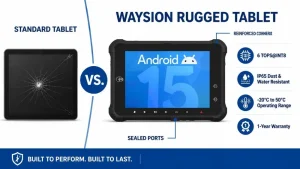
Mining sites are some of the harshest workplaces on Earth. From explosive gases and heavy vibration to dust, moisture, and temperature extremes, standard mobile devices simply don’t survive long in these conditions.
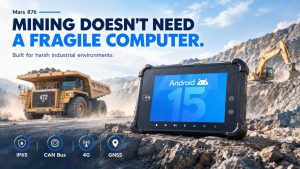
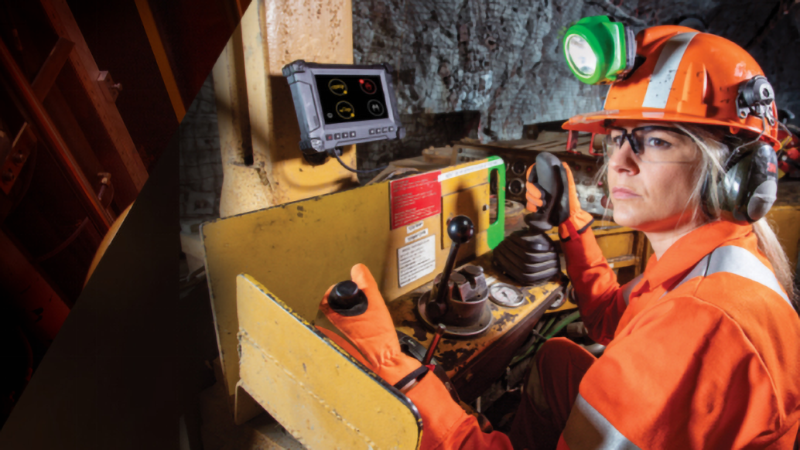
That’s where rugged tablets come in. Built with reinforced casings, shock-absorbing materials, waterproof seals, and long battery life, these devices are engineered to operate reliably in underground mines, open-pit operations, and remote field stations.
Consumer tablets often fail within months due to silica dust clogging ports, vibration cracking screens, and cab temperatures exceeding 50–55°C. Purpose-built mining tablets eliminate these failure points and deliver continuous uptime.
7 Critical Features Every Rugged Tablet for Mining Must Have
- ATEX or Intrinsically Safe Certification
Essential for use in explosive environments such as coal or gas mines (Zone 0/1/2 or Class I Div 1). - IP65/IP67/IP68 Waterproof & Dustproof Rating
Protection against water ingress, mine dust, and mud splashes. IP68 is preferred for complete dust sealing. - Sunlight-Readable Displays
High-brightness (800–1000+ nits), anti-glare, optically bonded screens for outdoor and dusty visibility. - Shockproof & Drop-Resistant Design
Durable housings that resist impact from drops (1.2–1.8 m to concrete) and continuous high-amplitude vibration (MIL-STD-810H). - Long Battery Life (10+ hours)
Support for full shifts without recharging, with hot-swappable battery options. - High-Precision GPS & GIS Integration
For accurate mapping and navigation in field surveys or exploration (plus inertial options for underground). - Connectivity Options: LTE, Wi-Fi, RFID, Bluetooth + Industrial I/O
Seamless integration into mining software, cloud platforms, CAN Bus, RS232/485, and AHD cameras.
Key Use Cases for Rugged Tablets in Mining
1. Exploration & Surveying
Geologists rely on GIS-capable tablets to collect and analyze field data, even in remote, uncharted terrains.
2. Equipment Inspection & Maintenance
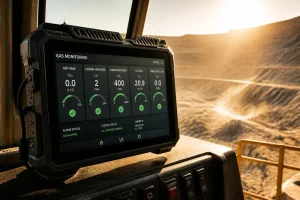
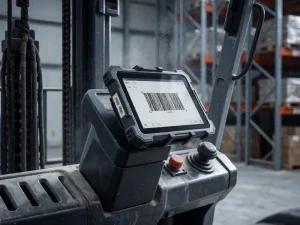
Technicians use rugged tablets with built-in barcode/RFID scanners for real-time asset tracking and preventative maintenance. CAN Bus integration enables live engine and payload data.
3. Safety & Compliance Checks
Explosion-proof models ensure safety while recording and transmitting data in hazardous zones. Digital checklists with photo evidence reduce incidents.
4. Data Collection & Reporting
From logging temperature and vibration data to completing digital forms and shift reports, tablets streamline reporting across operations.
5. Communication in Remote Sites
LTE, 4G/5G, and mesh/satellite-ready tablets enable team communication and data sync in regions with limited infrastructure. Store-and-forward keeps data safe offline.
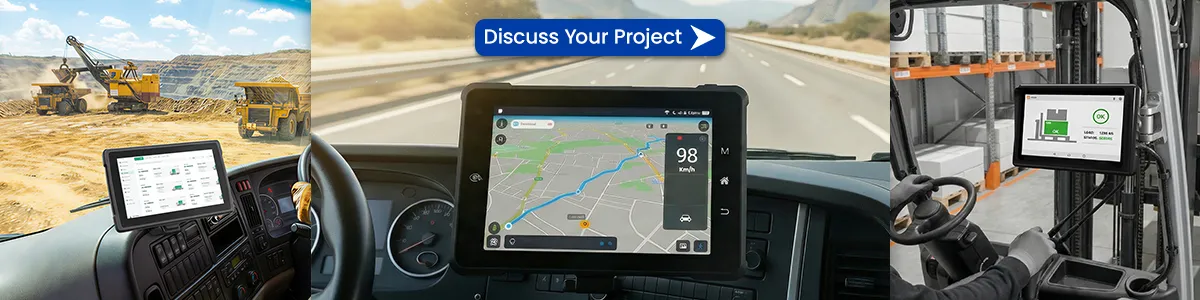
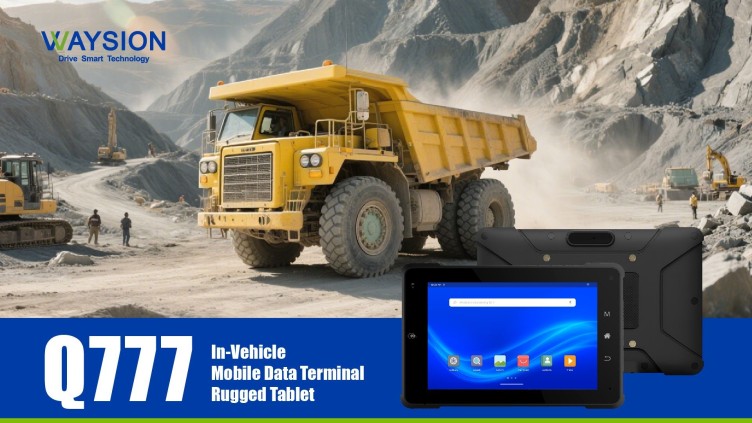
For vehicle-mounted open-pit fleets, see our detailed IP65 Mining Vehicle MDT Q777 & V7S solutions.
Mining-Grade vs Consumer/Pro Tablet Comparison
| Feature | Consumer / “Pro” Tablet | Mining-Grade Rugged Tablet |
|---|---|---|
| Drop Spec | None or needs case | 1.2–1.8 m to concrete (MIL-STD-810H) |
| IP Rating | IP67 temporary | IP65/IP67/IP68 dust-tight + jet-wash |
| Operating Temp | 0°C to 35°C | –20°C to +60/70°C |
| Vibration | Limited | High-amplitude continuous (haul-truck ready) |
| I/O Ports | USB-C only | CAN Bus, RS232/485, AHD camera, GPIO |
| Battery / Life Cycle | 12–18 months typical | Hot-swappable, 3–5+ years |
| Display | 400–500 nits | 800–1000+ nits sunlight-readable |
This difference directly impacts total cost of ownership and safety.
Android vs Windows Rugged Tablets: Which is Better for Mining?
| Feature | Android | Windows |
|---|---|---|
| Battery Life | Longer | Shorter |
| App Ecosystem | Lightweight apps | Full desktop apps |
| Ease of Use | User-friendly | More complex |
| Field Suitability | Excellent for data entry | Ideal for full software like AutoCAD |
| Price | More affordable | Higher cost, more features |
Recommendation: Choose Android for quick inspections, reporting, and vehicle MDTs. Go with Windows for in-depth analytics, modeling, and deep enterprise software integration.
Real-World Case Studies & ROI
Example 1 – Australian Iron Ore Mine
Deployed 350 ATEX-certified rugged tablets with mesh networking and custom software.
Results after 18 months:
- Safety inspection efficiency ↑ 70%
- Geological data update cycle reduced to 15 minutes
- Communication response time ↑ 85%
- Reportable safety incidents ↓ 40%
- Operational downtime ↓ 25%
- ROI achieved in 14 months
Example 2 – Haul Truck Fleets (Nevada / Wyoming / Pilbara)
Consumer tablets failed within 3 months (cracked screens, dust-clogged ports, thermal shutdowns). Waysion IP68 / MIL-STD tablets ran 18+ months with zero dust-related failures. Payload monitoring reduced overload fines and extended tire life by ~18%. Fuel efficiency coaching delivered measurable diesel savings.
Learn more real mining results in our haul truck telematics deep-dive and operations safety transformation article.
How to Choose the Right Rugged Tablet for Mining
- Identify the hazard zone → Confirm ATEX/IECEx/MSHA requirements (underground coal vs open-pit).
- Match durability → Minimum IP65/IP67 + MIL-STD-810H; prefer IP68 and proven vibration testing.
- Display & usability → ≥800–1000 nits, glove mode, sunlight readability.
- Power → 10+ hour battery + hot-swap for continuous shifts.
- Connectivity & integration → LTE/4G + GPS + CAN Bus / industrial I/O for FMS (Wenco, Modular, Hexagon etc.).
- OS decision → Android for speed and cost; Windows for heavy software.
- Mounting & support → Vehicle docks, long-term spare parts, and local service.
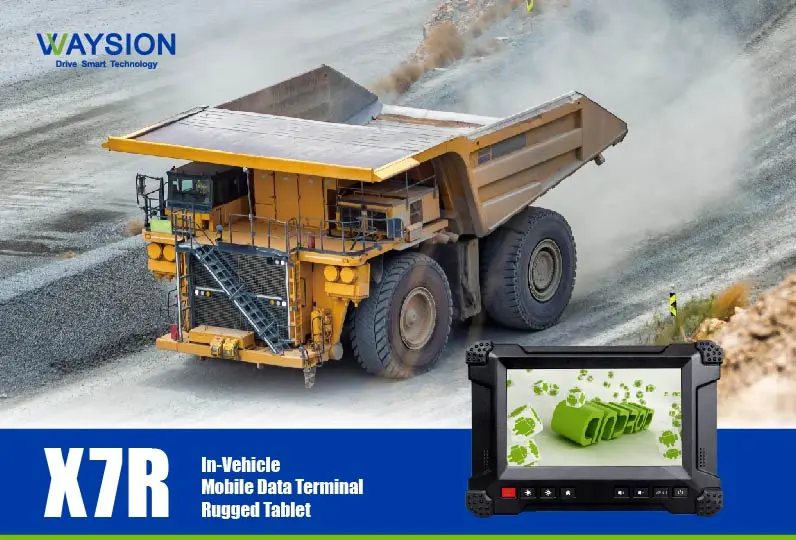
For vehicle-mounted needs, the Waysion Q777 / V7S / X7R series is purpose-built for open-pit haul trucks and loaders.
Top Rugged Tablet Brands for Mining
- Panasonic Toughpad – Known for durability and industrial certifications
- Waysion Q777 / X7R / V7S – Android-based, ideal for vehicle-mounted mining operations, CAN Bus, AHD cameras, and harsh-environment MDTs
- Getac F110 – Slim but rugged Windows tablet with ATEX options
- Trimble T100 – Designed for GIS mapping in the mining sector
- Xplore Technologies – Heavy-duty tablets with MIL-STD and IP67
FAQs About Rugged Tablets in Mining
What is an intrinsically safe tablet?
An intrinsically safe tablet is designed to prevent ignition of flammable gases or dust. It is certified for use in hazardous environments such as underground mines (ATEX/IECEx Zone 0/1 or equivalent).
Can rugged tablets connect to mining software?
Yes. Many rugged tablets run Android or Windows, allowing integration with mining ERP systems, GIS platforms, FMS (Wenco, Modular, Hexagon), and custom inspection apps via CAN Bus, APIs, or native clients.
Do rugged tablets work in freezing or hot conditions?
Yes. Most mining-grade rugged tablets operate between –20°C to +60°C (some up to +70°C), making them suitable for both arctic and desert mining conditions.
Are these tablets usable with gloves?
Absolutely. Capacitive touchscreens with glove mode or stylus compatibility are standard on rugged models.
What is the difference between IP65, IP67, and IP68 for mining?
IP65 protects against dust and low-pressure water jets. IP67 adds temporary immersion. IP68 offers complete dust protection and longer/deeper immersion — preferred for heavy silica dust environments.
How long do rugged tablets last in mining vs consumer devices?
Mining-grade units typically deliver 3–5+ years of service life with far lower failure rates, while consumer tablets often fail within 6–18 months under continuous vibration, dust, and heat.
Conclusion: Mining Efficiency Starts With the Right Technology
Rugged tablets are transforming mining operations by providing reliable, real-time access to data in the field, improving safety, and increasing productivity. Whether you’re managing underground coal mines, conducting mineral exploration, or inspecting heavy machinery, choosing the right rugged tablet for mining is a strategic investment in operational excellence.
Ready to upgrade your fleet or field teams?
Explore Waysion mining vehicle tablets (Q777 / V7S) or contact us for a free consultation and quote.
Tags: digital transformation in mining, durable tablet for coal mining, mining software compatibility, mobile workforce device for mining, ruggedized tablets for oil and gas mining